- Make it vegan: Simply omit the anchovy paste. Add a tiny extra pinch of capers or a splash of soy sauce to maintain that savory depth.
- Add sundried tomatoes: Toss in 2 tablespoons of oil-packed sundried tomatoes for a sweeter, richer variation that is absolutely incredible on sandwiches.
- Herb it up: Swap thyme for fresh rosemary or basil depending on your mood. Fresh parsley also brightens the whole thing beautifully
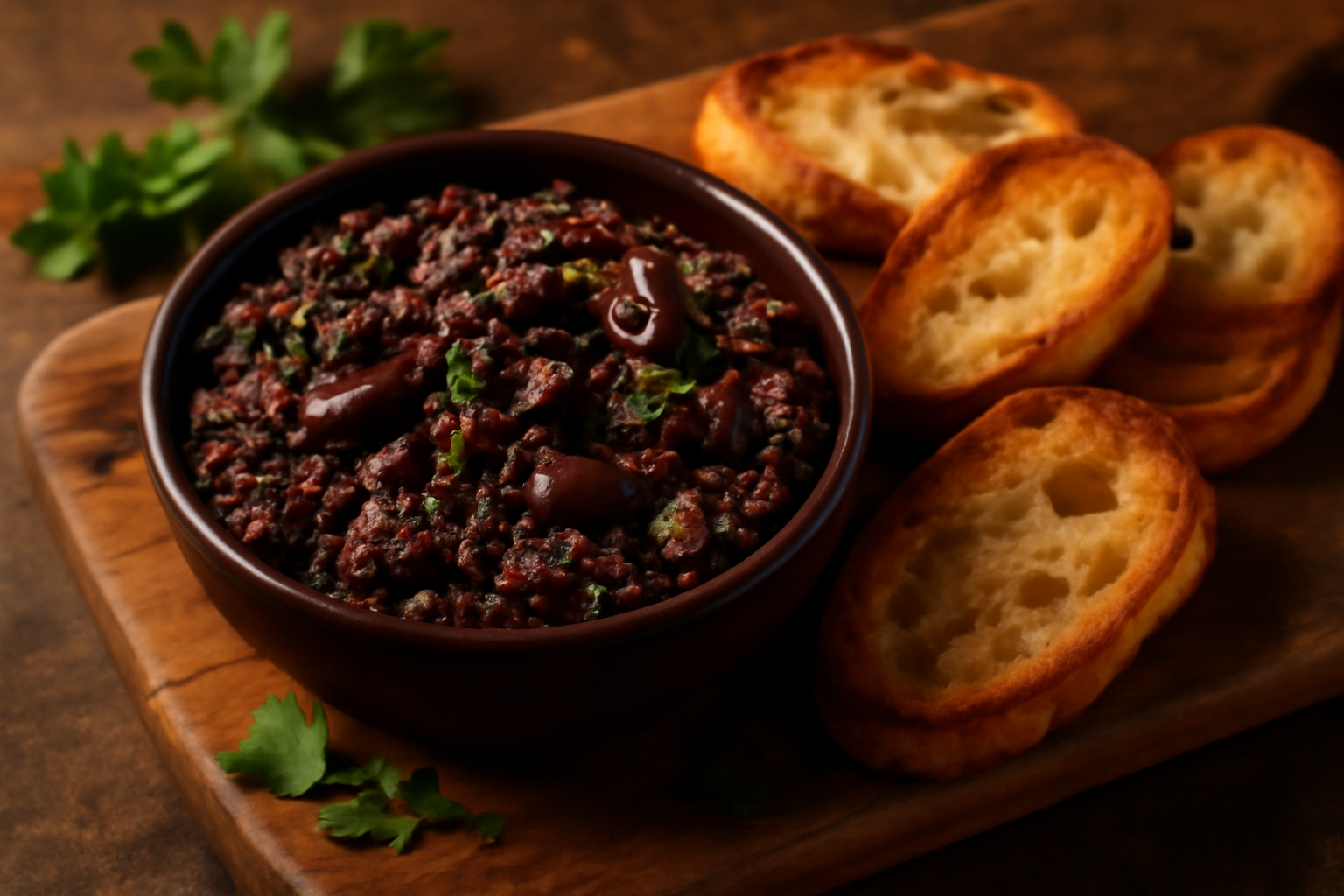
You know that moment at a party when you spot a little bowl of something dark and glossy sitting next to a pile of crusty bread — and suddenly nothing else matters? That’s the power of a great olive tapenade. I first made this olive tapenade recipe on a chaotic Friday night when I had zero energy to cook but desperately needed something impressive to bring to a neighbor’s get-together. I threw a few pantry staples into my food processor, pulsed it six times, and walked in with the most talked-about appetizer of the night. Friends were scooping it onto everything in sight. And honestly? I’ve never looked back.
This spread is bold, briny, herby, and deeply savory in the best possible way. It comes together in about five minutes flat, requires zero cooking, and tastes like something you ordered at a little restaurant tucked into a Mediterranean hillside. Whether you’re hosting a dinner party, building the ultimate charcuterie board, or just raiding your fridge on a Tuesday, this tapenade is your new best friend.
This post contains affiliate links. As an Amazon Associate, I earn from qualifying purchases at no extra cost to you.
Why This Olive Tapenade Recipe Works So Well
Let’s talk about what makes this version extra special, because not all tapenades are created equal. The secret is using two different olive varieties — Kalamata and Castelvetrano. Kalamata olives bring that classic deep, briny, almost wine-like punch. Castelvetrano olives are buttery, mild, and a little sweet. Together, they create this gorgeous complexity that a single-olive tapenade just can’t touch.
Then there’s the anchovy paste. I know, I know — don’t run away! You won’t taste “fish” at all. What anchovy paste does is add this incredible savory depth, that umami backbone that makes you keep reaching for more without quite knowing why. It’s the quiet hero of the whole recipe. Trust the process on this one.
And the capers? Tiny little flavor bombs of tangy, pickled perfection. They tie everything together beautifully.
What You’ll Need (Kitchen Tools)
The good news is that this recipe requires almost nothing in the way of equipment. Here’s what you’ll want to have on hand:
- Food processor — This is your MVP. A mini food processor works perfectly for this quantity. You want something that can pulse (not just puree) so you have control over the texture.
- Rubber spatula — For scraping down the sides between pulses.
- Airtight glass jar or container — For storing your tapenade in the fridge. It keeps beautifully for up to two weeks.
- Citrus juicer — Optional but handy for squeezing every last drop out of your lemon.
Ingredients for Olive Tapenade
Here’s everything you need. Most of this you probably already have in your pantry — and if not, stocking up is absolutely worth it because you’re going to make this on repeat.
- 1 cup Kalamata olives, pitted — I love using 365 by Whole Foods Market Organic Pitted Kalamata Olives for their clean, robust flavor, or grab a larger supply with the Amazon Grocery Pitted Kalamata Olives (9.5 oz) to keep in the pantry.
- ½ cup Castelvetrano olives, pitted
- 2 tablespoons capers, drained — For everyday batches I reach for the 365 by Whole Foods Market Organic Nonpareil Capers, and for entertaining season or big batches I stock up with the 32 oz jar of Non-Pareil Capers — a total pantry hero.
- 2 cloves garlic, roughly chopped
- 1 teaspoon anchovy paste (or 2 anchovy fillets)
- 3 tablespoons extra virgin olive oil, plus more to taste
- 1 tablespoon fresh lemon juice (about half a lemon)
- 1 teaspoon fresh thyme leaves (or ½ teaspoon dried)
- Fresh cracked black pepper, to taste
Note: Taste your olives before adding any salt. Kalamata olives and capers are already quite salty, so you likely won’t need to add any at all. Season at the end if needed.
Step-by-Step Instructions
Ready? Set a five-minute timer. I’m not even kidding — this is that fast.
- Drain your olives and capers. Give them a quick rinse under cold water if you prefer a slightly less briny flavor, then pat them dry with a paper towel. This step is optional but helps you control the saltiness of the final dip.
- Add everything to the food processor. Toss in your Kalamata olives, Castelvetrano olives, capers, chopped garlic, anchovy paste, lemon juice, fresh thyme, and a few good cracks of black pepper. Drizzle the olive oil over the top.
- Pulse — don’t puree. This is the most important step. Use short, quick pulses (about 8 to 12 of them) rather than letting the processor run continuously. You’re going for a rough, chunky, spreadable texture — not a smooth paste. Stop and scrape down the sides with your spatula between every few pulses.
- Taste and adjust. Give your tapenade a little taste. Want it more lemony? Add another squeeze. Want a looser consistency? Drizzle in a bit more olive oil and pulse once or twice. Need more herbaceousness? A little extra thyme goes a long way.
- Transfer and serve (or store). Spoon your tapenade into a serving bowl or a clean glass jar. If you’re serving it right away, drizzle a little extra olive oil on top and add a sprig of fresh thyme for that beautiful finishing touch. If you’re storing it, pop it in an airtight container in the fridge — it keeps perfectly for up to two weeks.
Tips, Tricks, and Ways to Make It Your Own
The Golden Rule: Pulse, Never Puree
I’ll say it again because it truly makes or breaks this recipe — chunky texture is everything. Tapenade should have personality and bite. The moment you let that food processor run too long, you’ve got a paste, and while it’ll still taste good, you lose that gorgeous rustic character that makes this spread so irresistible.
Don’t Skip the Two-Olive Method
Using both Kalamata and Castelvetrano olives gives you a flavor that’s so much more interesting than a single-variety tapenade. If you can only find one type, go with Kalamata — but do yourself a favor and hunt down both. Your taste buds will thank you.
Variations to Try
- Make it vegan: Simply omit the anchovy paste. Add a tiny extra pinch of capers or a splash of soy sauce to maintain that savory depth.
- Add sundried tomatoes: Toss in 2 tablespoons of oil-packed sundried tomatoes for a sweeter, richer variation that is absolutely incredible on sandwiches.
- Herb it up: Swap thyme for fresh rosemary or basil depending on your mood. Fresh parsley also brightens the whole thing beautifully
Olive Tapenade: The 5-Minute Mediterranean Spread You’ll Put on Everything
You might also enjoy
I Tried Every Dip in “Ottolenghi Simple” — These Five Are Worth Making Forever
8 min read
I Tested the KitchenAid Food Processor for Making Hummus — Total Game Changer
8 min read
The Whipped Feta Dip That Changed How I Think About Cheese
7 min read