This post contains affiliate links. As an Amazon Associate, I earn from qualifying purchases at no extra cost to you.
It was a Saturday afternoon, two hours before my annual summer cookout, and I was elbow-deep in a chickpea disaster. My old blender was whining like it was about to take off. The hummus looked grainy. The texture was completely wrong. I had twelve people coming over expecting my famous KitchenAid food processor hummus — and I was seriously about to serve something that looked like chunky paste. That was my breaking point.
I’ve been the designated dip person in my friend group for years. Hummus, baba ganoush, spinach artichoke dip, queso — you name it, I bring it. People genuinely look forward to my dips at every gathering. So when my equipment started letting me down, I knew I had to fix it fast.
That evening, after the party (yes, I still served the lumpy hummus — RIP my pride), I went down a serious rabbit hole. Hours of research later, I landed on the KitchenAid 13-Cup Food Processor – KFP1318. And honestly? It changed everything.
Why I Chose the KitchenAid 13-Cup Food Processor for Hummus
I didn’t just grab the first food processor I saw. I spent a solid week comparing options. Cuisinart came up constantly in reviews. Breville had some flashy models too. However, a few things kept pulling me back toward KitchenAid.
First, my friend Dana — who makes the most insanely smooth baba ganoush I’ve ever tasted — swore by her KitchenAid. She’d been using it for three years without a single complaint. That personal recommendation carried serious weight for me.
Second, the 13-cup bowl size was perfect for my needs. I typically make large batches of hummus for parties of 15 to 20 people. Smaller processors just couldn’t handle that volume in a single run. In my experience, having to batch-process dips doubles your cleanup time and makes it harder to get a consistent texture throughout.
Third, the KFP1318 specifically had a dual feed tube, a dicing kit, and a reversible shredding disc. That versatility mattered. I wasn’t just buying a hummus machine — I was buying a workhorse for my entire dip-making routine.
First Impressions: Unboxing and Build Quality
The box arrived on a Tuesday. I cleared my entire counter just to do the unboxing properly — no shame. Right away, the weight surprised me. This thing is solid. It doesn’t feel like a toy or a cheap appliance that’ll crack after six months.
The base has a matte finish that resists fingerprints really well. I chose the Contour Silver color, and it looks genuinely beautiful on my counter. It matches my other KitchenAid appliances, which was a small but satisfying detail.
The bowl locks into the base with a reassuring click. The lid feels tight without being frustrating to remove. That said, the number of included accessories was almost overwhelming at first. I counted the dicing kit pieces three times just to make sure I hadn’t lost anything.
Setup took about ten minutes. The instruction manual is clear, though it’s quite thick. For basic operations like making hummus or dips, you honestly don’t need to read much. The controls are intuitive — a simple dial with pulse, low, and high settings.
Putting the KitchenAid Food Processor Hummus to the Real Test
I tested this processor over six weeks. During that time, I made at least twelve different dip recipes across multiple occasions. Here’s a breakdown of what I specifically put it through.
The Hummus Test (My Gold Standard)
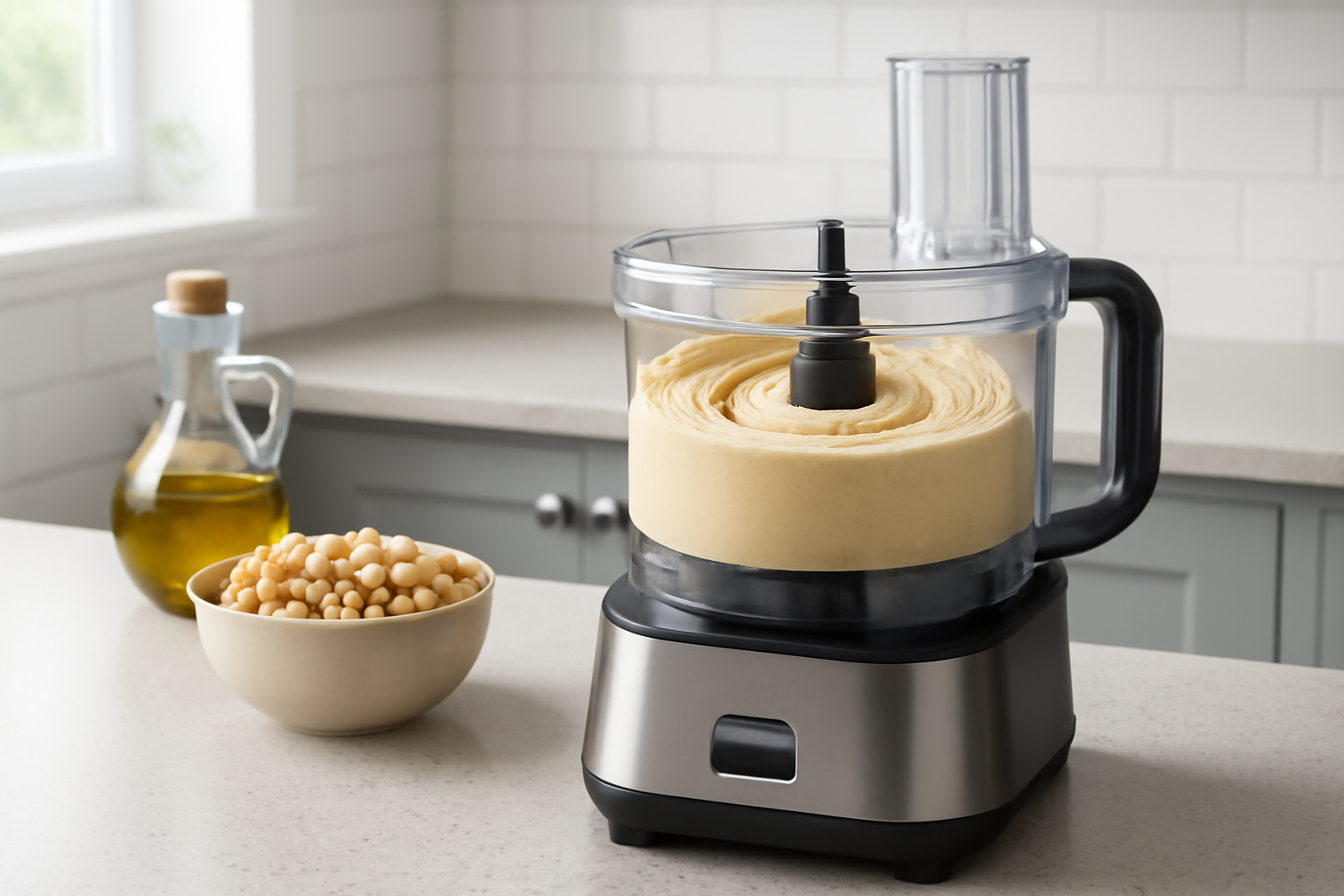
My classic hummus recipe uses two cans of chickpeas, tahini, fresh lemon juice, roasted garlic, and a generous pour of olive oil. I typically process at room temperature after warming the chickpeas slightly — around 100°F — because warm chickpeas blend into a silkier texture.
The result? Genuinely the smoothest hummus I have ever made at home. Not even close. I ran the processor on high for about three minutes, scraping down the sides once, and the texture was almost restaurant-quality. Velvety, airy, and completely lump-free.
I made this exact recipe four separate times during testing. Each time, the results were consistent. That consistency is huge for me when I’m hosting — I need to know what I’m going to get.
Baba Ganoush and Roasted Red Pepper Dip
Baba ganoush has always been trickier for me because of the texture. Too chunky and it feels rustic but sloppy. Too smooth and it loses its character. The KitchenAid handled this beautifully with the pulse function. Short bursts gave me that perfect slightly-coarse texture with no effort.
The roasted red pepper dip was another win. I roasted three large bell peppers at 450°F until charred, peeled them, and tossed them in with walnuts, olive oil, and smoked paprika. The processor emulsified everything in under two minutes. Silky, vibrant, and absolutely delicious.
Spinach Artichoke Dip and Queso
For spinach artichoke dip, I used the processor to roughly chop the spinach and artichoke hearts before combining them with the cream cheese base. The large feed tube was perfect for this — I could drop in large artichoke hearts without pre-cutting them into tiny pieces.
Queso is a different animal. I don’t use the processor to make the actual sauce, but I did use it to finely chop jalapeños, onions, and tomatoes for my queso fresco base. The slicing disc made quick work of the vegetables. What used to take me fifteen minutes of knife work took about ninety seconds.
I also tested guacamole. I know, food processor guacamole is controversial. I used the pulse function carefully and got a perfectly chunky result that didn’t turn into baby food. The key is short pulses — three or four quick bursts and you’re done.
What I Absolutely Loved
Let me get specific about the highlights, because there are genuinely several things that stood out.
- Motor power: The motor handles thick, dense dip bases without struggling or overheating, even during extended processing.
- Consistent texture: Every batch of hummus came out uniformly smooth — no pockets of underprocessed chickpeas.
- Dual feed tube: The large and small feed tube options made adding olive oil in a slow drizzle incredibly easy, which is key for properly emulsified hummus.
- Pulse control: The pulse setting is genuinely precise. Short, sharp pulses gave me full control over chunky versus smooth textures.
- Bowl design: The 13-cup bowl handled my party-sized batches easily. No splitting recipes into multiple rounds.
- Aesthetic: It looks beautiful. That matters when it’s sitting on your counter every day.
Specifically, the improvement to my hummus texture was almost embarrassing. I genuinely didn’t realize how much my old equipment was holding me back. Friends at my next party actually asked if I’d changed the recipe. I hadn’t — I’d just upgraded the tool.
The Downsides You Should Know About
Okay, let’s be real. No product is perfect, and I want to give you the honest version here.
Cleanup Is Involved
The biggest downside is cleanup. The dicing kit, specifically, has a lot of small components. After making a full dip spread for a party, you’re looking at washing the bowl, lid, blade, feed tube insert, and whatever disc or attachment you used. It adds up.
Most parts are listed as dishwasher safe on the top rack. However, I hand-wash mine to keep everything in better shape longer. That’s a personal choice, but it does mean more time at the sink after every session.
It’s Big
This is not a small appliance. The footprint on your counter is significant. If you have a tiny kitchen or very limited counter space, storing this might be a real challenge. I have a decent-sized kitchen and it takes up a noticeable chunk of real estate.
For smaller households or people making dips for two to four people, the 13-cup capacity might be more than you actually need. On the other hand, if you regularly cook for larger groups, that size is a genuine advantage.
My Moment of Doubt
I’ll be honest — the price gave me serious pause. This is not a budget purchase. When I first put it in my cart, I stared at the total for about three days before committing. Part of me wondered if I was just being swayed by brand loyalty and nice marketing photos.
After six weeks of consistent use, I genuinely believe the price is justified for the right person. That said, if you only make dips a handful of times a year, it might be harder to rationalize the investment.
Final Verdict: Who Should Buy This?
If you are serious about your KitchenAid food processor hummus game — and your dip game in general — the KitchenAid 13-Cup Food Processor – KFP1318 is a genuinely exceptional machine. It delivers consistent, smooth, restaurant-quality results that I honestly didn’t think were achievable at home.
This processor is perfect for:
- Home cooks who regularly make dips, spreads, or sauces for parties or meal prep
- Anyone who has struggled to get silky-smooth hummus or baba ganoush at home
- People who want one versatile machine that handles slicing, dicing, and blending
- Households that regularly cook for 8 or more people
You might want to skip it if you have a tiny kitchen, rarely entertain, or primarily make small single-serving dips. In that case, a smaller, less expensive processor might serve you better.
For me, personally? It was absolutely worth every penny. My hummus has never been better, my friends are still talking about that roasted red pepper dip, and I no longer dread party prep. That’s a win.
A Quick Note on the Alternative Option
If the KFP1318 I’ve been raving about is out of stock or unavailable in your preferred color, there’s a closely related alternative worth considering. The KitchenAid 13-Cup Food Processor – KFP1318 in an alternate configuration offers the same core performance and bowl capacity. It’s a solid runner-up that delivers nearly identical results for dips, hummus, and everything in between. Check availability and compare finishes to find the version that fits your kitchen best.