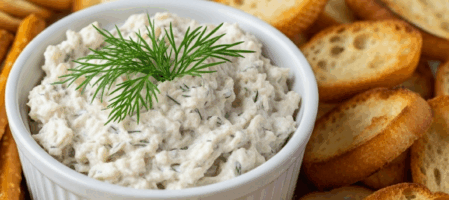

It was a Tuesday night, and I was staring at a bowl of hummus that tasted completely flat. My friend’s birthday party was the next evening. I had 24 hours to figure out what was wrong. The chickpeas were fresh. The tahini was good. Something was just… missing. That frustrating moment is exactly what pushed me down a rabbit hole of Salt Fat Acid Heat dip seasoning research — and honestly, it changed everything about how I cook.
I’ve been the “dip person” in my friend group for years. Every potluck, every game night, every holiday party — someone texts me. “Are you bringing the spinach artichoke?” “Please tell me you’re making that queso.” I love it. But even after years of practice, my dips occasionally fell short in ways I couldn’t explain. They were good. Not always great.
One cookbook fixed that. I’m not being dramatic. Salt, Fat, Acid, Heat: Mastering the Elements of Good Cooking by Samin Nosrat rewired my brain about how seasoning actually works. Now my dips are consistently great — and I finally understand why.
Why I Chose Salt, Fat, Acid, Heat
After that hummus disaster, I started asking around. My friend Della — who went to culinary school for two years before switching careers — had been recommending this book for ages. I’d always brushed it off. “I already know how to cook,” I told myself. Famous last words.
She pointed out something I hadn’t considered. Most home cooks learn recipes, not principles. Recipes tell you what to do. They don’t always explain why. As a result, when something tastes off, you have no framework for fixing it.
That landed. I went looking at other options, too. There are plenty of technique-focused cookbooks out there. However, most of them are either too chef-focused and intimidating, or too basic and surface-level. Salt, Fat, Acid, Heat: Mastering the Elements of Good Cooking felt different from every description I read. It promised to teach underlying principles, not just steps. For a dip obsessive who wanted to level up, that was exactly what I needed.
First Impressions: This Book Is Genuinely Beautiful
When the book arrived, I was not expecting to be wowed by the physical object itself. But here’s the thing — this book is stunning. It’s a substantial hardcover, well-built, with pages that feel thick and high quality. It doesn’t flop open awkwardly on your counter.
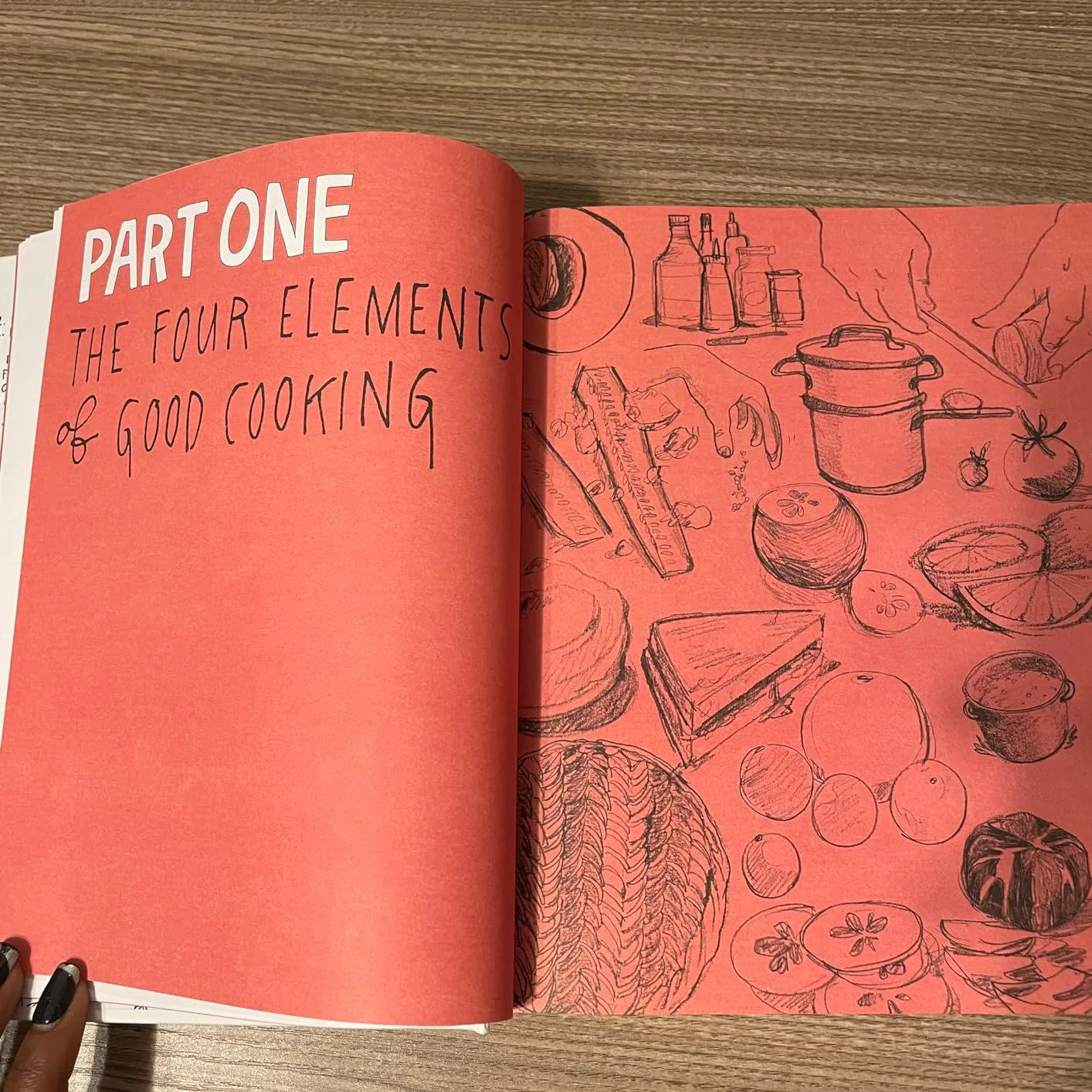
The illustrations by Wendy MacNaughton are watercolor-style and warm. They feel handmade and inviting, not clinical. Opening it for the first time genuinely felt like receiving a letter from someone who loves food as much as you do.
Specifically, the first section on salt alone felt like a revelation. Nosrat breaks down the difference between seasoning throughout cooking versus dumping salt at the end. That one concept — which I read in the first 20 minutes — immediately explained my flat hummus problem. I hadn’t salted my chickpeas while they cooked. I was trying to fix everything at the end. No wonder it tasted hollow.
The book is organized into four main sections: Salt, Fat, Acid, and Heat. Each section covers the science, the intuition, and the practical application. In my experience, the layout makes it incredibly easy to flip back to a specific concept mid-cook without losing your place.
Putting It to the Test: Six Months of Dips
I didn’t just read this book once and declare victory. Over about six months, I actively applied its principles to every dip I made. I treated it like a cooking companion, not a one-time read. Here’s what that actually looked like.
The Hummus Redemption
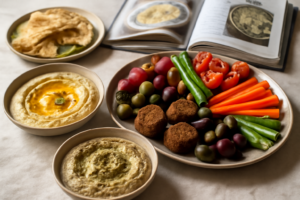
The hummus was my starting point. Following Nosrat’s salt principles, I seasoned my dried chickpeas generously in the soaking water overnight. Then I salted the cooking water, too. The difference was remarkable. The chickpeas themselves tasted seasoned, not just coated. My finished hummus was the best batch I’d ever made.
I brought it to a birthday party of about 30 people. Gone in 20 minutes. That almost never happens with hummus. People kept asking what brand of tahini I used. It wasn’t the tahini.
Queso and the Fat Principle
Next, I tackled my queso. I’d always made it with a base of American cheese and a little cream cheese. It was decent. However, the fat section of the book made me rethink my ratios and my fat sources.
Nosrat explains how fat carries flavor and coats the palate. Understanding that helped me see why my queso sometimes tasted sharp and one-dimensional. I started adding a splash of evaporated milk and a small amount of butter to build a rounder fat base. The result was noticeably creamier and more cohesive. Guests at a Super Bowl watch party — about 20 people — scraped the pan completely clean.
Baba Ganoush and the Acid Awakening
Baba ganoush was where the acid chapter genuinely blew my mind. My old recipe used a squeeze of lemon juice at the very end, almost as an afterthought. Nosrat’s acid section explains that acid brightens flavors and provides contrast — it’s not just about sourness.
I started adding lemon juice in layers. A small amount after charring the eggplant at around 450°F. More after blending. A final squeeze right before serving. Each addition served a different purpose. The finished baba ganoush tasted vibrant and complex in a way my old version never did.
For example, at a dinner party of eight people, two guests asked for the recipe. One of them specifically said it tasted “restaurant quality.” That feedback meant a lot, because baba ganoush is one of those dips that can easily taste muddy and flat.
Spinach Artichoke and Guacamole, Too
My spinach artichoke dip benefited most from the heat principles. I learned to think about how heat transforms moisture — which is critical when you’re dealing with spinach. Thoroughly squeezing and pre-cooking the spinach before adding it to my cream cheese base made the final dip noticeably less watery. No more sad, soupy spinach artichoke sitting in a puddle.
Guacamole, on the other hand, was already one of my stronger dips. That said, even here the book added nuance. Understanding salt’s role in drawing out moisture helped me salt my diced onions briefly before adding them, softening their sharpness without losing their texture. Small tweak, noticeable improvement.
The Book That Finally Taught Me Why My Dips Tasted Flat
That Tuesday night hummus disaster could’ve been solved hours earlier if I’d understood the framework in this book. Once I grasped how salt, fat, acid, and heat work together—not separately—every dip I made suddenly had depth and personality.
What works
- The explanations click immediately—I finally understood why a pinch of acid (lemon juice, vinegar) makes hummus taste alive instead of one-note, and how to balance it with fat and salt.
- It’s written for home cooks, not chefs, so there’s no ego or jargon getting in the way of actually learning something you can use tonight.
- I’ve dog-eared so many pages I keep going back to it before every party—it’s become my dip troubleshooting manual, not something that sits on a shelf.
What doesn’t
- It’s not a dip recipe book—you won’t find a ready-made tzatziki formula, so you have to do the creative work yourself (which is actually the point, but worth knowing).
- Some of the recipes inside are more advanced cooking than dip-focused, so not every page feels immediately relevant to a party spread.
I almost served that flat hummus anyway because I was running out of time and confidence—until I remembered reading about acid’s role and squeezed in more lemon. Salt, Fat, Acid, Heat: Mastering the Elements of Good Cooking saved that birthday party and every dip I’ve made since.
About This Article

Written by Rachel Thompson. Rachel Thompson is a home cook who has spent over 10 years making an unreasonable number of dips, appetizers, and party spreads — no culinary training, just a decade of trial and error and a reputation among friends for always being asked to "bring a dip." She focuses on approachable recipes that combine bold flavors with simple techniques, making entertaining at home accessible to everyone. More about this site.
Scope and limits. Rachel is a home cook with no culinary training. Follow current food safety guidance for holding temperatures and time limits whenever you are serving people other than yourself.
Verify this against a primary source
Specifics change, and your situation may differ from the one described here. These are the authorities worth checking directly:
- FoodSafety.gov — cold holding, hot holding and the two-hour rule
- USDA FoodData Central — ingredient composition and nutrition data
- USDA Food Safety and Inspection Service — safe minimum temperatures and leftovers