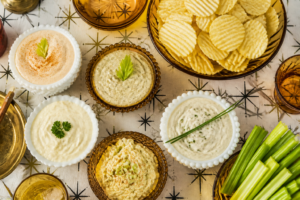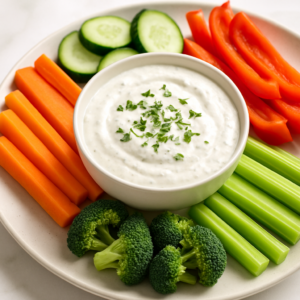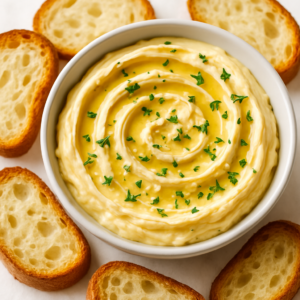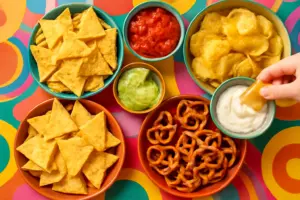

There is a moment at every party when someone lifts the lid off the spinach dip, looks at it, and asks whether it has been out since six. Nobody knows. The dip has been out long enough that the question is fair, and nobody wants to be the one who decides.
So here is the answer without the hedging. Most dips can sit out at room temperature for up to two hours. If the room is hotter than 90°F, which happens at outdoor summer parties, cut that to one hour. After that, throw it out, even if it still looks and smells perfectly fine. Bacteria do not announce themselves.
I have made dips for parties for a long time, and I do not have culinary training or a food-safety background. What I have is a decade of watching bowls go from full to empty and learning the hard way where the timing breaks down. The rule below is the one the USDA publishes, and I follow it at my own table.
Why Two Hours Is the Number
Perishable food should not sit at room temperature for more than two hours. The reason is the danger zone, which runs from 40°F to 140°F. Inside that range, bacteria multiply fastest, and a dip that starts cold or hot drifts into it the moment it sits on a counter with nothing keeping it in range.
The rule is simple, but the way it applies changes with the food. A hot queso and a cold bowl of chilled ranch need different handling, and treating them the same is where most hosts go wrong. Once you understand the two sides of the danger zone, the rest of this post is just details.
The Dip-by-Dip Breakdown
Here is how the common party dips stack up. Use the table as a quick reference, and read the notes below it for the dips that need extra care.
| Dip type | How to hold it | Maximum time out | Leftovers worth saving? |
|---|---|---|---|
| Hot queso or spinach-artichoke | Keep at 140°F or above, in a slow cooker on Warm after heating to 165°F | 2 hours (1 hour above 90°F) | Yes, 3 to 4 days refrigerated |
| Cold ranch, sour cream, or cream-cheese dips | Keep at 40°F or below, nested in a bowl of ice | 2 hours (1 hour above 90°F) | Yes, 3 to 4 days refrigerated |
| Hummus, bean dip, or fresh salsa | Refill in small batches from the fridge | 2 hours (1 hour above 90°F) | Yes, 3 to 4 days refrigerated |
| Seafood dip (crab, shrimp, smoked fish) | Keep cold at 40°F or below, serve small portions | 2 hours or less; strictest handling | Only if it stayed within the rule |
| Olive tapenade or jarred salsa (opened) | Serve at room temperature in small amounts | Not all evening once opened | Yes, refrigerate promptly |
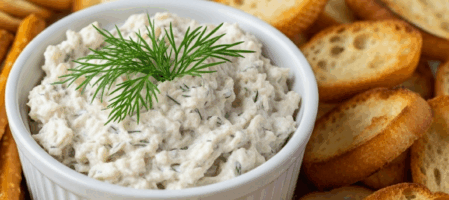
A few things in that table deserve a closer look. Seafood dips are the least forgiving, so keep them cold, serve them in small portions, and do not leave them out for the whole party. Guacamole follows the same two-hour rule, and browning on top is a quality problem, not a safety one, so you can scrape off the top layer and keep going while the rest stays in range.
Hosting Tricks That Make the Rule Easy
The rule is easy to follow if you set up the table so you never have to think about it. A few habits do most of the work.
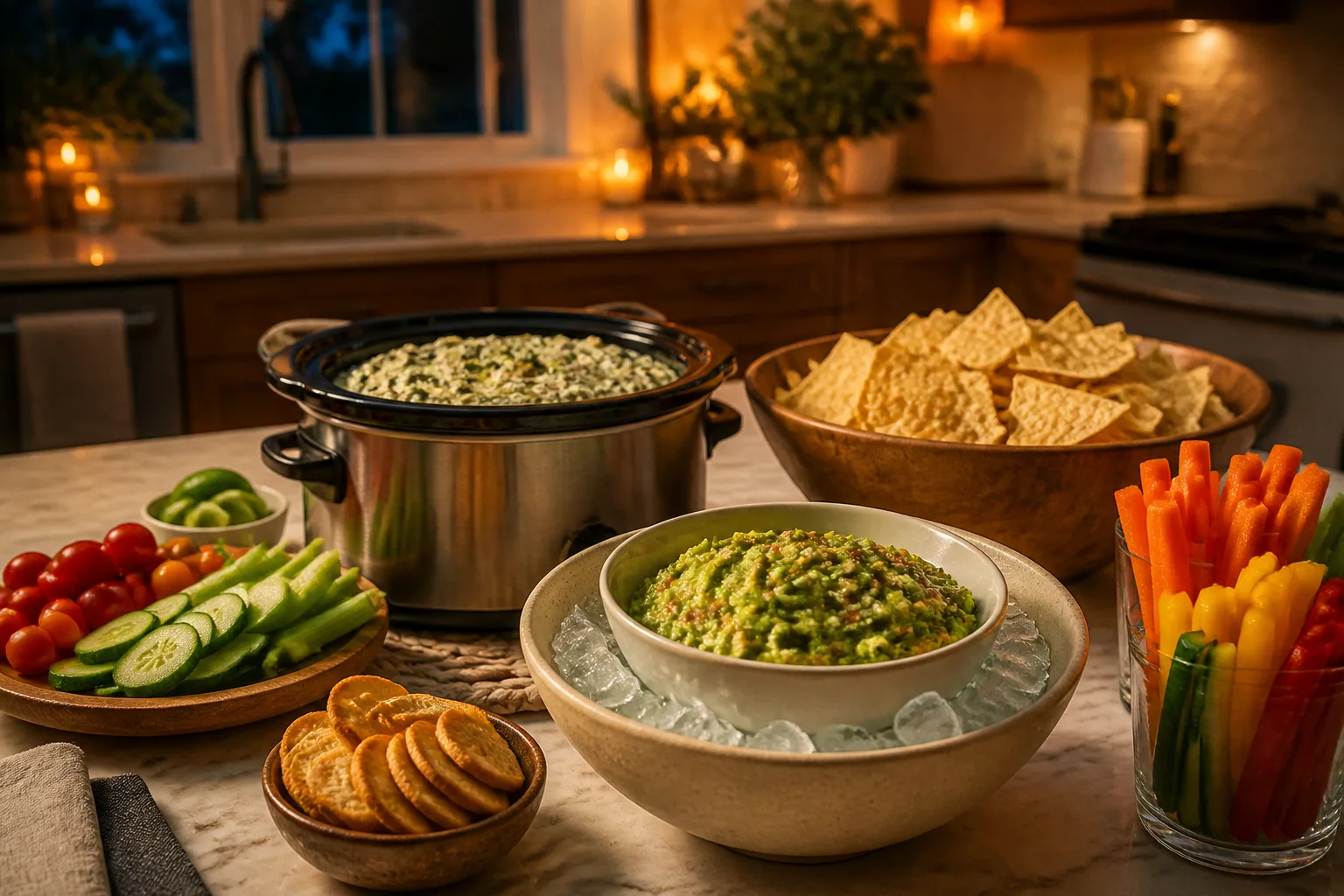
- Keep cold dips in a bowl nested inside a larger bowl of ice. The ice holds the dip at 40°F or below for the whole time it is out.
- Put out two or three small bowls instead of one big one. Swap in a fresh bowl from the refrigerator when the first one is half gone, rather than topping up what is already sitting there.
- Give every dip its own small spoon, and give guests small plates. Double-dipping transfers mouth bacteria back into the bowl, and small spoons solve it without anyone having to say anything.
- Set a timer when the dip first goes on the table. Two hours is easy to lose track of mid-conversation.
Hot Dips and the Slow Cooker Trap
Hot dips are where I see the most mistakes. A slow cooker is a fine tool, but its Warm setting is for holding food, not heating it. If you dump a cold dip into the slow cooker and turn it to Warm, the dip may never reach a safe temperature, because the setting is not built to bring it up from the refrigerator.
Heat the dip first on the stove or in the oven until it reaches 165°F, then move it to the slow cooker to hold. Check the temperature with an instant-read thermometer rather than trusting the dial, because dials are optimistic. The dip should stay at 140°F or above the whole time it is out.
Things That Do Not Fix a Dip
I get asked whether reheating can rescue a dip that sat out too long. It cannot. Some bacteria, Staphylococcus aureus being the classic example, leave toxins behind that survive heat. Once a dip has been out past the rule, the safe move is to throw it away, however good it looks.
The same goes for topping up. Adding fresh dip on top of dip that has been sitting out does not reset the clock. The old dip is still the same old dip, and the whole bowl is now on the same timer as the oldest part of it.
Mayonnaise gets blamed for a lot of this, and it is not the villain people make it out to be. Commercial mayonnaise is acidic. But once it is mixed into a dip with other ingredients, the whole thing is still perishable, and the two-hour rule applies.
Saving Leftovers Without Guessing
Leftovers are the easy part, as long as they stayed within the rule. Refrigerate them promptly in shallow containers, and use them within three to four days. If a dip went past the two-hour mark on the table, do not save it. Leftovers only keep if they were handled correctly from the start, and the fridge cannot undo a long afternoon on the counter.
When I am unsure, I ask whether I would serve it to my own family if they had not seen it sitting out. If the answer is no, it goes in the trash, and I try to remember for next time.
Closing Thoughts on Party Dips
The two-hour rule is not complicated. It just needs a little setup and a timer. Nest the cold bowls in ice, keep hot dips at 140°F or above, swap in fresh bowls instead of topping up, and throw out what has been out too long. If you are ever serving a dip that is hard to keep cold or hot, such as a large seafood spread for a crowd, it is worth asking a qualified food-safety professional or your local extension office for guidance on your specific setup.
Frequently Asked Questions
Can I leave dip out overnight if it has mayonnaise in it?
No. Commercial mayonnaise is acidic, but once it is mixed into a dip with other ingredients, the whole dip is still perishable. The two-hour rule applies, and an overnight dip should go in the trash.
Does a dip stay safe if it looks and smells fine?
Not necessarily. The bacteria that cause trouble do not always change how food looks or smells. If a dip has been out longer than the rule allows, throw it out even if it seems perfectly fine.
How do I keep guacamole from turning brown at a party?
Press plastic wrap directly onto the surface to limit air contact, and keep the bowl nested in ice if the room is warm. Browning is a quality issue rather than a safety one, but guacamole still follows the same two-hour rule.
Can I put cold dip in the slow cooker to keep it chilled?
No. A slow cooker’s Warm setting is for holding hot food, not for keeping cold food cold. Keep cold dips nested in ice, and use the slow cooker only for dips you have already heated to 165°F.
About This Article

Written by Rachel Thompson. Rachel Thompson is a home cook who has spent over 10 years making an unreasonable number of dips, appetizers, and party spreads — no culinary training, just a decade of trial and error and a reputation among friends for always being asked to "bring a dip." She focuses on approachable recipes that combine bold flavors with simple techniques, making entertaining at home accessible to everyone. More about this site.
Scope and limits. Rachel is a home cook with no culinary training. Follow current food safety guidance for holding temperatures and time limits whenever you are serving people other than yourself.
Verify this against a primary source
Specifics change, and your situation may differ from the one described here. These are the authorities worth checking directly:
- FoodSafety.gov — cold holding, hot holding and the two-hour rule
- USDA FoodData Central — ingredient composition and nutrition data
- USDA Food Safety and Inspection Service — safe minimum temperatures and leftovers