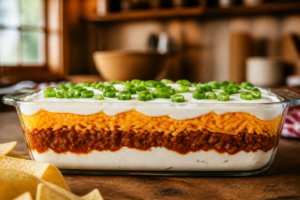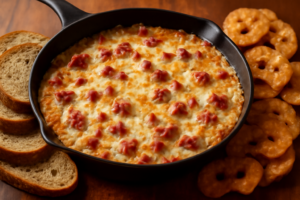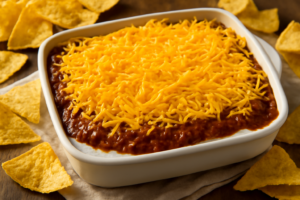

You may have heard whispers of a dish with a peculiar name. It often appears at potlucks, family reunions, and tailgates across the American Midwest. This dish is affectionately known as “Funeral Dip.” Despite its somber name, this creamy, savory dip represents comfort and community. It is a simple gesture of support, easy to whip up and share when words are not enough.
Why It’s Called Funeral Dip
The name might sound dark, but there’s genuine warmth behind it. In Midwestern culture, when someone passes away, neighbors and friends bring dishes to the grieving family’s home. Funeral Dip has become a staple at these gatherings because it requires minimal effort, travels well in a slow cooker, and feels hearty enough to feed a crowd. It’s the kind of dish that says, “I’m thinking of you,” without requiring fancy ingredients or complicated techniques. The name simply reflects where it’s most commonly served—not anything grim about the dip itself.
The Recipe: Midwestern Funeral Dip
Ingredients
- 16 oz cream cheese, softened
- 1 cup sour cream
- 2 cups cooked shredded chicken
- 8 slices bacon, cooked and crumbled
- 2 cups shredded sharp cheddar, divided
- 1 teaspoon garlic powder
- 1 teaspoon onion powder
- 1 tablespoon ranch seasoning
- ¼ teaspoon black pepper
Recipe Details
- Serves: 10–12
- Time: 15 minutes, plus 25 minutes baking
- Oven: 350°F
Instructions
- Heat the oven to 350°F.
- Beat the softened cream cheese and sour cream together until completely smooth — no lumps, or they will not bake out.
- Stir in the garlic powder, onion powder, ranch seasoning, and pepper.
- Fold in the chicken, most of the bacon, and 1½ cups of the cheddar.
- Spread into a 9-inch baking dish and top with the remaining cheddar and bacon.
- Bake 25 minutes, until bubbling at the edges and lightly golden on top.
- Rest 5 minutes before serving. It thickens as it cools.
The Cream Cheese That Actually Holds This Dip Together
Funeral Dip lives or dies by its base, and I learned the hard way that not all cream cheese performs the same way. Full-fat Philadelphia blocks give you that smooth, stable foundation that keeps everything creamy even after sitting out at a potluck or memorial service.
What works
- Stays creamy and doesn’t separate or get grainy after the chicken and bacon are folded in
- Blends into the other ingredients smoothly without needing to add extra liquid or cream to loosen it up
- Holds its texture at room temperature for hours, which means your dip won’t look broken or curdled by the time guests circle back for seconds
What doesn’t
- Softer or whipped varieties won’t give you the same structural integrity—your dip will feel loose and watery
- Store brands sometimes have stabilizers or fillers that affect the final texture, and I’ve found the price difference is worth avoiding that gamble
I once grabbed a tub of generic cream cheese at the last minute for a funeral potluck, and the dip came out thin and soupy—I had to dump it and start over with Philadelphia blocks. Don’t make my mistake: get the real thing with Amazon Grocery that you can count on.
The Classic Recipe
Funeral Dip typically combines cooked shredded chicken, crumbled bacon, cheese (usually cheddar or a blend), and that crucial cream cheese base. Most recipes also include a touch of seasoning—garlic powder, onion powder, or ranch seasoning—to build depth without overpowering the comfort-food appeal. Some versions add a splash of hot sauce or jalapeños for a little kick, though the traditional version stays mild and approachable.
The beauty of this dip is that it’s forgiving. You’re not fussing with precise measurements or worrying about delicate emulsions. You soften the cream cheese, mix in your cooked proteins and cheese, season to taste, and you’re done. Most home cooks warm it gently on the stovetop or transfer it to a slow cooker for serving, which keeps it at the perfect consistency throughout your gathering.
Making It Your Own
While the classic version is timeless, I’ve seen wonderful variations. Some families add crispy fried onions on top for texture, others mix in cream of chicken soup for extra creaminess, and a few adventurous souls have added everything from green chilies to fresh herbs. The key is respecting the core formula—cream cheese, chicken, bacon—and building from there without getting too experimental. You want it recognizable enough that regular Funeral Dip lovers won’t feel lost, but personalized enough to reflect your kitchen.
Serving and Storage Tips
Funeral Dip is best served warm, so a slow cooker on low heat is your friend at large gatherings. If you’re making it ahead of time, prepare it through the mixing stage, refrigerate it covered, and then warm it gently before serving. It will keep in the refrigerator for about three to four days, making it perfect for preparing a day or two before you need it.
Transport it in a disposable aluminum container if you’re bringing it to a gathering—it’s practical and one less dish the host has to wash during an already emotional time. That practicality is part of what makes Funeral Dip such a cherished tradition in the Midwest.
The Midwestern Funeral Lunch: What Actually Gets Served
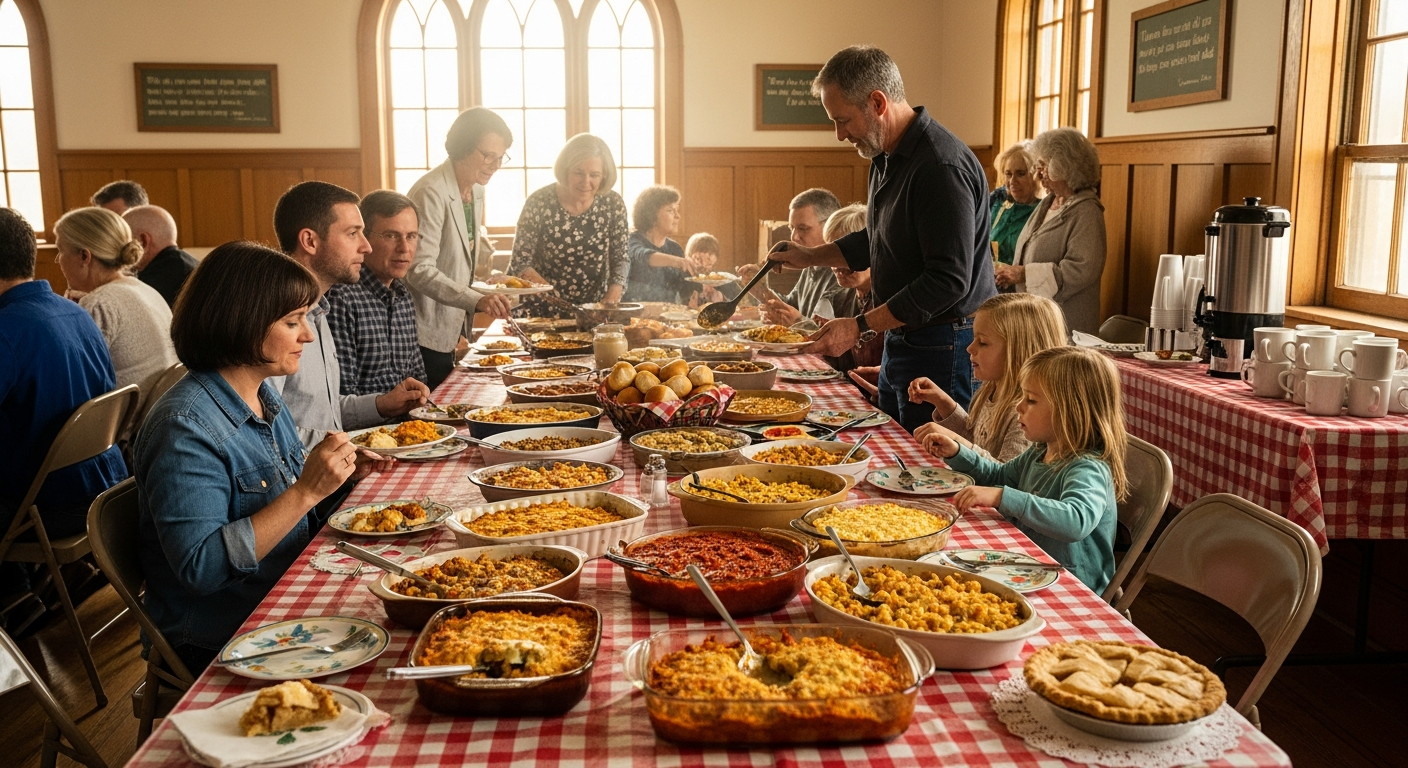
If you’ve grown up in the Midwest or attended a funeral here, you know the ritual. After the service at the church, everyone moves downstairs to the basement fellowship hall or community room. Long tables are already set. There’s a spread of food that seems to appear by magic, and it follows a pattern so consistent you could almost predict every dish before you walk in.
A Midwestern funeral lunch typically includes ham or turkey sandwiches on soft, squishy buns. There are funeral potatoes—that beloved cheesy hash brown casserole that appears at potlucks and holidays too, but somehow tastes even more meaningful at a funeral. Scalloped corn. A jello salad, often with fruit suspended inside or cottage cheese folded through. Bars. Not cookies—bars. These are the dense, fudgy brownies or lemon bars or chocolate chip bars that get cut into squares and stacked on a plate. Strong percolator coffee in industrial-sized pots. And somewhere on a side table, a dip and chips setup, where Funeral Dip often takes center stage.
This meal is organized and executed by the church women’s circle, the funeral committee, or a dedicated group of women from the congregation who have done this dozens of times. They arrive early. They know what works. They’ve cooked most of it the night before or that morning. The food is not presented as a gift to be admired—it is labor offered to a grieving family so they do not have to think about feeding people or hosting. The family has just buried someone. The last thing they need is to worry about whether there’s enough food or whether the kitchen is clean.
This tradition runs deep across Minnesota, Iowa, Wisconsin, the Dakotas, and Nebraska. It is one of the ways the community says: we are here, we see your loss, and we will feed you and everyone who comes to mourn with you.
Why Dips Show Up at Funeral Luncheons
You might wonder why Funeral Dip has become such a standard on that side table. There are practical reasons that explain everything.
First, a dip travels well. You make it in a disposable aluminum container or transfer it to a slow cooker, and it survives the car ride. It doesn’t need to stay hot—in fact, room temperature is fine. It won’t dry out or get worse the longer it sits. Unlike a casserole that can go from perfect to overcooked in twenty minutes, a dip is forgiving.
Second, it feeds an unknown number of people. When someone dies, attendance is unpredictable. You might get thirty people in the basement or eighty. A dip with a bag of chips can stretch to feed whoever shows up. There’s no counting plates or portioning. You just keep it filled, and it works.
Third, and maybe most important: it can be made the night before. Someone finds out about the death on a Tuesday afternoon. They get a call, maybe they cry for ten minutes, and then they think: I need to bring something tomorrow. Funeral Dip doesn’t require fresh ingredients that are hard to find at the last minute. You have cream cheese in your fridge. You have canned chicken or cooked rotisserie chicken from the grocery store. You have bacon. You have cheddar cheese. You can make this dip at eight o’clock that night and feel like you’ve done something real and nourishing for a family in shock.
The logistics of the “bring a dish” tradition matter here. Funeral Dip solves the problem of how to show up meaningfully on short notice.
Regional Differences Across the Midwest
While the Midwestern funeral lunch follows a general pattern, regional identity shows through in what gets served and what people expect to see on that table. What’s standard in Minnesota might not be standard in Ohio. What’s a given in Wisconsin looks different in Nebraska.
| Region | Signature Funeral Lunch Dish | Notes |
|---|---|---|
| Minnesota and the Dakotas | Hotdish and bars | Lutheran church basements. Hotdish (casserole) is often ground beef and cream of mushroom soup. Bars are essential—walnut brownies, date bars, lemon bars. |
| Iowa | Funeral potatoes | The cheesy hash brown casserole is almost always present. Sometimes called “scalloped potatoes” in older recipes. This is the signature comfort starch. |
| Wisconsin | Cheese and sausage trays, booyah | Wisconsin brings its dairy tradition. Cheese and crackers appear prominently. In northern Wisconsin, booyah—a rich stew of meat and vegetables simmered for hours—shows up at larger gatherings. |
| Ohio and Indiana | Chicken and noodles over mashed potatoes | A beloved regional dish that combines creamed chicken with egg noodles, served over a bed of mashed potatoes. Comfort food at its most direct. |
| Nebraska and Kansas | Runzas and ham buns | Hand-held meat pies or sandwiches are common. These are foods that don’t require a fork and can be eaten standing while paying respects. |
These regional dishes reflect what people grow up eating, what they learned from their mothers, and what feels like home when they’re grieving. Funeral Dip crosses all these regional lines, which is partly why it has become so universal. It works everywhere. It complements the hotdish in Minnesota. It sits naturally next to funeral potatoes in Iowa. It doesn’t compete with any of these traditions—it simply adds another way to show up.
The Unwritten Rules
There are things about the Midwestern funeral that nobody has to teach you if you grew up here, but visitors and newcomers benefit from knowing them. They’re about respect and practicality in equal measure.
Bring your dish in a container you do not need back. This is crucial. The family is in shock and grief. The last thing they should do is remember to wash your Tupperware and get it back to you. Use a disposable aluminum pan. Use a paper plate wrapped in foil. Use something from the dollar store that you can tell them to throw away. If you do bring something you care about, label it with masking tape so there’s zero ambiguity that it’s not yours to keep.
Food arrives before the family gets home from the cemetery. The timing matters. Someone needs to be at the church or funeral home early, setting up the tables and putting food out. The family should come downstairs from the service and see everything already in place. You should never have a grieving person arrive at their own funeral luncheon and find empty tables.
Someone always makes too much, and that is correct. If you’re on the funeral committee, you plan for it. You’d rather have food left over than run out. The abundance itself is a kind of comfort. It says: we believed you were worth this much care.
The leftovers go home with the family. After people have eaten and started to leave, you don’t box things up for the church to distribute or send to the food bank. You wrap it up and send it home with the wife or husband or adult children of the person who died. They shouldn’t have to cook for the next two days. They shouldn’t have to think about meals. You’ve already done that thinking for them.
These rules exist because a funeral is not a party or a celebration where tidiness and efficiency are the goals. It’s a moment when a community holds someone up. The food is part of that holding. Every practical detail—the disposable containers, the early arrival, the generous portions, the leftovers sent home—these are all ways of saying: you do not have to manage anything right now. We have you.
About This Article

Written by Rachel Thompson. Rachel Thompson is a home cook who has spent over 10 years making an unreasonable number of dips, appetizers, and party spreads — no culinary training, just a decade of trial and error and a reputation among friends for always being asked to "bring a dip." She focuses on approachable recipes that combine bold flavors with simple techniques, making entertaining at home accessible to everyone. More about this site.
Scope and limits. Rachel is a home cook with no culinary training. Follow current food safety guidance for holding temperatures and time limits whenever you are serving people other than yourself.
Verify this against a primary source
Specifics change, and your situation may differ from the one described here. These are the authorities worth checking directly:
- FoodSafety.gov — cold holding, hot holding and the two-hour rule
- USDA FoodData Central — ingredient composition and nutrition data
- USDA Food Safety and Inspection Service — safe minimum temperatures and leftovers