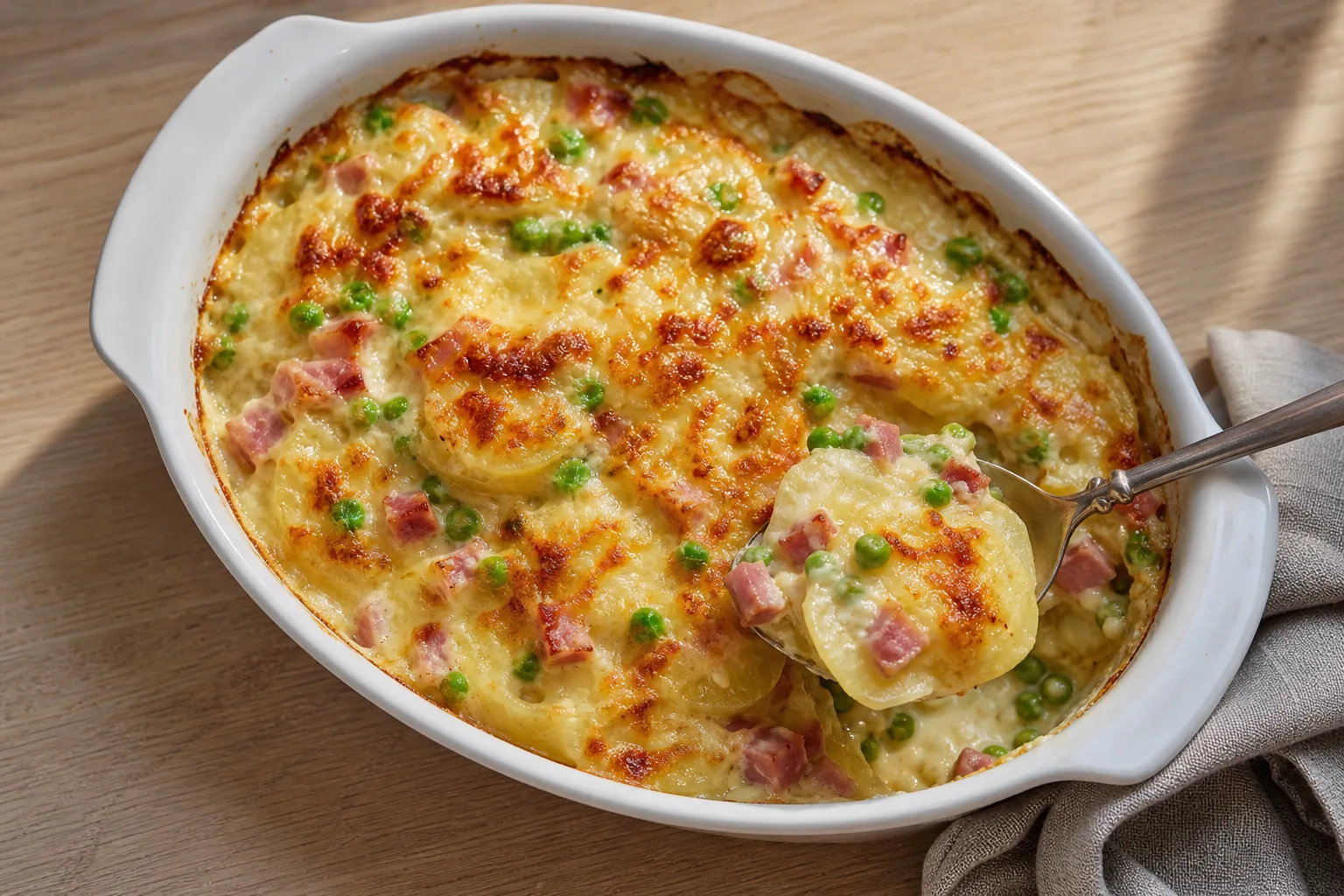

The first time I made a ham and potato gratin, I seasoned it the way I season everything else: a good pinch of salt in the sauce, a little more on the potatoes, a handful of sharp cheddar on top. It came out of the oven looking perfect and tasted like a salt lick. Ham is cured in salt. Cheese is made with salt. Potatoes are bland, but they act like a sponge for whatever liquid you hand them, and that liquid was already carrying the salt from both of its neighbors. I ate a few polite bites and then drank a great deal of water.
That is the whole story of this dish, and it is why I wrote it up. Everything else about this gratin is easy. It is built from a bag of frozen diced potatoes, a bag of frozen peas, some ham and a cold milk-and-cream slurry, and there is no peeling, no slicing, no saucepan and no boiling. You pour, you scatter, you cover it with foil and the oven does the work.
The part that takes any thought is the salt. So this post is organized around it: what to taste before you start, what to buy, and why I do not add a single grain of salt until the foil comes off. Get that right and you have a creamy, savory gratin that tastes like three good ingredients instead of one loud one.
Why This Works
A frozen diced potato is already blanched, so it cooks through reliably under foil and, unlike a raw slice, it will not darken. That is why the whole dish can go together straight from the freezer bag with no prep work, and why every bit of your attention can go to seasoning instead.
Ingredients
This fills a 9×13-inch baking dish about two inches deep. Use unsalted butter and unsalted nothing else is needed; the ham and cheese bring plenty of salt on their own.
For the Gratin
- 1 bag (32 ounces, 2 pounds) frozen Southern-style diced hash brown potatoes, straight from the freezer
- 1 1/2 cups (about 8 ounces) cooked ham, cut into 1/2-inch cubes
- 1 1/2 cups (about 8 ounces) frozen peas, kept frozen and set aside until later
- 1/3 cup all-purpose flour
- 1 1/2 cups whole milk, cold
- 3/4 cup heavy cream, cold
- 2 tablespoons unsalted butter, cut into small pieces
- 1/2 teaspoon black pepper
- 1/4 teaspoon garlic powder
- 1/4 teaspoon ground mustard
For the Cheese
- 2 cups (about 8 ounces) shredded Gruyère or sharp white cheddar, divided
To Finish
- Kosher salt, only to taste after baking
- 1 tablespoon chopped fresh chives or parsley, optional
Easy Swap
If your ham is very salty, replace half the cheese with a mild one like Monterey Jack or fontina and use a plain, unsmoked Swiss for the top. You keep the melt and lose some of the sodium.
How to Make It
Prep: 15 minutes | Bake: 80 minutes | Rest or cool: 15 minutes | Serves: 6 to 8
- Taste the ham before you do anything else. Pop a cube in your mouth and decide how salty it is. A spiral-cut holiday ham or country ham is usually very salty; deli ends and trimmings vary a lot; a mild boiled or baked ham is gentler. If it tastes salty on its own, plan to use the lesser amount of cheese and add no salt at the end without tasting first.
- Heat the oven to 375°F with a rack in the middle. Butter a 9×13-inch baking dish lightly with a little of the unsalted butter.
- Pour the frozen diced potatoes straight from the bag into the dish and spread them in an even layer. Do not thaw them. Scatter the ham cubes over the potatoes and toss everything together with your hands so the ham is distributed instead of sitting in one layer.
- In a large measuring cup or bowl, whisk the flour into the cold milk until there is not a single lump, then whisk in the cream, pepper, garlic powder and ground mustard. Do not add salt. Pour this slurry evenly over the potatoes and ham, then dot the top with the small pieces of butter and sprinkle on 1 cup of the cheese, stirring it gently into the top layer.
- Cover the dish tightly with foil, crimping it around the edges so steam stays in. Bake covered for 50 minutes. The covered phase cooks the potatoes through and thickens the slurry. Resist peeking in the first 40 minutes.
- Remove the foil carefully, away from your face. Stir the gratin gently so the thickened sauce is evenly distributed. Scatter the frozen peas over the top, still frozen, and press them lightly into the sauce. Cover the dish with the remaining 1 cup of cheese.
- Bake uncovered for 20 to 25 minutes, until the sauce is bubbling at the edges, the cheese is golden in spots and a fork slides easily through the potatoes. The peas will finish cooking in this short window and stay bright green.
- Let the gratin rest on a rack for 15 minutes. This is not optional; the sauce sets as it cools and a gratin cut too early runs across the plate. While it rests, taste a spoonful from the center, including some ham and cheese. Only now add a small pinch of kosher salt if it needs it, plus the chives. Most of the time it does not need much.
Don’t Do This
Do not add salt to the slurry or to the potatoes before baking. Salt is easy to add after and impossible to remove. A gratin that tastes slightly under-seasoned when it comes out of the oven is a gratin you can fix; one that is already over-salted is not.
Can You Make It the Night Before?
Yes — Assemble Up to 24 Hours Ahead
You can assemble this gratin the night before and bake it the next day. Hold back about a quarter cup of the milk, keep the peas and top cheese separate and add 10 to 15 minutes to the covered bake.
Assemble through the foil cover, but pour in only about 1 1/4 cups of milk instead of 1 1/2. The frozen potatoes will thaw in the refrigerator overnight and release water, so the dish loosens on its own. Keep the peas in the freezer and the top cheese in the fridge until baking time.
The next day, take the dish out of the refrigerator and let it sit on the counter for 30 to 45 minutes. Putting a cold glass or ceramic dish straight into a hot oven risks cracking it. Give the contents a stir to redistribute the settled flour, re-cover and bake 60 to 65 minutes, then continue with the peas, cheese and uncovered bake as written.
Make-ahead buys you attention on the day, not minutes. The overnight version is slightly looser and slower than a same-day one, but it holds up well. Frozen potatoes do not darken in the fridge the way raw slices do, which is the real advantage here.
Why Salt Is the Whole Game Here
Most gratin recipes tell you to season each layer as you build. That works when the main ingredients are fresh potato slices, cream and a mild cheese, because nothing in the dish is already salted. In this version, you start with three ingredients that are each doing a lot of salty work. The ham is cured. The cheese is aged. And frozen diced potatoes, while unseasoned in the bag, absorb liquid the way a dry sponge does.
The problem is that salt does not show up until the dish is finished. During assembly, the raw slurry tastes like nothing. After 75 minutes in the oven, the ham has seeped its cure into the sauce, the cheese has melted into it and the potatoes have drunk it all. If you salted at the start, the salt has been concentrating the whole time.
That is why I treat salt as a finishing step in this dish. Season with pepper, garlic powder and mustard for flavor, and let the ham and cheese carry the salt. Taste at the end, with a real forkful of the finished gratin, and decide then.
Use Unsalted Butter
Salted butter varies by brand, from about 1/4 teaspoon of salt per tablespoon to nearly double that. Unsalted gives you a known starting point so the only salt in the dish comes from ingredients you tasted.
Choosing and Tasting Your Ham
Cure levels vary wildly between hams, which is why I taste first. A spiral-cut holiday ham, especially one with a sweet glaze, can be quite salty, and the cooked ham trimmings from a country ham are nearly a different ingredient altogether. Deli ends and packaged diced ham sit in the middle, though a cheap cube can be saltier than a thick-cut slice.
If your ham tastes very salty on its own, shake off any glaze, rinse the cubes briefly and pat them dry before adding them to the dish. If it tastes mild, you have more room and might add a pinch of salt at the end, or a little more cheese on top.
I am not telling you to buy a particular ham or to avoid any one kind. Use what you have. The point is that the ham is the variable here, and tasting it first is the only way to know how the rest of the dish needs to behave. If you want a full guide to cooking with leftover holiday ham, the site already has one; this post is only about getting the seasoning right.
Why the Peas Go In Late
Frozen peas are the lowest-water vegetable I use in this series of gratins. They are small, already blanched before freezing and need almost no cooking, which means they are the one vegetable that should not go in at the start.
If they bake for the full 75 minutes, they turn the dull, army-green color of an overcooked canned pea, and they shed a little starch into the sauce. Added after the foil comes off, still frozen, they thaw and warm through in the last 20 to 25 minutes and stay bright green and sweet. They also add a little pop against the soft potato and the salty ham, which is exactly the contrast the dish needs.
Press them gently into the sauce rather than burying them, so a few stay on top where the heat can warm them without browning.
Rachel’s Tip
After the gratin rests, taste a spoonful that includes ham, potato and cheese together, not just sauce. That bite tells you what the whole dish tastes like, and it is the only one that decides whether you add salt.
Questions People Ask
Why is my ham and potato gratin too salty?
Ham and cheese are both salty, and the starch absorbs that salt as it bakes. The fix is prevention: use unsalted butter, add no salt to the slurry and wait until after baking to taste and season. If it is already too salty, serve it over plain steamed greens or with unsalted bread and a splash of cream to cut it.
Can I use frozen sliced potatoes instead of diced ones?
Not reliably. Frozen sliced potatoes are not a common US grocery item. Use the 32-ounce bag of Southern-style diced hash browns, which is available from Ore-Ida and most store brands.
Do I have to thaw the frozen potatoes first?
No. They go in straight from the bag. A frozen diced potato is already blanched, so it cooks through under foil and will not darken. If you want a tighter sauce, you can thaw and pat them dry, but the recipe is written for frozen.
Why does the sauce look thin when I take the foil off?
Frozen potatoes release water as they thaw, and the slurry has not fully set yet. Stir gently after removing the foil and bake uncovered. The sauce reduces and thickens in the last 20 to 25 minutes, and it sets completely during the 15-minute rest.
Can I freeze the baked gratin?
Leftovers freeze fine for a month or two, though the sauce can separate slightly when thawed. Reheat covered in a 325°F oven until hot throughout, stirring once. A splash of milk helps loosen it.
About This Article

Written by Rachel Thompson. Rachel Thompson is a home cook who has spent over 10 years making an unreasonable number of dips, appetizers, and party spreads — no culinary training, just a decade of trial and error and a reputation among friends for always being asked to "bring a dip." She focuses on approachable recipes that combine bold flavors with simple techniques, making entertaining at home accessible to everyone. More about this site.
Scope and limits. Rachel is a home cook with no culinary training. Follow current food safety guidance for holding temperatures and time limits whenever you are serving people other than yourself.
Verify this against a primary source
Specifics change, and your situation may differ from the one described here. These are the authorities worth checking directly:
- FoodSafety.gov — cold holding, hot holding and the two-hour rule
- USDA FoodData Central — ingredient composition and nutrition data
- USDA Food Safety and Inspection Service — safe minimum temperatures and leftovers