
For years my baked ziti meant three pots before it ever reached the oven: a skillet for the meat, a saucepan for the sauce, and a big pot of boiling water for pasta that was going to get cooked a second time anyway. Then I’d stand over the sink draining it and wonder why I was doing the same job twice.
So I stopped. The ziti goes in dry. It cooks in the oven, in the sauce, under foil, which is what the oven was going to do to boiled pasta anyway, just without the wasted step. The first time I tried it I got it wrong, with a crunchy top layer and a dish that looked dry, because I’d treated the sauce the way I always had. The fix was giving the pasta much more liquid than feels reasonable.
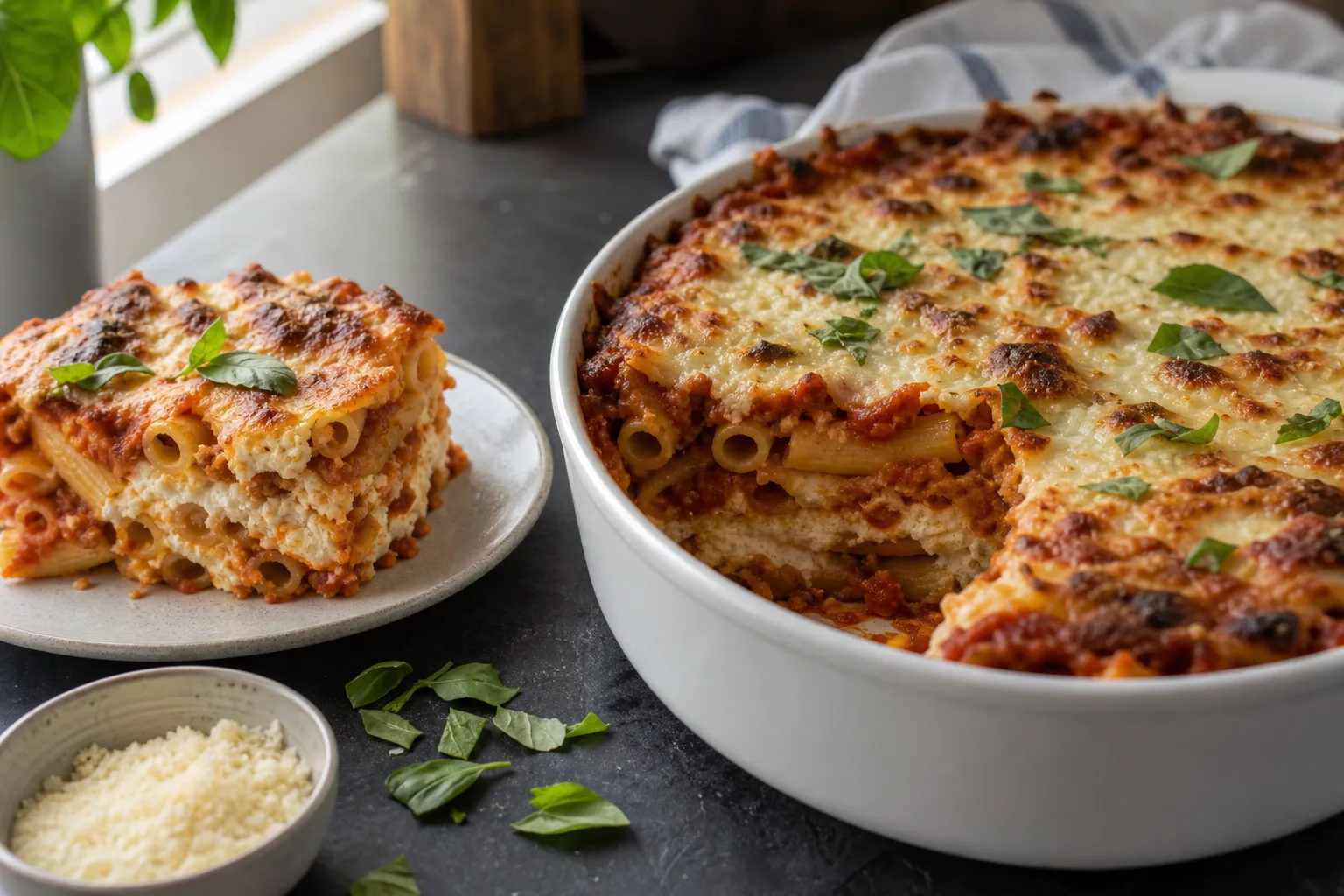
This version has one skillet and one bowl, and you chop an onion. Everything else gets stirred together and baked. It slices into squares instead of slumping onto the plate, and I’ve made it enough times now to trust it.
Why This Works
A pound of dry ziti drinks up roughly four cups of liquid while it cooks, so the dish has to start with a sauce that looks far too loose. Keep every tube under that liquid, hold the foil on tight for the first 45 minutes, and the pasta cooks through in the sauce instead of in plain water. It also comes out firm enough to hold a square, because it never had a chance to overcook in a pot first.
Ingredients
This fills a deep 9×13 dish, at least 2 inches tall. Set it on a rimmed baking sheet, because the dry pasta swells as it bakes and the sauce can bubble over the edge. It cuts into ten generous squares, or eight if nobody is pretending to be polite.
For the Sauce
- 1 pound ground beef chuck (80/20) or half beef, half bulk Italian sausage
- 1 (28-ounce) can crushed tomatoes
- 1 (8-ounce) can tomato sauce
- 1 cup water
- 2 tablespoons tomato paste
- 1 medium yellow onion, diced small (about 1/4 inch)
- 3 cloves garlic, minced
- 1 teaspoon dried oregano
- 1/2 teaspoon red pepper flakes
- 2 1/2 teaspoons kosher salt
- 1/2 teaspoon black pepper
For the Ricotta Layer
- 15 ounces whole-milk ricotta, drained if wet
- 1 large egg
- 3/4 cup grated Parmesan
- 1/2 cup chopped fresh parsley or basil
- 1/2 teaspoon kosher salt
- Several grinds of black pepper
For Assembly
- 1 pound dry ziti or penne rigate (not boiled)
- 1 pound low-moisture whole-milk mozzarella, grated (about 4 cups)
- 1/2 cup grated Parmesan for the top
Easy Swap
Penne rigate is a straight swap for ziti and easier to find, and the ridges hold sauce well. Skip small shapes like elbows or shells, which pack too densely and swell into a solid brick in the middle of the dish. Stay with a tube about an inch and a half long, and don’t use spaghetti, which needs to be broken and layered flat to stay submerged.
How to Make It
Prep: 20 minutes | Bake: 70 minutes | Rest or cool: 15 minutes | Serves: 8 to 10
- Heat the oven to 375°F and set a deep 9×13 dish on a rimmed baking sheet. Brown the beef in a large skillet over medium-high heat, breaking it up and then leaving it alone for 4 minutes so it browns instead of steaming. Stir, cook 3 minutes more, then drain off all of the fat. This is the one stovetop step in the recipe.
- In a large bowl, stir together the crushed tomatoes, tomato sauce, water, tomato paste, onion, garlic, oregano, pepper flakes, salt, and pepper. Fold in the browned beef. The mixture should look much looser than a sauce you would serve on pasta, and it should taste a little over-seasoned, because the pasta is about to soak up the salt.
- In a second bowl, stir the ricotta, egg, 3/4 cup Parmesan, herbs, salt, and pepper until smooth.
- Ladle about 1 cup of sauce into the bottom of the dish and spread it around. Pour in half of the dry ziti (roughly 2 1/2 cups), then ladle about 2 cups of sauce over it. Jiggle the dish and nudge the tubes with a spoon so sauce runs inside them and no pasta is left sticking out above the liquid.
- Drop the ricotta mixture over the pasta in spoonfuls, leaving gaps between them so sauce can flow around. Don’t smooth it into a sheet.
- Add the remaining dry ziti, then pour the rest of the sauce over the top. Press down on the pasta with the back of a spoon until every piece is submerged or fully glazed, and tap the dish on the counter to settle the tubes. Cover tightly with foil, crimping the edges all the way around, and bake for 45 minutes.
- Lift a corner of the foil. The surface should be actively bubbling, and a knife pushed into a piece of ziti should slide in without hitting a hard core. If the center is still firm, re-cover and give it 10 more minutes.
- Pull off the foil, scatter the mozzarella and the 1/2 cup Parmesan over the top, and bake another 20 to 25 minutes until the top is blistered and the edges are bubbling hard. Let it rest 15 minutes before cutting, which is what turns a pan of ziti into squares.
The One Step I Kept
I tried it with the beef raw, and it is the one thing I won’t skip. Raw ground meat in a casserole does reach a safe temperature, but it renders its fat straight into the dish and steams gray instead of browning. You end up with a greasy sauce and a crumbly, flavorless texture. Seven minutes in a skillet, drained well, fixes it, and nothing else in this recipe touches the stove.
Can You Make It the Night Before?
Not Fully — Here Is What You Can Prep
Not as a fully assembled dish. Dry pasta sitting in cold sauce overnight absorbs the liquid unevenly and leaves the oven too little to finish with, so assemble it right before it bakes. What you can do ahead is brown the beef, mix the sauce, and mix the ricotta layer, which turns a night-of project into a ten-minute assembly.
Browned and drained beef keeps in the refrigerator for three days. The finished sauce (tomatoes, water, onion, garlic, seasonings, and beef) keeps up to two days in a covered container. Mix the ricotta layer up to a day ahead and grate both cheeses whenever you like. On baking day, take the sauce out 30 minutes early so it isn’t ice cold when it hits the pasta, then assemble and bake as written.
I want to be plain about the trade here. The boiled-pasta version of this dish can sit assembled overnight because the pasta is already cooked, and this one can’t. You give up that head start in exchange for not boiling anything or cooking anything twice. If you really need to assemble a day early, make the older boiled version, and make this one when you want fewer dishes.
Leftovers freeze well once baked. Cut portions, wrap each one in plastic and then foil, and freeze up to two months. Thaw overnight in the refrigerator, then reheat covered at 350°F for 25 minutes. I would not freeze the unbaked dish, since the raw pasta would sit in frozen sauce and cook unevenly.
Why There’s So Much Liquid
A pound of dry pasta takes up about four cups of thin liquid while it cooks, and in this dish that liquid is your sauce. Between the crushed tomatoes, the tomato sauce, and the water, the dish starts with a little over five cups of tomato and water. Because crushed tomatoes are thick, only part of that counts as true liquid, which is why it looks like too much when you pour it in.
It isn’t too much. Assemble this dish with a sauce at the thickness you’d spoon onto a plate of spaghetti and you will end up with a crunchy top layer and a dry dish, which is exactly what happened to me the first time. The pasta finishes cooking in whatever is touching it, and if there isn’t enough liquid it stops partway.
The other rule is that every piece of ziti has to be submerged or fully coated when the foil goes on. Pasta that sticks up above the liquid line never gets wet enough to soften, and it goes hard and leathery. After you pour in the last of the sauce, press everything down under the surface and tap the dish on the counter so sauce runs into the tubes.
A Quick Gut Check
When you lift the foil at the 45-minute mark, poke a piece of ziti with a knife instead of trusting the clock. It should slide in with a slight resistance at the very center. If it hits something hard, the pasta needs more time, and the fix is 10 more minutes covered, not more liquid.
The Ricotta Layer Still Matters
Baked ziti is a tomato-and-ricotta dish, and the ricotta is the part most recipes treat carelessly. Supermarket ricotta ranges from thick and curdy to nearly pourable, and the wet kind will thin your whole casserole from the inside. If yours looks loose in the tub, set it in a fine strainer over a bowl for thirty minutes first. You may lose a surprising half cup of whey.
The egg is a binder, not richness. Without it the ricotta layer goes grainy and weeps as it bakes, and with it the layer sets just enough to stay put when you cut a square. One egg for 15 ounces is plenty. Season the ricotta mixture on its own and taste it before it goes in, because unseasoned ricotta in the middle of a well-salted casserole reads as a bland patch.
Spoon it on in dollops with gaps between, rather than a continuous sheet. A sealed ricotta layer works like a wall: steam collects under it and the pasta below cooks in a wet pocket. And use low-moisture whole-milk mozzarella grated off the block, not fresh mozzarella packed in water. The fresh kind releases a surprising amount of liquid and leaves a pale pool on top instead of a browned crust.
Covered First, Then Uncovered
The two-stage bake does two separate jobs. Under tightly crimped foil, trapped steam is what cooks the raw pasta and thickens the sauce, a gentle simmer that runs for 45 minutes. This is also why the cheese stays off at first: it would melt and brown under the foil, then slide into the dish and clog the top before the pasta underneath had finished.
Once the pasta is tender, the foil comes off and the job changes. Now you are driving off surface moisture and browning the cheese, which foil makes impossible. The rest period matters more than you’d think. The sauce is still loose when it comes out of the oven and settles as the starch from the pasta sets, so a dish cut right away slumps, and one rested for 15 minutes holds a square.
Rachel’s Tip
Dice the onion small, about 1/4 inch. It never gets sautéed, so a coarse chop stays crunchy right through the bake, while a fine dice softens in the sauce and you don’t notice it. For the same reason I use three cloves of garlic here instead of the four I’d sauté. Raw garlic cooked in a covered dish gets sharp quickly.
Questions People Ask
Does the pasta really cook through in the oven without boiling?
Yes, as long as the dish has enough liquid and stays covered. A pound of dry ziti needs about four cups of liquid, every piece has to be submerged or glazed, and the foil has to stay on tightly for the first 45 minutes. Check by poking a piece with a knife when you lift the foil. If it meets a hard center, re-cover it for 10 more minutes.
Why is the pasta on top of my baked ziti hard?
Pasta that sticks up above the sauce never gets wet enough to soften. Before the foil goes on, press everything down under the sauce with the back of a spoon and tap the dish on the counter so liquid runs into the tubes. Make sure the foil is crimped tight, too, because a loose lid lets steam escape and the top layer dries out.
Why is my baked ziti watery?
Usually it was cut too soon. The sauce is loose when it comes out and settles as the starch sets over a 15-minute rest. If it is still thin after resting, the foil probably came off too early, so next time give the covered bake the full 45 minutes and let the uncovered stage run the full 25.
Can I use jarred sauce?
Yes. One 24-ounce jar is about three cups, so use one jar plus 2 cups of water, since jarred sauce is formulated for pasta that’s already cooked and is thicker than this dish needs. Stir in the garlic and onion and the browned beef, then assemble as written.
Can I skip the beef?
You can make it meatless. Leave out the beef and the browning step entirely, and add an extra 1/2 teaspoon of salt to the sauce since you lose the seasoning from the meat. If you do keep meat, don’t put it in raw: it should always be browned and drained first, or the fat ends up in the dish.
About This Article

Written by Rachel Thompson. Rachel Thompson is a home cook who has spent over 10 years making an unreasonable number of dips, appetizers, and party spreads — no culinary training, just a decade of trial and error and a reputation among friends for always being asked to "bring a dip." She focuses on approachable recipes that combine bold flavors with simple techniques, making entertaining at home accessible to everyone. More about this site.
Scope and limits. Rachel is a home cook with no culinary training. Follow current food safety guidance for holding temperatures and time limits whenever you are serving people other than yourself.
Verify this against a primary source
Specifics change, and your situation may differ from the one described here. These are the authorities worth checking directly:
- FoodSafety.gov — cold holding, hot holding and the two-hour rule
- USDA FoodData Central — ingredient composition and nutrition data
- USDA Food Safety and Inspection Service — safe minimum temperatures and leftovers