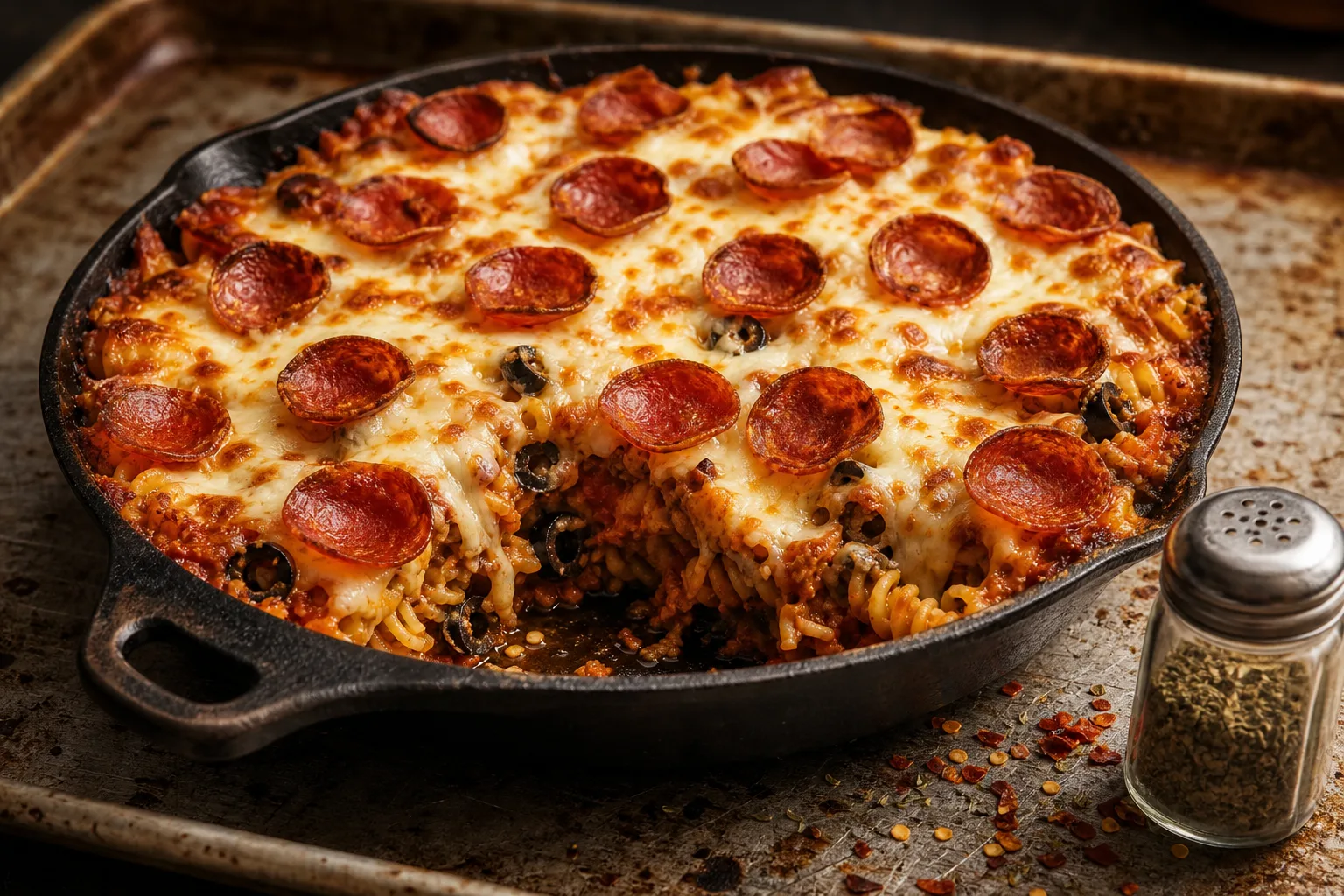

Pizza casserole gets dismissed as baked ziti with pepperoni thrown at it, and when people make it carelessly, that is exactly what it is. The two dishes are built differently on purpose, and the differences are the whole reason to make this one: no ricotta anywhere, a bright uncooked pizza sauce instead of a long-simmered meat sauce, and pepperoni that crisps and curls on top instead of going soft and greasy in the middle.
The complaint I hear most is that it comes out greasy and bland at the same time, which sounds contradictory until you realize both have the same cause. Pepperoni dumped in raw releases its fat into the pasta, so the dish is oily, and the pepperoni itself has given away the flavor that made it worth adding. Render it first and you get the opposite of both.
The other half is the pasta, which is the same lesson every dish in this category teaches. Rotini boiled to the package number has already used up its cooking time before the oven gets a turn.
Why This Works
Rotini goes in four minutes short of the package time, around 6 minutes instead of 10, and the pizza sauce is thinned until it pours like tomato juice. The spirals still have starch left to hydrate and a thin sauce to hydrate in, so they finish firm. The bake is what cooks them — the pot of water only gets them started.
Ingredients
Fills a 9×13 dish or a 12-inch cast iron skillet. The skillet gives you crisper edges and a slightly deeper center; the 9×13 feeds two more people.
For the Pizza Sauce
- 1 (28-ounce) can crushed tomatoes
- 3 tablespoons tomato paste
- 3/4 cup water
- 3 cloves garlic, grated
- 2 teaspoons dried oregano
- 1 teaspoon dried basil
- 1/2 teaspoon fennel seed, crushed
- 1/2 teaspoon sugar
- 1/2 teaspoon red pepper flakes
- 1 1/2 teaspoons kosher salt
- 2 tablespoons olive oil
For the Casserole
- 1 pound dried rotini or fusilli
- 1 pound bulk Italian sausage, hot or sweet
- 6 ounces sliced pepperoni (about 60 slices)
- 8 ounces cremini mushrooms, sliced
- 1 green bell pepper, diced
- 1 small red onion, diced
- 1 (4-ounce) can sliced black olives, drained
- 1 pound low-moisture whole-milk mozzarella, grated (about 4 cups)
- 3/4 cup grated Parmesan
For the Crumb Edge
- 3/4 cup panko breadcrumbs
- 2 tablespoons unsalted butter, melted
- 1 clove garlic, grated
- 1/4 cup grated Parmesan
- 1/2 teaspoon dried oregano
Easy Swap
Treat the add-ins like a pizza order: Canadian bacon and pineapple, cooked crumbled bacon, sliced banana peppers, or jarred artichoke hearts all work. Two rules hold regardless. Anything raw and watery gets cooked dry in a skillet first, and anything cured and fatty gets rendered first. Jarred toppings get drained and patted dry.
How to Make It
Prep: 25 minutes | Bake: 40 minutes | Serves: 8 to 10
- Heat the oven to 400°F. Stir all the pizza sauce ingredients together in a bowl. That is the whole sauce — no simmering, because a cooked-down sauce loses the sharp oregano-and-tomato edge that makes this taste like pizza instead of like Sunday dinner. It should be thin enough to pour in a steady stream; add water if it is not.
- Put the pepperoni in a large dry skillet over medium heat in a single layer, working in two batches. Cook 2 to 3 minutes per side until the slices curl and darken at the rim and a visible pool of orange fat has rendered out. Move them to a plate and pour off all but a tablespoon of the fat. Set aside about 24 of the best-looking slices for the top.
- In the same skillet, brown the sausage over medium-high heat, breaking it up after it has had 4 undisturbed minutes. Cook 3 minutes more, then lift it out, leaving the fat behind. Pour off all but a tablespoon again.
- Add the mushrooms to the hot skillet and cook 6 minutes without stirring much, until they have released their water and it has cooked away and they are browned at the edges. Add the bell pepper and onion and cook 4 more minutes, just until they lose their raw crunch. This step is not optional — raw vegetables added straight to the dish will release their water in the oven and thin everything out.
- Bring a large pot of heavily salted water to a boil. Check the package time on the rotini, subtract 4 minutes, and boil for that long, usually 6. Bite a spiral: it should still have an opaque, chalky core. Drain, do not rinse.
- In the pasta pot, combine the drained rotini, the sauce, the sausage, the cooked vegetables, the olives, the rendered pepperoni you did not set aside, 2 1/2 cups of the mozzarella, and the 3/4 cup Parmesan. It will look soupy. Good. Transfer to a buttered 9×13 dish or a 12-inch cast iron skillet.
- Cover tightly with foil and bake 25 minutes. Meanwhile toss the panko with the melted butter, garlic, Parmesan, and oregano.
- Remove the foil. Scatter the remaining 1 1/2 cups mozzarella over the surface, lay the reserved pepperoni slices on top, and sprinkle the crumb mixture in a 2-inch band around the perimeter only. Bake uncovered 13 to 15 minutes until the pepperoni edges are dark and crisp, the cheese is blistered, and the crumb border is golden. Rest 10 minutes.
Don’t Do This
Do not add raw pepperoni straight to the pasta. A 6-ounce package renders out a startling amount of fat, and in a covered dish that fat has nowhere to go — it pools at the bottom and coats every spiral. You end up with a greasy casserole and pale, flabby pepperoni that tastes of nothing. Five minutes in a dry skillet solves both at once.
Can You Make It the Night Before?
Yes — Assemble Up to 24 Hours Ahead
Assemble through step 6, cover, and refrigerate up to 24 hours, holding back the top mozzarella, the reserved pepperoni, and the crumbs. Add a quarter cup of water before baking and give the covered stage 15 extra minutes. The pepperoni and crumbs go on for the last 15 minutes exactly as they would fresh.
Let it stand on the counter 45 minutes before baking. A cold, dense pan of pasta will brown on top long before the middle is hot, and pizza casserole is particularly bad for this because the cheese and pepperoni on the surface give you a confident-looking crust over a lukewarm center.
Never put the reserved pepperoni on before the fridge. It softens overnight in contact with the sauce, loses the rendered crispness you worked for, and leaves a slick of orange fat across the top of the dish. Keep those slices in a covered container — they stay crisp for a day at room temperature.
It freezes well without the toppings. Assemble in a foil pan, wrap in plastic and then foil, and freeze up to three months. Bake from frozen, covered, at 350°F for 70 minutes, then add cheese, pepperoni, and crumbs and finish uncovered at 400°F for 18 minutes. The mushrooms come out softer than fresh but everything else holds.
How This Is Different From Baked Ziti
Worth being clear about, because these two dishes blur together constantly and the differences are the reason to make one instead of the other. Baked ziti is a tomato-and-ricotta dish built on a long-simmered meat sauce, layered, with soft dairy running through the middle. Pizza casserole has no ricotta at all, and adding it would push the dish straight into ziti territory.
Instead, the dairy is all mozzarella, used the way it is on a pizza: shredded through the body for pull, then a blanket on top for browning. The sauce is raw and bright and oregano-forward, not cooked down, which is what pizza sauce actually is. And the dish is topped rather than layered, so the surface behaves like the top of a pizza — crisp pepperoni, blistered cheese, a browned crumb edge standing in for crust.
The pasta shape follows from that. Ziti uses a smooth tube that slides against ricotta. Here you want spirals, because the twists physically trap the small bits — olive slices, sausage crumbles, diced pepper — so every forkful carries toppings instead of leaving them at the bottom of the dish.
The Crumb Edge
Buttered garlic panko around the perimeter only, never across the middle. The border gives you a crust-like bite where the pasta meets the pan, which is the best part of a pizza, while the center stays cheesy and molten. Crumbs over the whole surface would just be a different casserole.
Rendering Is the Whole Trick With Cured Meat
Pepperoni, like most cured sausage, is roughly a third fat by weight. In a dry skillet that fat comes out in a couple of minutes and takes the water with it, and what is left is concentrated and chewy-crisp with a nearly crackly rim. The slices also shrink by about a quarter, which is why sixty slices sounds like a lot and is not.
The rendered fat is worth keeping a spoonful of. Cooking the sausage and then the vegetables in it layers that pepperoni flavor through the dish rather than leaving it on the surface. Pour off the rest, though — a tablespoon seasons, a quarter cup makes the casserole oily.
The same logic covers the vegetables, from the other direction. Mushrooms are mostly water and will give it up somewhere; your choice is whether that happens in a hot skillet where it evaporates or in a covered dish where it does not.
Covered, Then Uncovered, and Why the Order Matters
Twenty-five minutes under foil is what finishes the underdone rotini, using trapped steam as a second, gentler boil. Nothing on the top gets a chance to brown during that stage, which is exactly why the pepperoni and the top cheese wait.
The last fifteen minutes uncovered is a different kind of cooking: dry heat driving off surface moisture so the cheese blisters and the crumbs toast. Try to do both jobs at once and you get hard dry pasta at the edges with pepperoni that has gone past crisp into burnt.
Rachel’s Tip
Use the small thin pepperoni slices rather than the thick deli-cut ones for the top. The thin cups curl up into little bowls as the fat renders and the rims go almost crunchy, which is the texture you are after. Thick-cut slices stay flat and chewy no matter how long you bake them.
Questions People Ask
Why is my pizza casserole greasy?
Unrendered pepperoni and undrained sausage, in that order. A 6-ounce package of pepperoni holds about a quarter cup of fat that will come out during the bake and settle into the pasta. Render the slices in a dry skillet and pour off the fat, then lift the browned sausage out of its own fat rather than tipping the whole skillet into the pot.
Can I use jarred pizza sauce?
Yes. You need about 3 cups, which is usually two jars, plus a half cup of water stirred in because jarred sauce is built to sit on a crust rather than hydrate a pound of pasta. Taste it first and add a teaspoon of dried oregano if it is on the sweet side, as many jarred versions are.
Why did my pasta come out mushy?
It was boiled too long. Rotini has a thick twist that holds heat well, and forty minutes in a 400°F oven surrounded by liquid is a full second cooking. Pull it four minutes early, while a bitten spiral still shows a chalky core, and let the bake finish it.
What about a crescent roll or biscuit crust?
Those versions exist and are popular, with dough pressed into the bottom or laid across the top. I have made both and I skip them now — the bottom crust goes soggy under a wet filling, and a top crust seals in the steam you need to escape in the last stretch. The garlic crumb border gets you a crust-like bite without either problem.
Can I make it in a cast iron skillet?
That is my preference, with one adjustment. Cast iron holds heat hard, so the edges brown faster — check it at 10 minutes during the uncovered stage. A 12-inch skillet holds slightly less than a 9×13 dish, so either serve eight instead of ten or bake the extra cup in a small ramekin alongside.
About This Article

Written by Rachel Thompson. Rachel Thompson is a home cook who has spent over 10 years making an unreasonable number of dips, appetizers, and party spreads — no culinary training, just a decade of trial and error and a reputation among friends for always being asked to "bring a dip." She focuses on approachable recipes that combine bold flavors with simple techniques, making entertaining at home accessible to everyone. More about this site.
Scope and limits. Rachel is a home cook with no culinary training. Follow current food safety guidance for holding temperatures and time limits whenever you are serving people other than yourself.
Verify this against a primary source
Specifics change, and your situation may differ from the one described here. These are the authorities worth checking directly:
- FoodSafety.gov — cold holding, hot holding and the two-hour rule
- USDA FoodData Central — ingredient composition and nutrition data
- USDA Food Safety and Inspection Service — safe minimum temperatures and leftovers