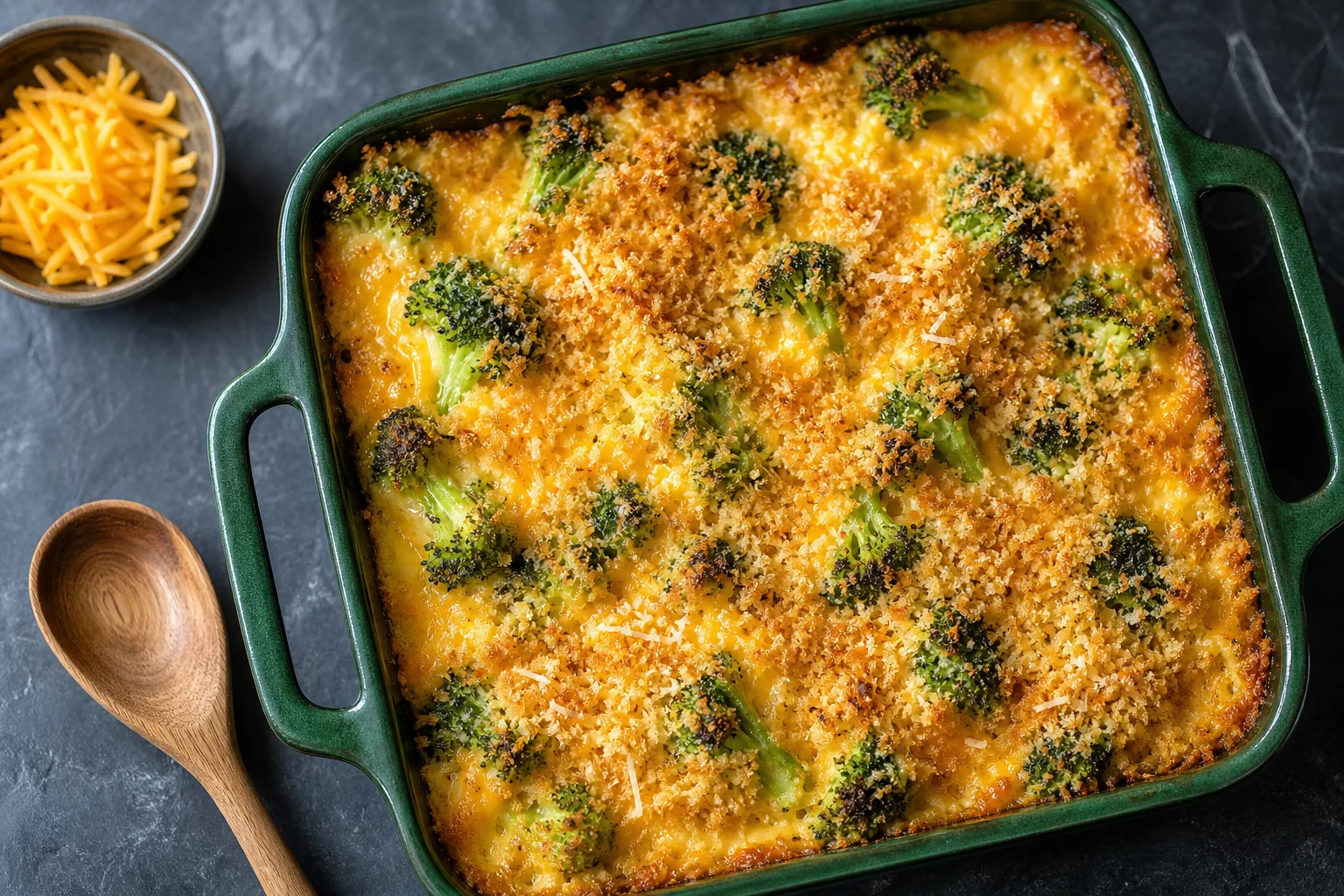

Most broccoli cheese casserole recipes ask for three jobs before the dish ever sees the oven: boil or blanch the broccoli, build a roux in a saucepan, then melt cheese into it without breaking it. After all that, the whole thing bakes for another half hour anyway. You end up cooking everything twice and washing a pot you did not need.
This version skips the saucepan. The broccoli roasts on a sheet pan while you whisk flour into cold milk. Everything goes into the dish, and the oven makes the sauce. The first time I tried it, I baked it uncovered. The top skinned over and the milk underneath stayed thin. Covered with foil, it thickened properly into a creamy, cheesy sauce around firm, bright broccoli. No condensed soup, no processed cheese loaf, and no saucepan.
Why This Works
Flour whisked into cold milk spreads out evenly with no lumps, because the starch has not started to swell yet. Covered, the dish holds a steady heat for 30 minutes, which is long enough for that starch to thicken the milk around the cheese as it melts. Because the cheese melts slowly into liquid that is already thickening, it never hits a hot pan and breaks.
Ingredients
Fills a 9×13 or a 3-quart baker. Two and a half pounds of broccoli crowns gives about 10 cups of florets, which looks like far too much until it roasts down.
For the Broccoli
- 2 1/2 pounds broccoli crowns, cut into 1 1/2-inch florets
- 2 tablespoons olive oil
- 3/4 teaspoon kosher salt
For the Cold Sauce Mix
- 2 cups whole milk, cold
- 1/2 cup heavy cream, cold
- 1/4 cup all-purpose flour
- 1 teaspoon Dijon mustard
- 1/2 teaspoon onion powder
- 1/4 teaspoon freshly grated nutmeg
- 1 teaspoon kosher salt
- 1/2 teaspoon black pepper
- A few dashes of hot sauce
For the Cheese
- 10 ounces sharp cheddar, grated from a block (about 3 1/2 cups)
- 2 ounces Gruyere or aged white cheddar, grated
- Softened butter for the dish
For the Topping
- 1 cup panko breadcrumbs
- 2 tablespoons unsalted butter, melted
- 1/4 cup grated Parmesan
Easy Swap
The cheese is where to play. Smoked gouda for the 2 ounces of Gruyere is excellent, and a few ounces of pepper jack swapped into the cheddar gives the whole dish a low hum of heat. What I would not swap in is pre-shredded cheese of any kind. The starch coating that keeps the shreds separate in the bag turns the sauce chalky and slightly grainy. Grating 10 ounces off a block takes three minutes.
How to Make It
Prep: 15 minutes | Bake: 65 minutes | Rest or cool: 10 minutes | Serves: 8 to 10
- Heat the oven to 425°F. Toss the florets with the olive oil and 3/4 teaspoon salt and spread them over two sheet pans in a single layer. Crowding one pan steams them instead of roasting them, which is the problem you are trying to avoid.
- Roast 12 to 14 minutes, until the edges are just beginning to brown and the stems are still quite firm. Pull them earlier than you would for a plain side. They get 45 more minutes in a covered dish and will soften plenty there. Drop the oven to 375°F and leave the door open for a minute to help it along.
- While the oven comes down, pour the cold milk and cream into a large measuring cup or bowl. Sprinkle the flour over the top and whisk for a full minute, until you cannot feel or see any lumps. Whisk in the Dijon, onion powder, nutmeg, salt, pepper, and hot sauce.
- Toss the cheddar and Gruyere together and set aside 1 cup for the top. Butter a 9×13 baking dish. Spread the roasted broccoli in it and scatter the rest of the cheese over and between the florets, gently turning everything with a spoon so the cheese is distributed through the dish rather than sitting in one layer.
- Whisk the sauce mix again, because the flour settles within a few minutes, and pour it evenly over the broccoli. The liquid will come about halfway up the florets. That is correct. Press the broccoli down lightly so most pieces are touching liquid.
- Cover the dish tightly with foil and bake at 375°F for 30 minutes. When you lift the foil, the sauce should be bubbling at the edges and visibly thickened, coating the broccoli rather than pooling thinly under it.
- Remove the foil and scatter the reserved cheese over the top. Toss the panko with the melted butter until evenly coated, stir in the Parmesan, and scatter it across the dish. Bake uncovered 18 to 22 minutes, until the sauce is bubbling around the edges and the crumbs are deep golden.
- Rest 10 to 15 minutes. The sauce goes from loose to scoopable in that time, and the florets stop being hot enough to burn anyone.
Don’t Do This
Do not skip the foil. Uncovered, the top of the sauce dries into a skin before the flour underneath has thickened, and you get a thin, milky bottom. Also do not boil the broccoli. It arrives at the dish already soft and full of water and finishes as drab little sponges. If roasting is not an option, blanch the florets 2 minutes in salted water, shock them in ice water, and dry them thoroughly on a towel.
Can You Make It the Night Before?
Yes — Assemble Up to 24 Hours Ahead
Assemble the broccoli and cheese in the buttered dish, cover, and refrigerate up to 24 hours. Keep the cold sauce mix in a jar in the refrigerator and the panko topping in a separate container on the counter. Shake or whisk the jar and pour it over right before baking.
The sauce goes in last because flour sitting in milk settles to the bottom overnight. Poured over the broccoli ahead of time, it ends up as a dense layer at the base of the dish and a thin liquid on top. A jar you can shake takes ten seconds and avoids that. Take the dish out of the refrigerator 30 minutes before baking, pour on the sauce, and add 10 minutes to the covered bake so it is not starting from cold.
If you want to split the work differently, roast the broccoli up to three days ahead and keep it uncovered in the refrigerator so it does not sweat. Then everything else takes about ten minutes on the day: grate, whisk, and assemble. That gives you the firmest florets of any option, since the broccoli has not been sitting in anything.
Do not freeze this one. A dairy-and-flour sauce splits when it thaws and the cheddar turns grainy. Broccoli that has been frozen after cooking goes soft and strongly flavored. If you need something from the freezer, freeze the roasted broccoli plain for up to two months and make the rest fresh.
Why the Sauce Makes Itself in the Oven
A roux works by cooking the flour in butter first, so it is already thick when the milk goes in. Skipping that step means the oven has to do the thickening, and it can, as long as two things are true. The flour has to go in smooth, and the dish has to stay covered long enough for the starch to hydrate. Whisking the flour into cold milk covers the first. It spreads out evenly in cold liquid, where it would clump into dumplings in hot. The foil covers the second. About 30 minutes under a tight cover is the minimum. Peek at 20 and you will see thin, bubbling milk, which is normal.
The cheese goes in solid and melts into the liquid as the dish heats. That slow, even melt is gentler than dropping cheddar into a pan on a burner, and it is where graininess usually comes from. Use block cheese grated on the large holes of a box grater. Bagged shreds are coated in potato starch or powdered cellulose, and that coating does not dissolve cleanly into a sauce, so it leaves a faintly powdery texture.
I will be honest about the result. It is looser and a little more rustic than a stovetop sauce, with less of that glossy, pourable look. The cheese is melted into the milk around the broccoli instead of whisked into a smooth sauce first. It tastes just as cheesy, and the texture is creamy rather than silky. Most people at the table will not notice. If you want the glossiest possible sauce, the stovetop method is still the way to get it.
If Oil Pools at the Edges
Very sharp aged cheddar can leave a little orange oil around the rim of the dish. Let the casserole rest the full 10 to 15 minutes, then blot the edges with a folded paper towel before serving. If a lot of oil shows up, your cheddar was likely very dry and aged. Swap 4 ounces of it for a milder one next time.
The One Step I Kept: Roasting the Broccoli
I cut the roux, the pre-melted cheese sauce, and the boiled broccoli. I kept roasting the broccoli on a sheet pan, and it is worth it. Raw broccoli in a covered casserole steams. It turns olive green, releases a lot of water, and thins the sauce you just worked to thicken. Roasting browns the edges and drives off surface moisture first, so the florets hold their shape and flavor through 45 more minutes in the oven. If you skip this step, you are not saving a dish, just trading the best part of the casserole for a few minutes.
Because the dish now bakes covered for a full half hour, roast the broccoli less than you would otherwise. Twelve to fourteen minutes at 425°F is enough, with the edges just turning golden and the stems still firm. The rest of the cooking happens in the sauce. If you pull them when they look perfectly done on the pan, they will be soft by the time you eat.
Making It the Main Course
This is a side dish as written, but it takes additions well because the sauce is generous. For a one-dish dinner, stir 1 1/2 pounds of boneless, skinless chicken thighs or breasts, cut into 1-inch pieces, into the broccoli and cheese before you pour on the sauce. Raw diced chicken cooks through in a covered casserole. Extend the covered bake to 40 minutes, then check a large piece. It should be white all the way through with no pink in the middle. Then uncover and finish as written.
I have left out the rice version that many families grew up with. It needs either cooked rice, which is an extra pot, or extra liquid and a longer bake to cook raw rice in the dish, and I do not trust the math enough to hand you a guess. If you want it, cook the rice first and fold in 3 cups, adding 1/4 cup more milk. Assemble the chicken version the same day instead of the night before, since raw chicken sitting in a dish overnight is less ideal than staging the pieces separately.
Rachel’s Tip
The Dijon and the nutmeg are not there to be tasted. A teaspoon of mustard sharpens cheddar and makes it read as more cheesy, and a quarter teaspoon of nutmeg does the same thing for the milk. Leave them both out and the dish tastes flat in a way that tempts you to add more salt, which is not what is missing. The hot sauce is doing the same job from the other direction.
Questions People Ask
Will the sauce really thicken in the oven without cooking the flour first?
Yes, as long as it bakes covered for at least 30 minutes. The flour is whisked smooth into cold milk and the dish holds heat under foil long enough for the starch to swell and thicken. Uncovered, the top skins over and the liquid underneath stays thin. If it still looks loose when you lift the foil at 30 minutes, put the foil back and give it another 5 to 8 minutes.
Why did my cheese sauce turn grainy?
Pre-shredded cheese is the most likely cause, since the starch coating on bagged shreds does not melt cleanly. The second is very high heat, so keep the oven at 375°F and do not skip the foil. Grated block cheese melting into a flour-thickened liquid is much less likely to break than cheese stirred into a hot pan.
Why is my broccoli cheese casserole watery?
Boiled, steamed, or raw broccoli is the usual cause. Florets hold a startling amount of water in their crevices and release it in the oven, thinning the sauce. Roasting drives that water off first. Frozen broccoli used straight from the bag is the other common cause, and it carries even more water than fresh.
Can I use frozen broccoli?
Yes, but thaw it completely, drain it, and press it between towels first, then roast it at 425°F for about 10 minutes to drive off the rest of the water. Do not skip the roast and do not use it frozen. Frozen florets are blanched before freezing, so they start softer than fresh and will not hold much bite through a covered bake.
Can I assemble it the night before?
Yes, with one change. Put the broccoli and cheese in the dish and refrigerate it, but keep the milk-and-flour mix in a separate jar and pour it on just before baking. Flour left sitting in milk overnight sinks to the bottom and bakes up uneven. Shake the jar, pour, and add about 10 minutes to the covered bake since the dish starts cold.
About This Article

Written by Rachel Thompson. Rachel Thompson is a home cook who has spent over 10 years making an unreasonable number of dips, appetizers, and party spreads — no culinary training, just a decade of trial and error and a reputation among friends for always being asked to "bring a dip." She focuses on approachable recipes that combine bold flavors with simple techniques, making entertaining at home accessible to everyone. More about this site.
Scope and limits. Rachel is a home cook with no culinary training. Follow current food safety guidance for holding temperatures and time limits whenever you are serving people other than yourself.
Verify this against a primary source
Specifics change, and your situation may differ from the one described here. These are the authorities worth checking directly:
- FoodSafety.gov — cold holding, hot holding and the two-hour rule
- USDA FoodData Central — ingredient composition and nutrition data
- USDA Food Safety and Inspection Service — safe minimum temperatures and leftovers