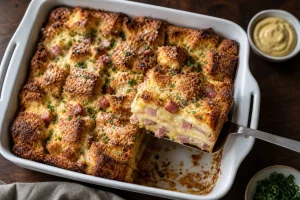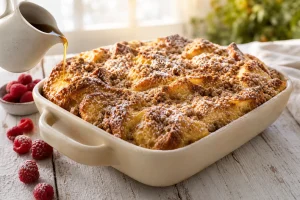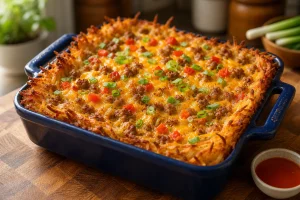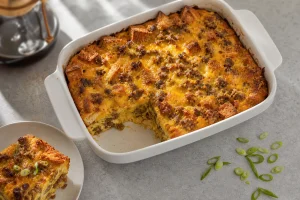
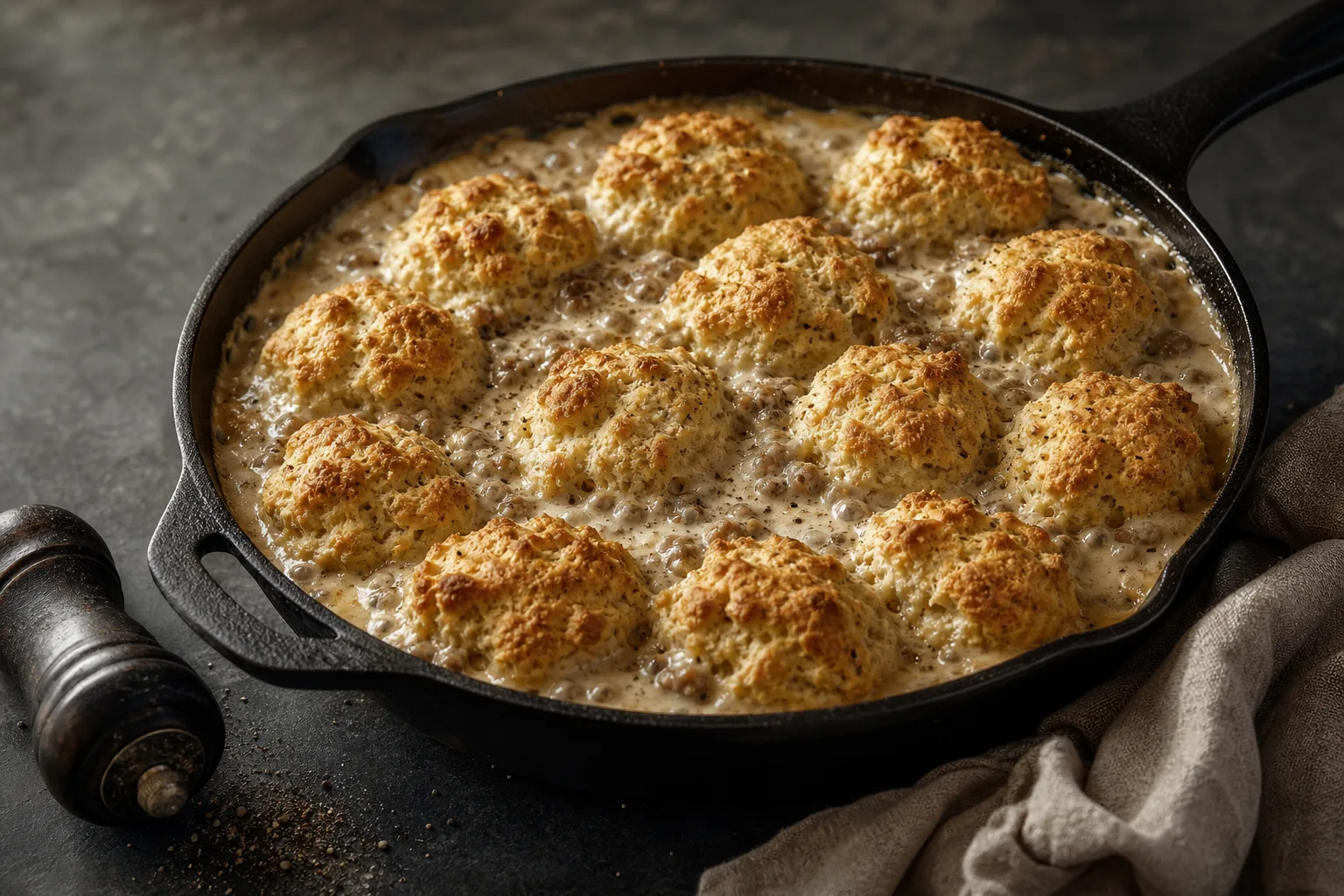

The appeal of turning biscuits and gravy into a casserole is obvious: one pan, no standing over a skillet ladling gravy onto plates in shifts. The problem is that most of the recipes doing the rounds bury the biscuits in the gravy, and buried biscuits do not bake. They steam. You get a pan of gravy with pale, gummy dough floating in it.
The fix is not complicated, but it does change the order of operations. The gravy goes in the dish first and goes into the oven while you make the dough. The biscuits get dropped on top of gravy that is already bubbling hot, sitting proud of the surface with gaps between them, so steam can escape and the tops can actually brown.
This is the version I make when people stay over, and it is also the one in this category I am least able to make the night before. I have tried. Three times. The gravy is fine ahead. The dough absolutely is not, and the reason is worth understanding before you plan around it.
Why This Works
Biscuit dough bakes from the top down when it is sitting on a wet surface, so the only way the bottoms set instead of turning to paste is if the gravy underneath is already hot when the dough lands on it. Cold gravy plus cold dough means the biscuits spend their first ten minutes in the oven wicking up liquid while the pan slowly warms. Hot gravy sets the undersides almost immediately.
Ingredients
This fills a 9×13 dish or a 12-inch cast iron skillet, with twelve drop biscuits on top. Figure one and a half biscuits per person.
For the Sausage Gravy
- 1 1/2 pounds bulk breakfast sausage, preferably sage
- 6 tablespoons unsalted butter
- 1/2 cup all-purpose flour
- 4 1/2 cups whole milk, warmed
- 1 1/2 teaspoons kosher salt
- 1 1/2 teaspoons coarsely ground black pepper
- 1/2 teaspoon dried sage
- 1/4 teaspoon cayenne pepper
For the Drop Biscuits
- 2 1/2 cups all-purpose flour
- 1 tablespoon baking powder
- 1 teaspoon granulated sugar
- 1 teaspoon kosher salt
- 1/2 teaspoon baking soda
- 10 tablespoons unsalted butter, frozen
- 1 cup cold buttermilk, plus 2 tablespoons for brushing
Canned Biscuits, Honestly Assessed
A can of refrigerated biscuits works here and I will not pretend otherwise — the leavening is formulated to survive refrigeration, which is exactly the problem scratch dough has. Use two 8-count cans, cut each biscuit in half so they bake through, and knock the oven down to 375°F. The one rule still applies: they go on hot gravy at the last minute, never the night before.
How to Make It
Prep: 25 minutes | Bake: 40 minutes | Serves: 8 to 10
- Heat the oven to 400°F and butter a 9×13 dish. Cook the sausage in a large skillet over medium-high heat, breaking it into bite-sized pieces, about 10 minutes, until there is real brown color on it. If the pan has more than a thin film of fat, pour some off.
- Add the butter to the sausage and let it melt, then sprinkle the flour over everything and stir constantly for 2 full minutes. The mixture will look like wet sand clinging to the sausage. Cooking the flour this long is what keeps the gravy from tasting like paste.
- Add the warm milk about a cup at a time, whisking after each addition until smooth before adding more. Bring it to a bare simmer and cook 5 to 6 minutes. Stop while it is noticeably looser than gravy you would ladle onto a plate — it should coat a spoon but still run off it easily.
- Stir in the salt, pepper, sage, and cayenne, then taste it. It should be aggressively peppery and slightly too salty on its own, because two and a half cups of unsalted biscuit dough are about to land on it. Pour the gravy into the buttered dish and slide it into the oven while you make the biscuits.
- Whisk the flour, baking powder, sugar, salt, and baking soda together in a bowl. Grate the frozen butter directly into the bowl on the large holes of a box grater and toss it through the flour with your fingers until the shreds are coated and separate.
- Pour in the cold buttermilk and stir about ten strokes with a fork, just until there is no dry flour left. The dough should be shaggy and sticky and look underworked. Do not knead it — every extra stir trades height for toughness.
- Pull the hot dish out of the oven. Drop twelve rough mounds of dough onto the bubbling gravy, spaced so there is a visible gap of gravy between them. Brush the tops with the remaining buttermilk.
- Bake 25 to 30 minutes, until the biscuits are deep golden on top and the gravy is bubbling hard around them. Check one by splitting the center biscuit open: it should be dry and flaky inside, not shiny or gummy. Let it rest 8 to 10 minutes before serving.
Don’t Make the Gravy Thick
Gravy that looks right in the skillet will be stiff and pasty in the finished casserole, because a dozen biscuits sitting on it absorb liquid the whole time it bakes. Pull it off the heat while it still runs off a spoon. If it looks slightly thin going into the dish, you have it right.
Can You Make It the Night Before?
Not Fully — Here Is What You Can Prep
Make the gravy up to two days ahead and refrigerate it on its own. Measure the dry biscuit ingredients into a bowl and grate the butter into them, then keep that in the freezer. What you cannot do is assemble this casserole the night before — the dough has to be mixed and dropped within minutes of baking, so morning-of work is about twelve minutes.
Baking powder and baking soda start reacting the moment they get wet. Mixed dough left overnight has spent most of its lift before it ever sees the oven, and what comes out is flat, dense, and faintly metallic. On top of that, raw dough resting on liquid wicks it upward for hours, so the bottom third of each biscuit turns to wet paste that no amount of baking will dry out. I have confirmed this the hard way more than once.
Reheating the gravy takes a little attention. Flour-thickened gravy sets to the texture of pudding in the refrigerator, so whisk it in a saucepan over low heat with an extra 1/2 to 3/4 cup of milk until it is loose again, then get it fully bubbling in the dish in the oven before the dough goes on. Dropping dough onto lukewarm gravy is the same mistake as assembling it overnight, just compressed into one morning.
For freezing, split the difference. The gravy freezes well on its own for up to two months, though it will want more milk and a patient whisk on thawing. Unbaked biscuit dough also freezes well: drop the twelve mounds onto a parchment-lined sheet pan, freeze them solid, bag them, and bake them straight from frozen with about 5 extra minutes. A fully baked casserole is the thing that does not freeze — the biscuits go dry and the gravy splits.
How to Tell the Biscuits Are Actually Cooked
Color on top is not proof. Biscuits sitting on hot liquid brown on their exposed surfaces well before the middles are done, which is how so many of these come out looking perfect and eating like dough. Split the center biscuit — the one most insulated by its neighbors — and look at the crumb. Dry and flaky with visible layers means done. Shiny, dense, or slightly translucent means give it five more minutes.
If the tops are already dark and the insides are not there yet, lay a sheet of foil loosely over the dish and keep going. Pulling it early to save the color guarantees the gummy result you were trying to avoid, and underbaked biscuit dough does not improve while it rests.
Why Drop Biscuits and Not Rolled Ones
Rolled and cut biscuits have flat bottoms and tight sides, which is a liability here — a flat base sits in the gravy and seals against it, so steam has nowhere to go and the underside poaches. Rough drop biscuits have craggy, uneven bottoms that trap air, and the gaps in their surface let steam out through the top.
The grated frozen butter does the rest. Shreds of solid butter distributed through a barely-mixed dough turn into steam pockets in the oven, which is where the height and the flaky layers come from. Softened or melted butter blends into the flour instead and bakes into something closer to a scone.
Use More Pepper Than Feels Reasonable
A teaspoon and a half of coarsely ground black pepper reads as a lot while you are measuring it into the pan, and then disappears into four and a half cups of milk and a pound and a half of sausage. Peppery gravy is the whole character of the dish. Grind it coarse so you get actual flecks of heat rather than a uniform background warmth.
Questions People Ask
Can I assemble this the night before?
No, and this is the one in the category where I would push back hardest. The chemical leavening in biscuit dough is spent within a couple of hours of getting wet, and dough resting on gravy overnight wicks liquid up into itself. You get flat, pasty biscuits. Make the gravy ahead instead and mix the dough in the morning — it takes about four minutes.
Why are my biscuits gummy on the bottom?
Usually the gravy was not hot when the dough went on, or the biscuits were buried rather than sitting on top. Both leave the undersides sitting in warm liquid instead of setting. The third cause is simply pulling the dish too early because the tops looked done.
Why is my sausage gravy gluey?
Either the flour did not get cooked long enough — two full minutes of constant stirring, not thirty seconds — or the gravy was reduced too far before it went in the dish. Remember that it keeps thickening in the oven as the biscuits drink from it, so it has to go in looser than it looks right.
Can I add eggs to it?
Yes. Soft-scramble eight eggs until they are just barely set and still glossy, then spread them over the gravy before the biscuits go on. Do not add raw beaten egg to the gravy — it curdles into strands in a flour-thickened sauce rather than setting into a custard.
Can I make it in a cast iron skillet?
A 12-inch skillet is my preference, since you can build the gravy and bake in the same pan. The gravy sits slightly deeper than in a 9×13, so give it an extra 3 to 5 minutes and check the center biscuit carefully. Let it rest the full 10 minutes in the skillet, which holds heat and keeps cooking after it comes out.
About This Article

Written by Rachel Thompson. Rachel Thompson is a home cook who has spent over 10 years making an unreasonable number of dips, appetizers, and party spreads — no culinary training, just a decade of trial and error and a reputation among friends for always being asked to "bring a dip." She focuses on approachable recipes that combine bold flavors with simple techniques, making entertaining at home accessible to everyone. More about this site.
Scope and limits. Rachel is a home cook with no culinary training. Follow current food safety guidance for holding temperatures and time limits whenever you are serving people other than yourself.
Verify this against a primary source
Specifics change, and your situation may differ from the one described here. These are the authorities worth checking directly:
- FoodSafety.gov — cold holding, hot holding and the two-hour rule
- USDA FoodData Central — ingredient composition and nutrition data
- USDA Food Safety and Inspection Service — safe minimum temperatures and leftovers