
Every watery hash brown casserole I have ever eaten, including the first four I made myself, failed in the same place: the bottom. The top looks terrific. You cut into it and a thin gray layer of potato is sitting in a quarter-inch of liquid that was not there when it went in the oven.
That liquid comes out of the potatoes. A standard bag of frozen shredded hash browns is holding a serious amount of ice, and ice does not stay ice at 350°F. It melts, it has nowhere to go, and it thins out your custard from underneath while you are watching the cheese brown on top.
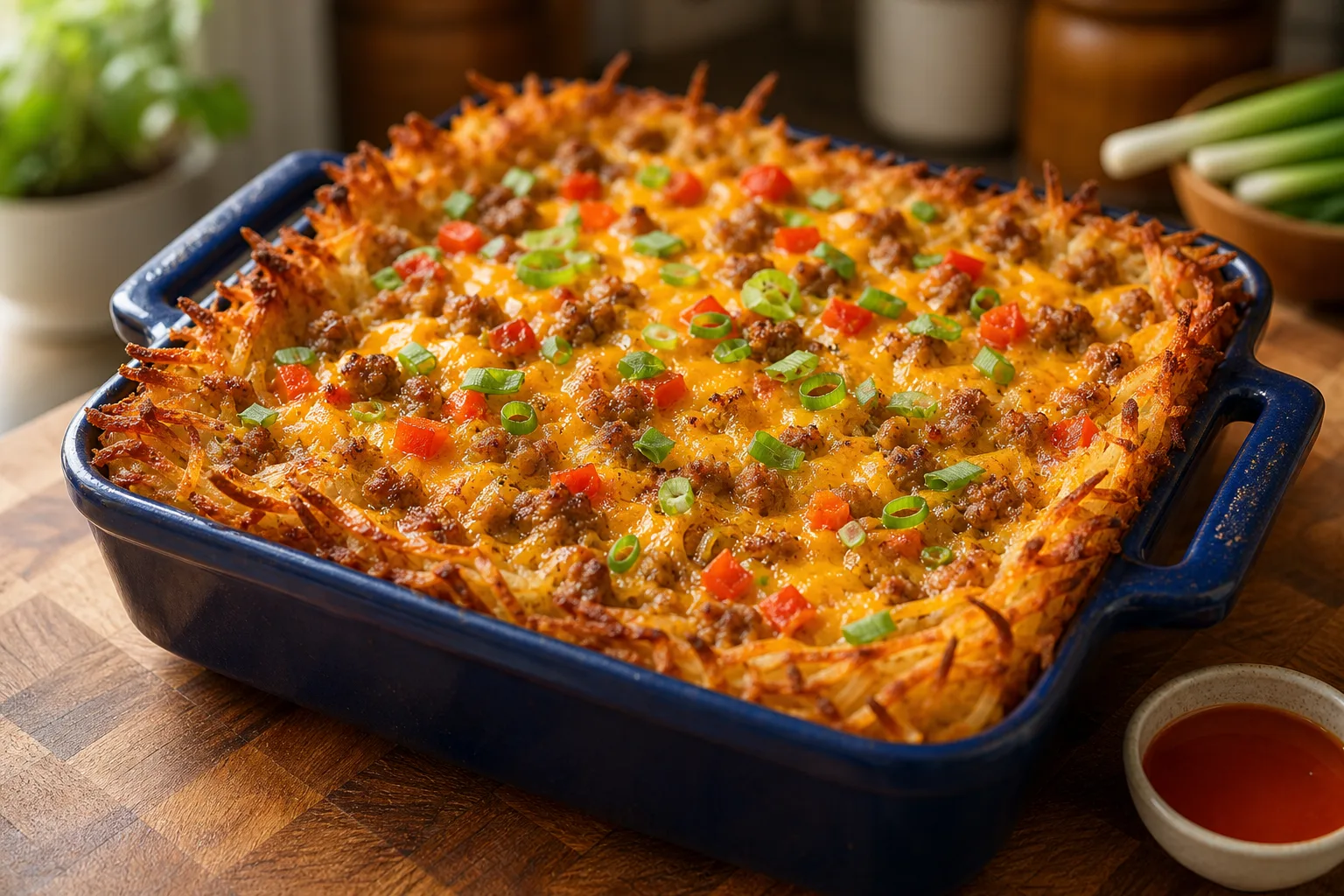
So this version does two things differently. The potatoes get wrung out in a towel before they go anywhere near the dish, and the potato layer gets par-baked on its own at high heat before the eggs are added. The result is a crust with actual crisp edges instead of a wet layer pretending to be one.
Why This Works
Par-baking the buttered potato layer at 425°F for twenty minutes drives off the water the towel missed and sets the starch into a real crust. By the time the custard goes in, the potatoes have already given up everything they were going to give up — so the only liquid left in the dish is the liquid you poured in on purpose.
Ingredients
This makes a 9×13 dish with the potato crust running about an inch up the sides. Ten square portions, or eight if it is the only thing on the table.
For the Potato Crust
- 30 ounces frozen shredded hash brown potatoes, fully thawed (one standard bag)
- 4 tablespoons unsalted butter, melted, plus more for the dish
- 1 teaspoon kosher salt
- 1/2 teaspoon black pepper
For the Filling
- 1 pound bulk breakfast sausage
- 1 medium yellow onion, diced small
- 1 red bell pepper, diced small
- 2 cups shredded sharp cheddar (about 8 ounces), divided
- 8 large eggs
- 1 1/2 cups whole milk
- 1/2 cup sour cream
- 1 1/2 teaspoons kosher salt
- 1/2 teaspoon black pepper
- 1/2 teaspoon smoked paprika
- 3 scallions, sliced thin, for finishing
Sausage, Bacon, or Neither
Twelve ounces of thick-cut bacon, cooked crisp and chopped, works in place of the sausage — add it with the cheese rather than with the vegetables so it does not go soft. For a meatless version, use a pound of cremini mushrooms cooked until the pan is completely dry, which takes longer than you think, around 12 minutes.
How to Make It
Prep: 25 minutes | Bake: 60 minutes | Serves: 8 to 10
- Thaw the hash browns completely — overnight in the refrigerator, or about an hour on the counter. Then pile them into a clean kitchen towel in two batches and wring them out hard over the sink. The amount of water that comes out is genuinely startling the first time, and it is water that would otherwise have ended up under your eggs.
- Heat the oven to 425°F and butter a 9×13 dish. Toss the wrung-out potatoes with the melted butter, 1 teaspoon salt, and 1/2 teaspoon pepper, then press them into the dish in an even layer and about an inch up the sides. Press firmly — you want a sheet, not a pile.
- Bake the crust alone for 20 to 22 minutes, until the top looks dry and the edges and corners have gone golden. Leave the oven on for now.
- While the crust bakes, cook the sausage in a large skillet over medium-high heat, breaking it into bite-sized pieces, about 8 to 10 minutes. Add the onion and bell pepper and cook another 6 minutes, until the vegetables are soft and the pan has gone dry rather than wet. Drain off the fat.
- Whisk the sour cream into the milk first, until there are no lumps, then whisk in the eggs, 1 1/2 teaspoons salt, 1/2 teaspoon pepper, and the smoked paprika. Whisk a full minute — you should not see any clear streaks of egg white.
- Turn the oven down to 350°F. Scatter the sausage and vegetable mixture over the hot crust, then 1 1/2 cups of the cheddar. Pour the custard evenly over everything and finish with the remaining 1/2 cup of cheese.
- Bake 38 to 45 minutes. It is ready when the center jiggles as one piece instead of sloshing, and a knife in the middle comes out clean.
- Rest it 10 minutes, scatter the scallions over the top, and cut into squares. Run a thin spatula down the sides first to free the crust, or the crisp edge stays in the dish.
Don’t Use the Potatoes Straight From the Bag
Frozen shredded potatoes dumped in still frozen are the single most common cause of a soupy hash brown casserole. The ice between the shreds melts during the bake and goes nowhere. Thaw them, wring them, and the problem disappears — this is not a step you can cheat with a longer bake time.
Can You Make It the Night Before?
Not Fully — Here Is What You Can Prep
You can get almost everything done the night before, but do not assemble this one. Cook the sausage and vegetables, grate the cheese, thaw and wring out the potatoes, and whisk the custard into a jar — all up to 24 hours ahead, all stored separately. Then the morning-of work is pressing the crust, par-baking it, and pouring. About eight minutes of actual effort.
The reason is salt and raw potato. Shredded potatoes sitting in a salted egg custard overnight go through exactly what happens when you salt cucumbers: the salt draws water out of the cells, and by morning there is a pool at the bottom of the dish and the potatoes have turned slack and gray-brown at the edges. You also lose the crust entirely, because a crust cannot be par-baked once it is sitting in liquid.
The prepped potatoes need one small precaution. Wrung-out raw potato oxidizes and goes pinkish-gray in the refrigerator within a few hours. Toss them with a tablespoon of neutral oil and press out the air from the bag or container, and they stay pale overnight. The color change is cosmetic rather than a safety problem, but it is unappetizing and it does not bake out.
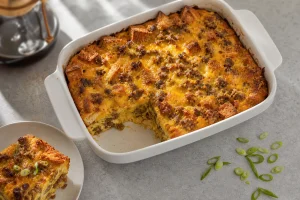
If you want something that can genuinely be assembled and refrigerated overnight, make a bread-based casserole or a strata instead — bread wants the long soak, and potatoes do not. Baked leftovers of this one reheat well, though: cover a portion loosely and give it 15 minutes at 325°F. The microwave sets the eggs tough and turns the crust to rubber.
Frozen, Refrigerated, or Grated Yourself
Frozen shredded is what I use, and after wringing it is honestly the most consistent of the three. Refrigerated shredded potatoes in a tub are also good and need no thawing, but they are usually treated to stay white and they hold less water, so skip the towel and cut the par-bake to 15 minutes or the edges go leathery.
Grating your own russets is the best version if you are willing to do the work. Grate them on the large holes, rinse the shreds in cold water until the water runs clear, then wring them out in a towel. The rinse matters more than it sounds: unrinsed fresh shreds are coated in loose starch that goes gluey in the oven instead of crisp.
Shreds Versus Diced Potatoes
Diced or cubed hash browns are a different dish, not a substitute. They cannot be pressed into a sheet, so you get no crust — the cubes stay separate and the custard flows all the way to the bottom of the dish. That version is perfectly good and bakes in about 45 minutes with no par-bake at all, but it eats like an egg bake with potatoes in it.
If you want crisp edges, you need shreds, and you need to press them hard enough that they knit together. I use the flat bottom of a measuring cup and lean on it. A loosely scattered potato layer browns in spots and stays pale everywhere else.
The Sour Cream Is Doing a Job
Half a cup of sour cream in place of some of the milk makes the set custard noticeably more tender and less likely to go rubbery if it sits on a warm counter through a long breakfast. Whisk it into the milk before the eggs go in, or you will be picking white lumps out for five minutes.
Questions People Ask
Why is my hash brown casserole watery?
Unthawed or unwrung potatoes, nearly every time. A bag of frozen shreds carries a lot of ice and it all ends up in the dish. The second cause is vegetables added while the skillet was still wet — cook the onion and pepper until the pan goes dry before they go in.
Can I assemble it the night before?
Not this one, and I would rather say so plainly. Raw shredded potato sitting in salted custard overnight leaches water and goes gray, and you lose the par-baked crust that makes the recipe worth making. Prep every component the night before and assemble in the morning instead — it takes under ten minutes.
Do I have to par-bake the potato crust?
If you want crisp edges, yes. Skip it and the casserole still works, but the potatoes stay soft throughout and the bottom is much more likely to go wet. Add about 10 minutes to the final bake if you do skip it, since the potatoes are starting cold.
Why did my potatoes turn gray?
Oxidation, which is harmless but ugly. Raw grated potato starts discoloring within an hour of being exposed to air, and wringing it out speeds that up. Use the potatoes right away, or toss them with a little oil and keep the air out if they have to wait.
Can I bake it in a slow cooker instead?
You can cook it, but you cannot crisp it. A slow cooker is a moist environment by design, so the potato layer steams rather than browns and the result is closer to a soft potato and egg pudding. If the oven is not available, that is a fine outcome — just do not expect the edges.
About This Article

Written by Rachel Thompson. Rachel Thompson is a home cook who has spent over 10 years making an unreasonable number of dips, appetizers, and party spreads — no culinary training, just a decade of trial and error and a reputation among friends for always being asked to "bring a dip." She focuses on approachable recipes that combine bold flavors with simple techniques, making entertaining at home accessible to everyone. More about this site.
Scope and limits. Rachel is a home cook with no culinary training. Follow current food safety guidance for holding temperatures and time limits whenever you are serving people other than yourself.
Verify this against a primary source
Specifics change, and your situation may differ from the one described here. These are the authorities worth checking directly:
- FoodSafety.gov — cold holding, hot holding and the two-hour rule
- USDA FoodData Central — ingredient composition and nutrition data
- USDA Food Safety and Inspection Service — safe minimum temperatures and leftovers