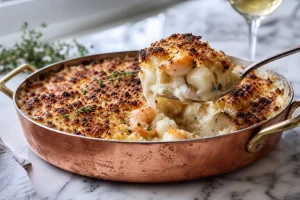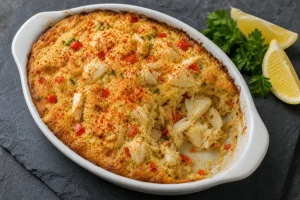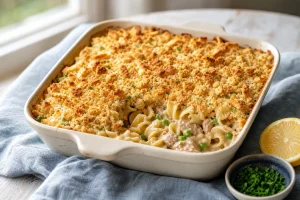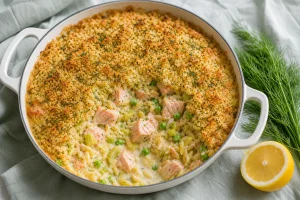

Shrimp and grits is a ten-minute dish. You cook the grits, you sear the shrimp for ninety seconds a side, you eat. Turning it into a casserole sounds like a good idea right up until you realize the casserole part takes thirty minutes and the shrimp part takes three.
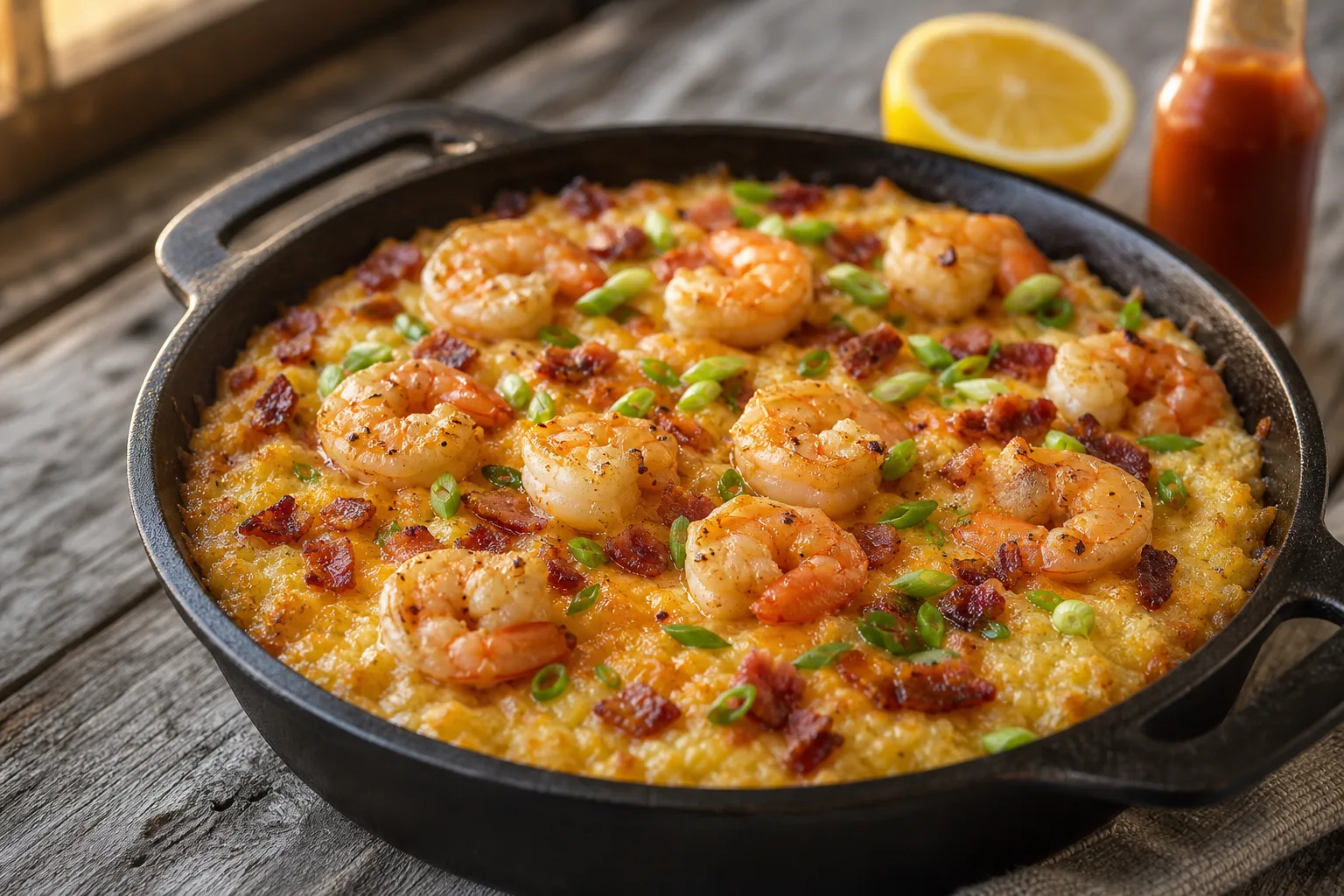
So I stopped treating them as one dish going into the oven. The grits bake alone, into a set, cheesy, spoonbread-adjacent slab. Then the dish comes out, raw shrimp get pressed into the surface, and it goes back in for eight minutes — the grits cooking them from underneath while the oven works from above.
I have served this to eight people on a Sunday and the shrimp were still plump. That is the entire claim and it took me four tries to get there.
Why This Works
A baked grits base is a hot, dense slab of stored heat. Pressing raw shrimp into it means they cook from below as well as above, so eight minutes is genuinely enough — and the five-minute rest afterward finishes the thickest ones on carryover instead of in the oven.
Ingredients
This wants a 12-inch cast iron skillet or a shallow 3-quart dish. Cast iron holds the most heat, which is the trick the recipe depends on.
For the Grits Base
- 6 ounces thick-cut bacon, cut crosswise into 1/4-inch strips
- 1 small yellow onion, diced fine
- 3 cloves garlic, minced
- 1 1/2 cups stone-ground grits, not instant
- 4 cups chicken stock
- 2 cups whole milk
- 6 ounces sharp cheddar, grated
- 2 ounces cream cheese
- 3 tablespoons unsalted butter
- 2 large eggs, beaten
- 1 teaspoon kosher salt
- 1/2 teaspoon black pepper
- A few dashes of hot sauce
For the Shrimp
- 1 1/2 pounds large shrimp, peeled and deveined, tails off
- 1 tablespoon olive oil
- 1 1/2 teaspoons Cajun or Creole seasoning
- 1 tablespoon fresh lemon juice
- 4 scallions, sliced thin
- Lemon wedges, for serving
Easy Swap
Andouille in place of bacon is a straight swap and arguably more authentic — brown it in a tablespoon of oil, since it renders less fat. To skip pork entirely, brown eight ounces of sliced mushrooms in butter; you lose the smoke but keep the savory backbone.
How to Make It
Prep: 35 minutes | Bake: 40 minutes | Serves: 8
- Heat the oven to 350°F. Render the bacon in a 12-inch cast iron skillet over medium heat until crisp, about 8 minutes. Lift it out onto a plate and pour off all but two tablespoons of the fat.
- Cook the onion in that fat for 5 minutes, then the garlic for 30 seconds. Add the stock and milk and bring it to a simmer.
- Rain the grits in while whisking. Drop the heat to low and cook 20 to 25 minutes, whisking every few minutes and scraping the corners, until they are thick enough to hold a line from the whisk.
- Off the heat, stir in the cheddar, cream cheese, butter, salt, pepper, and hot sauce. Let it cool for four or five minutes — long enough that it won’t scramble the eggs — then whisk in the beaten eggs and half the bacon.
- Smooth the top and bake 30 minutes, until it is set at the edges and barely wobbly in the middle. While it bakes, toss the shrimp with the olive oil and Cajun seasoning.
- Take the skillet out and turn the oven up to 425°F. Working quickly, press the shrimp into the surface in rows, laying each one flat so it is half-buried in hot grits. Do not pile them up — a shrimp sitting on top of another shrimp will be raw while its neighbor is tough.
- Return it to the oven for 7 to 8 minutes. You are looking for shrimp that have curled into a loose C and gone opaque at the thickest part. A tight O means you waited too long.
- Pull it out, squeeze the lemon juice over the shrimp, and let it rest 5 minutes — the centers finish in that window. Scatter the scallions and the rest of the bacon, and serve with lemon wedges.
Don’t Do This
Do not use instant or quick grits. They make a base that is loose and pasty at the same time, and because it holds less heat it cannot cook the shrimp from below — which is the one thing the whole recipe is built on. Stone-ground, twenty-five minutes, no shortcuts.
Can You Make It the Night Before?
Yes — Assemble Up to 24 Hours Ahead
Yes, easily, because the shrimp were never going in early anyway. Make the grits base through step 4, spread it in the skillet, cover, and refrigerate up to two days. Bake it cold at 350°F for about 42 minutes instead of 30, then carry on with the shrimp exactly as written.
Cold grits set up firm — you can cut them with a knife — and they look nothing like what you put in the dish. That is normal and they loosen as they heat. What you must not do is skip the extra bake time and start pressing shrimp into a base that is only warm, because the stored heat from underneath is doing half the cooking.
The baked base reheats well on its own the next day, which makes this the rare casserole whose leftovers I plan for: foil on, 325°F, twenty minutes. Reheated shrimp are a different story — they go tough no matter what. If you expect leftovers, cook only as many shrimp as you will eat and keep the rest raw.
Reading a Shrimp Instead of a Timer
A raw shrimp is a straight gray comma. A cooked one is a pink C, loose and open, with the thickest part gone opaque all the way through. An overcooked one has pulled itself into a tight O, and once it closes that circle there is nothing you can do.
Because my shrimp are half-buried, I watch the exposed curve of the back. When it has gone from translucent to solid pink along the whole length, the dish comes out — even if that happens at six minutes. The rest happens on the counter.
Worth Knowing
Frozen shrimp are usually better than the thawed ones in the case, which were frozen anyway and have been sitting. Thaw them in a colander under cool running water for five minutes, then dry them well — wet shrimp steam instead of roasting.
Buying Shrimp That Can Take Eight Minutes
Shrimp are sold by count per pound, and the number on the sign is the only size information worth trusting — large, jumbo and colossal mean different things at different counters. You want 21/25 or 26/30. At that size a shrimp has enough mass to spend eight minutes in a hot dish and come out plump. A 51/60 salad shrimp is fully cooked in about ninety seconds and then has five minutes of nothing good ahead of it.
The other thing to look at is whether they have been treated. Shrimp labeled with sodium tripolyphosphate, or sold as wet-packed, have been soaked so they hold water and weigh more. They feel slippery and faintly soapy, they refuse to brown, and they release that water into your grits. Dry-packed shrimp cost more per pound and you are not paying for water, so the real gap is smaller than the shelf price suggests.
Buy them peeled and deveined if you can, because you cannot do either job once they are pressed into the surface of a baked casserole. If you only find shell-on, peel them yourself and save the shells in the freezer — a handful of shrimp shells simmered in the stock before the grits go in costs ten minutes and makes the base taste unmistakably of shrimp rather than just of cheese.
Don’t Skip This
Dry the shrimp before they go into the oil and seasoning. Wet shrimp steam rather than roast, the Cajun seasoning slides off into the grits, and the surface never takes on any color at all. Paper towels, both sides, thirty seconds of attention.
Why the Eggs Belong in There
Two beaten eggs turn the grits from a porridge into something sliceable. Without them you get a dish that tastes right and collapses on the spoon, which matters when you are serving eight people and want the portions to hold their shape on the plate.
The timing is the only fussy part. Grits straight off the stove will scramble the eggs into yellow threads, so let the pot sit four or five minutes first. Stir them in briskly and get the dish into the oven while it is still warm.
Rachel’s Tip
Buy shrimp a size bigger than you think you need. Large or jumbo have enough mass to survive eight minutes, where small salad shrimp are fully cooked in three and then spend five more minutes getting worse. Size is a buffer against the oven.
Questions People Ask
Can I use pre-cooked shrimp?
You can, but change the method: skip the oil and seasoning toss, press them into the base, and give it only three minutes at 425°F. Pre-cooked shrimp have already been through the curl, so all you are doing is warming them. Eight minutes will take them to rubber.
Why are my grits gritty or grainy?
Undercooked, nearly always. Stone-ground grits need the full twenty-five minutes at a real low simmer, and they need liquid — if yours tightened up before the time was out, add a splash more milk and keep going. Grits are done when they taste creamy, not when they look thick.
Can I bake the shrimp in from the start if I’m in a hurry?
You can, and you will get the rubbery casserole this recipe exists to avoid — thirty-eight minutes is roughly twelve times as long as a shrimp needs. The better shortcut is to sear them ninety seconds a side and spoon them over the baked grits at the table.
What size shrimp should I buy?
Look for counts of 21/25 or 26/30 per pound, sold as large or extra-large. Tails off makes serving easier. Deveined is worth the extra dollar because you cannot easily do it once they are pressed into the grits.
What do you serve alongside it?
It is already a complete dinner, so I keep the sides sharp and green rather than adding more richness. Collards with vinegar, a tomato salad in summer, or just lemon wedges and hot sauce on the table. If you want bread, cornbread is the obvious match, though it overlaps with the grits and you may not want both.
About This Article

Written by Rachel Thompson. Rachel Thompson is a home cook who has spent over 10 years making an unreasonable number of dips, appetizers, and party spreads — no culinary training, just a decade of trial and error and a reputation among friends for always being asked to "bring a dip." She focuses on approachable recipes that combine bold flavors with simple techniques, making entertaining at home accessible to everyone. More about this site.
Scope and limits. Rachel is a home cook with no culinary training. Follow current food safety guidance for holding temperatures and time limits whenever you are serving people other than yourself.
Verify this against a primary source
Specifics change, and your situation may differ from the one described here. These are the authorities worth checking directly:
- FoodSafety.gov — cold holding, hot holding and the two-hour rule
- USDA FoodData Central — ingredient composition and nutrition data
- USDA Food Safety and Inspection Service — safe minimum temperatures and leftovers