
The first time I swapped cauliflower into a gratin, I used the same amount of sauce that had worked beautifully for broccoli. It came out of the oven looking gorgeous and tasted like cheese-flavored paste. The sauce was gone. Not watery, not broken, just gone, absorbed into the florets until the whole dish was dense and dry.
That is the whole story of cauliflower in a gratin. It is the one frozen vegetable that soaks up liquid instead of shedding it, so it needs more sauce than anything else I make this way. Once I stopped treating it like broccoli and gave it the extra cup it wanted, this became the dish my family asks for with ham, with roast chicken, and on its own with a green salad.
Like the rest of the gratins in this series, it starts with a bag of frozen diced hash brown potatoes and a bag of frozen vegetables, and it never touches a peeler, a mandoline, a saucepan, or a cutting board. If you want the fresh-sliced version, I have one on the site and it is lovely. This is the Tuesday-night version.
Why This Works
Cauliflower florets are porous. They are mostly a dense, spongy network of tiny crevices, and when they thaw and cook they take sauce into those crevices instead of letting it pool around them. Broccoli sheds water; cauliflower drinks. So this gratin gets roughly a cup more liquid than a broccoli one would, and it comes out creamy instead of pasty.
Ingredients
This fills a 9×13-inch baking dish, about 2 inches deep. Everything goes in frozen, straight from the bag.
For the Gratin
- 1 bag (32 ounces, 2 pounds) frozen Southern-style diced hash brown potatoes
- 1 pound frozen cauliflower florets (a standard 16-ounce bag)
- 3 tablespoons all-purpose flour
- 1 1/2 cups whole milk, cold
- 1 1/2 cups heavy cream, cold
- 3/4 teaspoon kosher salt, plus more to taste
- 1/2 teaspoon black pepper
- 1/4 teaspoon freshly grated nutmeg
- 1 teaspoon garlic powder
- 1 teaspoon Dijon mustard
- 2 cups (8 ounces) shredded Gruyère, divided
- 1 cup (4 ounces) shredded sharp white cheddar
- 2 tablespoons unsalted butter, cut into small pieces
- Chopped fresh chives, for serving
Easy Swap
If you want a tighter, less saucy gratin, thaw the potatoes in a colander and pat them dry, and use only 2 cups of total liquid. The cauliflower will still soak up plenty. Do not do this for the main recipe, though; the whole idea is that nothing gets thawed.
How to Make It
Prep: 15 minutes | Bake: 75 minutes | Rest or cool: 15 minutes | Serves: 8 to 10
- Heat the oven to 375°F with a rack in the center. Butter a 9×13-inch baking dish, or grease it generously with cooking spray.
- In a large bowl, whisk the flour into the cold milk first, working out every lump, then whisk in the cream, salt, pepper, nutmeg, garlic powder, and Dijon. Doing the flour and milk first matters: poured onto cream, flour clumps and stays in little pockets that never dissolve.
- Add the frozen potatoes, the frozen cauliflower, 1 cup of the Gruyère, and half the cheddar to the bowl. Stir until the potatoes and florets are evenly coated. The mixture will look loose and a bit soupy. That is correct, and it is the point of this recipe.
- Scrape everything into the prepared dish and spread it into an even layer. Tap the dish lightly on the counter so the liquid settles between the potatoes and the florets. Dot the surface with the butter.
- Cover the dish tightly with foil, crimping it around the edges. Bake for 50 minutes. The covered phase cooks the potatoes through and thickens the flour slurry.
- Remove the foil. Give the surface a gentle press with a spatula to submerge any dry florets, then scatter the remaining Gruyère and cheddar over the top.
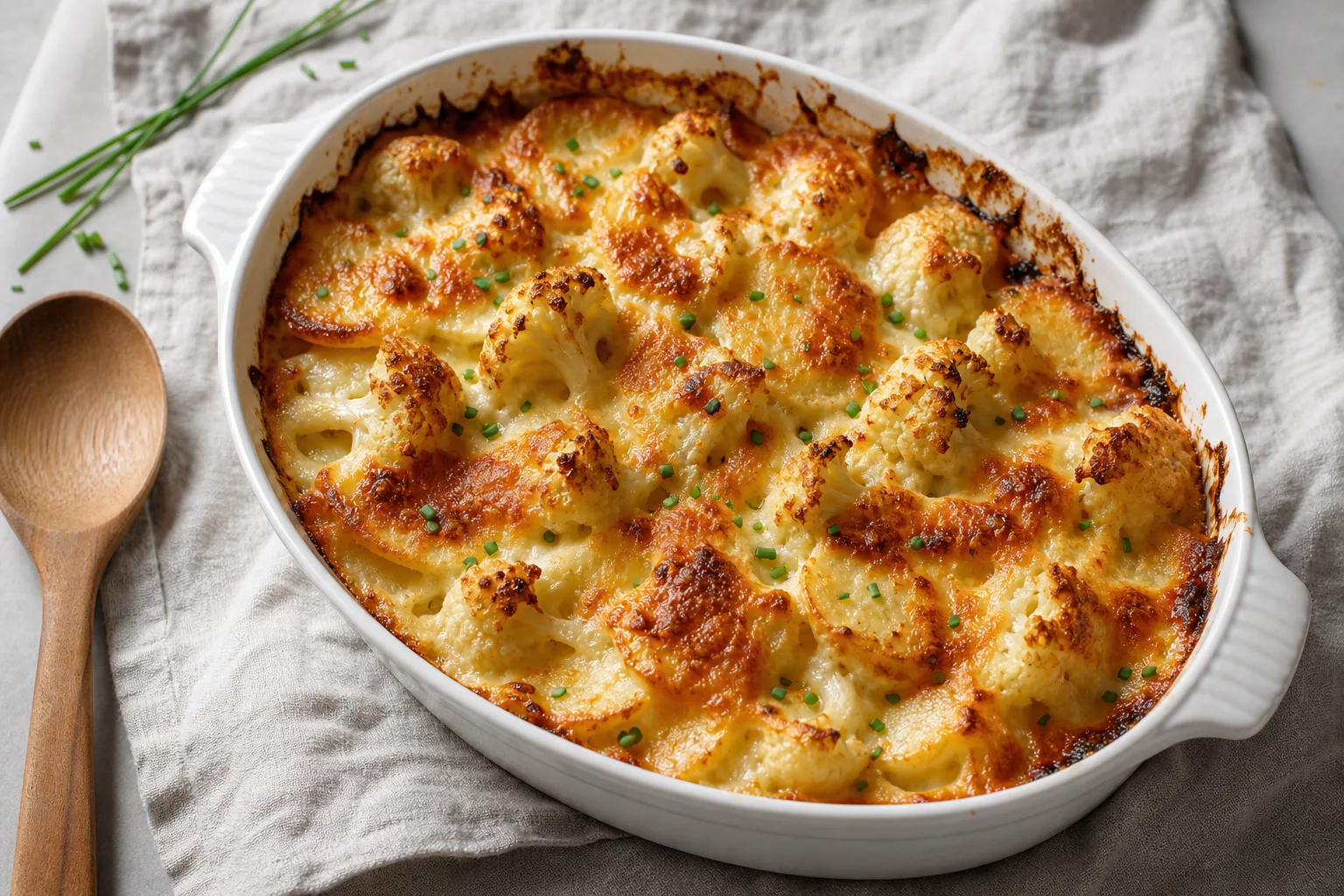
- Return to the oven, uncovered, for 25 to 30 minutes, until the cheese is deeply golden and the edges are bubbling. Cauliflower browns better than any other vegetable here, so let it go until you see real color, with some dark flecks on the tips of the florets.
- Rest the gratin for 15 minutes before cutting. The sauce is loose when it comes out and tightens as it cools. Cut too early and it runs across the plate. Scatter with chives and serve.
Don’t Do This
Do not use a broccoli-gratin liquid amount here. If you cut the milk and cream to 2 or 2 1/2 cups, the florets will absorb it all and you will get a dry, dense dish with sauce only in the bottom corners. Cauliflower needs the full 3 cups.
Can You Make It the Night Before?
Yes — Assemble Up to 24 Hours Ahead
Assemble the whole dish up to a day ahead and refrigerate it covered, holding back about a quarter cup of the milk. Stir gently before it goes in the oven and add 10 to 15 minutes to the covered bake.
Because frozen potatoes never darken the way raw sliced ones do, this gratin can be fully assembled the night before. Mix everything as written, but reserve about a quarter cup of the milk, then cover the dish tightly and refrigerate. Overnight, the potatoes thaw and release a little water, and the flour settles to the bottom.
Before baking, pull the dish from the refrigerator and let it sit on the counter for 30 to 45 minutes. A glass or ceramic dish that goes cold-to-hot can crack. Stir the contents gently to redistribute the settled flour, pour in the reserved milk, smooth the top, re-cover, and bake. Plan on 10 to 15 extra minutes in the covered phase because it starts cold. The overnight version comes out a touch looser and a touch slower than one baked straight away, but it is a good gratin.
Be honest with yourself about the timing: with the counter rest and the longer bake, make-ahead saves you attention on the day, not minutes. It frees you from assembling anything while guests are in the kitchen. Leftovers keep in the refrigerator for 4 days and reheat in a 350°F oven, covered, for about 20 minutes. I do not recommend freezing it; the cream sauce turns grainy after thawing.
Why Cauliflower Needs More Sauce
Every other frozen vegetable I put into this style of gratin eventually gives something back to the pan. Broccoli and spinach are the biggest offenders; they shed water as the dish bakes, and I cut the liquid to account for it. Cauliflower is different. Its florets are packed with tiny air pockets and rough surfaces, and as the ice thaws and the vegetable heats, those spaces fill with whatever liquid is nearby.
In practice this means a gratin calling for about 2 to 2 1/2 cups of liquid with broccoli wants a full 3 cups with cauliflower: 1 1/2 cups of milk and 1 1/2 cups of cream, with only 3 tablespoons of flour to keep it from setting stiff. The batter will look wetter than you are comfortable with when you pour it into the dish. Trust it. By the end of the covered bake, the florets will have taken in a lot of it, and the potatoes will have taken in some more.
I learned the number by doing it wrong. My first cauliflower gratin used the broccoli measurements and came out like a casserole someone had left in the oven for two hours. The second, with a full cup extra, was creamy and saucy at the edges and tender all the way through.
Browning, and Why You Should Keep Going
Cauliflower caramelizes better than any other vegetable in this cluster. Roasted cauliflower is a staple for a reason: its natural sugars and its craggy, porous surface take on deep color quickly. In a gratin, that means the tips of the florets that poke through the top will brown and char slightly while the cheese goes golden around them.
That is a real argument for uncovering the dish and leaving it uncovered a little longer than you would for a spinach or broccoli gratin. I give this one the full 25 to 30 minutes, and I look for dark brown flecks, not just golden cheese. The extra time also drives off a bit more moisture from the sauce, so the finished texture is thick, not runny.
Mixing a little cheddar in with the Gruyère helps as well. Gruyère gives you nutty depth and a smooth melt; the sharp white cheddar contributes tang that cuts through the cream. If you only have one of them, either works, but I like both.
What to Serve With It
This is a side that holds its own next to a plain roast chicken, baked ham, a pork loin, or a pan-seared steak. It is rich, so I serve it with something bright: a vinegary green salad, roasted green beans, or sliced tomatoes with a little salt.
At holiday meals it replaces the usual potato side and the vegetable side at once, which is useful when oven space and attention are both short. A 9×13 pan feeds eight to ten as a side, and I have never had much left over.
Rachel’s Tip
Bake it until the top looks a little darker than you think it should. Cauliflower and a little Dijon are made for deep browning, and the roasty flavor is what separates this from plain creamed cauliflower.
Questions People Ask
Why is my cauliflower gratin dry?
Almost certainly not enough liquid. Cauliflower soaks up sauce instead of releasing water, so it needs more than other vegetables do. Use the full 3 cups of milk and cream with this much potato and cauliflower, and cover the dish tightly for the first 50 minutes so the liquid is not lost to evaporation.
Can I use fresh cauliflower instead of frozen?
You can, but it behaves a little differently. Fresh florets are firmer and release almost no water, and they take longer to soften. Cut them small, about the size of a large marble, and add 10 to 15 minutes to the covered bake. The frozen version is more forgiving, which is why I use it.
Should the potatoes and cauliflower be thawed first?
No. Everything goes in frozen, straight from the bag. The frozen potatoes are already blanched, so they cook through reliably, and the liquid in this recipe is calculated for ingredients that thaw in the oven. Thawing is a one-line option for a tighter sauce, but it is not necessary.
Why did my sauce turn out grainy?
A grainy sauce usually means the cheese was baked too long at too high a heat, or pre-shredded cheese was used. Packaged shredded cheese is coated with starch that can prevent smooth melting. Shredding your own from a block gives a smoother, silkier result.
Can I add ham or bacon?
Yes. About a cup of diced cooked ham stirred into the bowl works well with cauliflower. Because ham is salty, I would cut the added salt back to 1/2 teaspoon and taste before baking. Crumbled cooked bacon on top during the last 10 minutes is also good.
About This Article

Written by Rachel Thompson. Rachel Thompson is a home cook who has spent over 10 years making an unreasonable number of dips, appetizers, and party spreads — no culinary training, just a decade of trial and error and a reputation among friends for always being asked to "bring a dip." She focuses on approachable recipes that combine bold flavors with simple techniques, making entertaining at home accessible to everyone. More about this site.
Scope and limits. Rachel is a home cook with no culinary training. Follow current food safety guidance for holding temperatures and time limits whenever you are serving people other than yourself.
Verify this against a primary source
Specifics change, and your situation may differ from the one described here. These are the authorities worth checking directly:
- FoodSafety.gov — cold holding, hot holding and the two-hour rule
- USDA FoodData Central — ingredient composition and nutrition data
- USDA Food Safety and Inspection Service — safe minimum temperatures and leftovers