
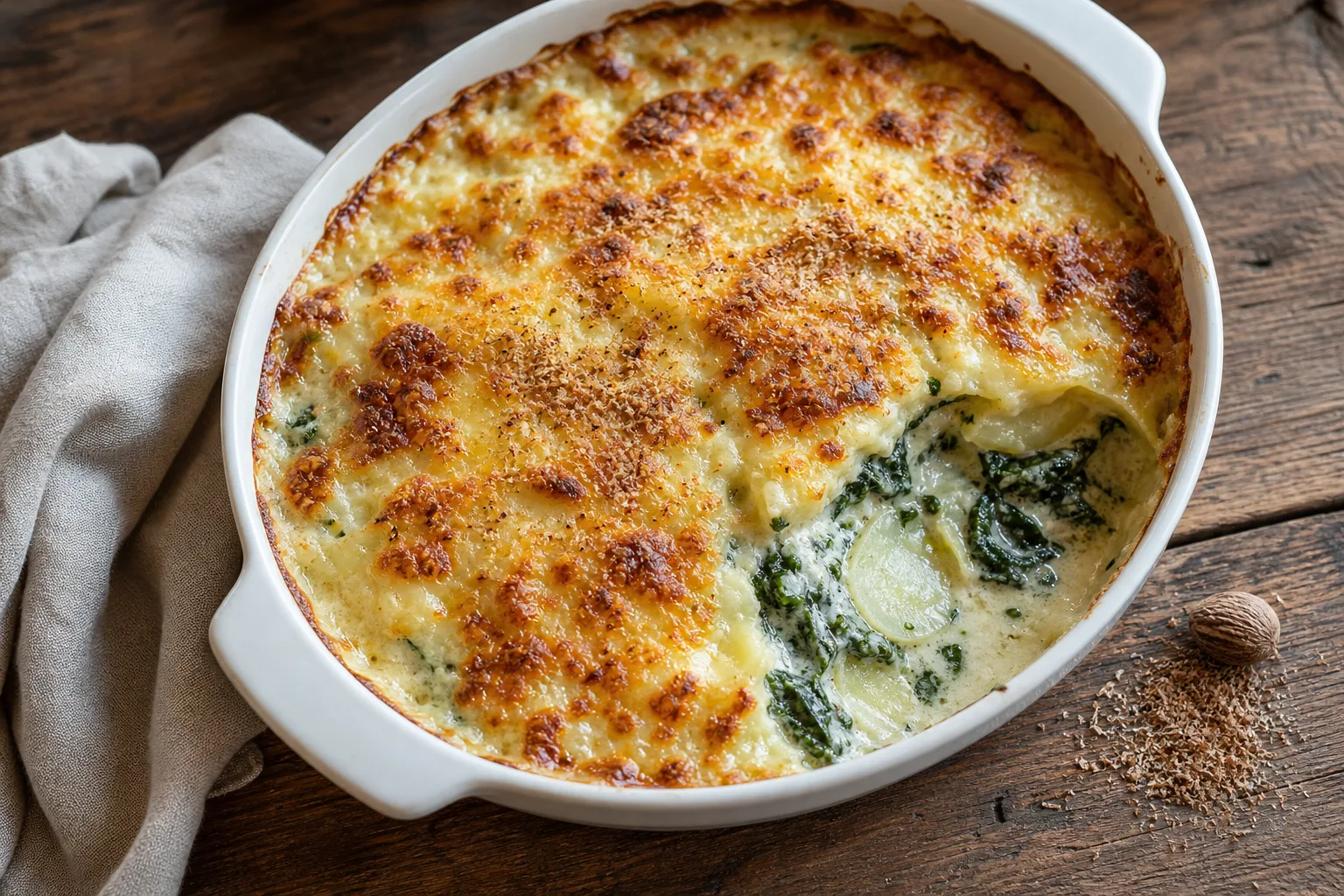

The first time I made a spinach gratin from frozen spinach, I thawed the box, dumped it in with the potatoes, and slid the dish into the oven feeling very pleased with myself. An hour later I pulled out something that looked like a casserole and ate like a bowl of potato soup with a green tint. The cheese had slid off the top into a pool of gray-green liquid at the edges, and the bottom layer of potatoes was swimming.
That was the spinach. A 10-ounce box of frozen chopped spinach is mostly water, and all of it comes out in the oven if it doesn’t come out in your kitchen first. Once I started wringing it out in a towel, the same dish came out thick, creamy and sliceable. It was the only thing I changed.
Everything else in this recipe is as lazy as I can make it. The potatoes are frozen diced hash browns that go in straight from the bag, so there’s no peeling and no slicing. The sauce is a cold milk-and-cream slurry that gets poured in raw, so there’s no saucepan. If you’ve been put off by the knife work in the fresh-potato gratins on this site, which make a better-looking dish but cost you 20 minutes at the cutting board, this is the Tuesday-night answer. It asks for exactly one real task, and that task is squeezing the spinach.
Why This Works
Frozen potatoes and frozen spinach both release water as they thaw in the oven, and a gratin sauce can only set if there’s not too much liquid fighting it. The potatoes are manageable because I cut the dairy back to compensate, but spinach is too wet for that trick to work. Wringing it out removes roughly a cup of water before it ever reaches the dish, which lets a modest amount of cream and a flour slurry thicken into a proper sauce instead of getting diluted into soup.
Ingredients
This fills a 9×13-inch baking dish about two inches deep and serves 8 to 10 as a side. Use a straight-sided dish, not a deep casserole, so the top browns before the middle overcooks.
For the Gratin
- 1 bag (32 ounces, about 2 pounds) frozen Southern-style diced hash brown potatoes, straight from the freezer
- 2 boxes (10 ounces each) frozen chopped spinach, thawed and wrung completely dry (see Step 1)
- 1 1/4 cups whole milk, cold
- 1 cup heavy cream, cold
- 1/4 cup all-purpose flour
- 3 cloves garlic, minced
- 1/2 teaspoon freshly grated nutmeg
- 1 teaspoon kosher salt, plus more to taste at the end
- 1/2 teaspoon black pepper
- 4 ounces cream cheese, cut into small cubes
For the Topping
- 2 cups (8 ounces) shredded Gruyere cheese
- 1/2 cup freshly grated Parmesan
- 1 tablespoon butter, cut into small pieces
- Cooking spray or butter for the dish
Easy Swap
If you want a tighter, less creamy sauce, thaw the hash browns in a colander and pat them dry before they go in the dish. Cut the milk to 1 cup if you do. I don’t bother on a weeknight, but it does make a firmer slice.
How to Make It
Prep: 20 minutes | Bake: 75 minutes | Rest or cool: 15 minutes | Serves: 8 to 10
- Put the frozen spinach in a colander in the sink the night before, or microwave the boxes for about 3 minutes until thawed and just warm. Let it sit until you can handle it. Spread a clean dish towel (cotton or linen, not terry cloth that sheds lint) flat on the counter. Pile one box of thawed spinach in the center, gather the corners, and twist hard over the sink. Keep wringing until the liquid slows to an occasional drip and the spinach looks like a dense, crumbly wad you could pull apart with your fingers. Repeat with the second box. You should end up with about 2 cups of liquid down the drain between the two boxes and roughly 1 cup of compact spinach.
- Fluff the wrung spinach apart with a fork so it doesn’t go into the dish in one clump. It should feel almost dry to the touch. If a squeeze of a handful still runs water between your fingers, wring it again.
- Heat the oven to 375°F with a rack in the middle. Grease a 9×13-inch baking dish well with butter or cooking spray.
- In a large measuring cup or bowl, whisk the flour into the cold milk until there is not a single lump left, then whisk in the cold cream, garlic, nutmeg, 1 teaspoon salt and the pepper. Take your time here; flour that goes in lumpy stays lumpy.
- Pour the frozen hash browns straight from the bag into the dish and spread them out. Scatter the fluffed spinach and the cream cheese cubes over the potatoes, then use a fork to toss everything together gently in the dish. Pour the milk mixture evenly over the top. It will look thin and a little sad at this point. That’s correct.
- Cover the dish tightly with foil, crimping the edges, and bake for 45 to 50 minutes. The covered phase is cooking the potatoes and thickening the flour slurry, so don’t peek early.
- Remove the foil, sprinkle the Gruyere and Parmesan evenly over the top and dot with the butter. Bake uncovered for 20 to 25 minutes more, until the cheese is deeply golden at the edges and the sauce is bubbling thickly around the sides.
- Rest the gratin for 15 minutes before serving. This is not optional. It’s what lets the sauce finish setting, and a gratin cut straight from the oven will run across the plate. Taste a corner, then add a pinch of salt at the table if it needs it.
Don’t Skip the Squeeze
This is the one step in this recipe that is genuinely mandatory. Spinach that goes in even slightly damp will thin the sauce, pull the cheese off the top and leave a pool of gray-green liquid at the bottom of the dish. If you only have five minutes, spend all five on the towel.
Can You Make It the Night Before?
Yes — Assemble Up to 24 Hours Ahead
You can assemble this the night before and bake it the next day, unlike the fresh-potato gratins on this site, but hold back about a quarter cup of the milk and plan on a longer covered bake.
Frozen potatoes are already blanched, so they won’t darken overnight the way raw sliced potatoes do. That’s what makes this version safe to assemble ahead. Do the spinach squeeze, build the whole dish, pour in the liquid minus about 1/4 cup of the milk, cover with foil and refrigerate for up to 24 hours.
The potatoes will thaw in the fridge and shed a little water, and the flour will settle to the bottom. Before baking, pull the dish out for 30 to 45 minutes so it comes up from fridge-cold, which also keeps glass and ceramic from cracking from thermal shock. Stir everything gently to redistribute the settled flour, then pour the reserved milk over the top. Bake covered for 55 to 65 minutes, about 10 to 15 minutes longer than the straight-from-freezer version, then uncover and finish as written.
Be honest with yourself about what you’re buying. The overnight version is a touch looser and slower, and the total clock time is about 90 minutes once you count the counter rest. What make-ahead gives you is a free afternoon on the day, not a shorter dinner. Leftovers keep three days in the fridge and reheat well covered at 325°F. I don’t recommend freezing a baked pan; the sauce turns grainy.
What Happens If You Skip the Squeeze
I’ve done this on purpose twice now, so you don’t have to. The first time I drained thawed spinach in a colander and gave it a couple of presses with a spoon. The second time I just dumped it in thawed. Both times the gratin looked fine going into the oven. Both times it came out of the oven wrong.
The colander-and-spoon version was better but still loose, with a visible tide line of liquid along the edges of the dish and a sauce that never quite set. The dump-and-go version was the soup. The cheese on top had broken into oily islands, and when I scooped a serving, liquid ran into the hole and the potatoes slid into it. The flavor was fine, but it was a bowl food, not a side you could plate next to a roast.
A 10-ounce box of frozen chopped spinach sounds like a small amount of food, but most of that weight is water locked inside the leaves. When you thaw it, you can drain off a little, but the rest is held in the cell structure until you apply real force. A towel twist gets it out. A spoon on a colander doesn’t. Between two boxes you should see around 2 cups of liquid come out, and that’s liquid that would otherwise be sitting in your dish.
How Dry Is Dry Enough
Squeeze a golf-ball-sized handful in your fist. If water runs out between your fingers, keep going. When it comes out as a dense, crumbly ball that holds its shape and leaves your palm only slightly damp, you’re done.
Why Everything Else Here Is Easier
Once the spinach is dry, the rest of the dish is almost embarrassingly simple. The hash browns go in frozen. They’re already blanched, which means they cook through reliably under the foil and, unlike raw potato slices, they won’t darken if the dish sits in the fridge overnight.
The sauce is a cold slurry: flour whisked into cold milk and cream, poured in raw. There’s no roux and no saucepan. The flour thickens while the dish bakes under foil, and because I’ve cut the total liquid to about 2 1/4 cups for 2 pounds of potatoes and 20 ounces of spinach, there’s room for the little water the potatoes still release. The cream cheese melts into the sauce and gives it body without the canned-soup shortcut. I don’t use canned soup in anything here, since a cold slurry does the same job with ingredients you can pronounce.
If you want the full, glossy, fresh-sliced-potato version of a gratin, the classic au gratin on this site is lovely, but it will cost you a mandoline or a lot of patience. This one trades some looks for a Tuesday.
Rachel’s Tip
Do the squeeze in two batches, one box at a time. Half a box in a towel gets much drier than a whole pile you can’t get your hands around, and you’ll twist harder and faster with a smaller bundle.
Questions People Ask
Can I use fresh spinach instead of frozen?
You can, but it takes more work. You’d need about 1 1/2 pounds of fresh spinach, wilted in a pan and then squeezed dry in a towel exactly the same way, since wilted fresh spinach is just as wet. Frozen is easier here, and it’s consistent from box to box.
Why is my spinach gratin watery?
Nine times out of ten it’s the spinach. If the leaves go in damp, they release roughly a cup of liquid in the oven, and that thins the sauce and slides the cheese off the top. Wring the thawed spinach in a towel until it’s a dense, crumbly wad that barely leaves your palm damp. The potatoes are the second most likely cause, so make sure you used the reduced liquid amounts above.
Do I have to thaw the hash browns?
No. They go in frozen, straight from the bag, and the covered bake time and liquid amount in this recipe are built around that. Thawing them and patting them dry will tighten the sauce slightly, but it’s optional.
Can I make this gratin ahead of time?
Yes, up to 24 hours. Assemble it with about 1/4 cup of the milk held back, cover and refrigerate. Let it sit out 30 to 45 minutes before baking, stir to redistribute the settled flour, add the reserved milk, and bake covered for 10 to 15 minutes longer than the fresh version.
About This Article

Written by Rachel Thompson. Rachel Thompson is a home cook who has spent over 10 years making an unreasonable number of dips, appetizers, and party spreads — no culinary training, just a decade of trial and error and a reputation among friends for always being asked to "bring a dip." She focuses on approachable recipes that combine bold flavors with simple techniques, making entertaining at home accessible to everyone. More about this site.
Scope and limits. Rachel is a home cook with no culinary training. Follow current food safety guidance for holding temperatures and time limits whenever you are serving people other than yourself.
Verify this against a primary source
Specifics change, and your situation may differ from the one described here. These are the authorities worth checking directly:
- FoodSafety.gov — cold holding, hot holding and the two-hour rule
- USDA FoodData Central — ingredient composition and nutrition data
- USDA Food Safety and Inspection Service — safe minimum temperatures and leftovers