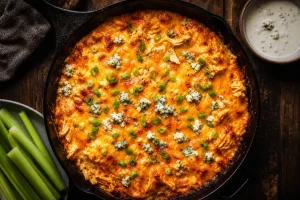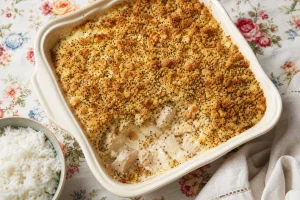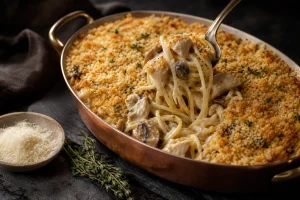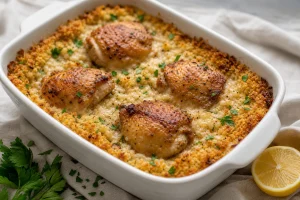

This is the chicken version. The ground beef one is a different post on this site and a different problem: beef brings its own grease and most of the work there is getting rid of it. Chicken brings none, which is why swapping shredded chicken straight into a taco casserole gives you something that tastes like a spice jar was shaken over rice.
I made that swap the first few times because it looked obvious, and what came out was pale and powdery, with the chili powder sitting on top of everything instead of running through it and the chicken gone stringy by the time the cheese browned. Both faults trace back to one missing ingredient, and it is not a spice. A pound of ground beef renders about five tablespoons of fat, and that fat dissolves the seasoning and insulates the meat through a long bake. Here you put it back on purpose, up front.
Why This Works
Chili powder, cumin, and paprika carry most of their flavor in fat-soluble compounds, so they need hot fat to open up. Ground beef supplies it for free; shredded chicken does not. Stirring the dry spices into three tablespoons of hot oil for forty-five seconds, before any liquid arrives, is the whole difference between seasoned and dusty.
Ingredients
For the Chicken Mixture
- 3 tablespoons neutral oil, such as canola or avocado
- 1 large yellow onion, diced small
- 4 cloves garlic, minced
- 2 tablespoons chili powder
- 1 tablespoon ground cumin
- 2 teaspoons sweet or smoked paprika
- 1 teaspoon dried oregano
- 1/2 teaspoon cayenne, optional
- 1 tablespoon tomato paste
- 2 cups salsa
- 1 1/4 cups chicken broth
- 4 cups cooked chicken, pulled into thumb-sized pieces (about 1 1/4 pounds)
- 1 (15-ounce) can black or pinto beans, drained and rinsed
- 1 1/2 cups frozen corn
- 3 cups cooked long-grain white rice, cooled
- 2 tablespoons fresh lime juice
- 1/2 cup chopped cilantro
- 2 teaspoons kosher salt
- 1 teaspoon black pepper
For the Top
- 10 ounces Monterey Jack or a Jack-cheddar mix, grated from a block (about 2 1/2 cups)
- 2 tablespoons chopped cilantro
For the Table
- Shredded romaine or iceberg
- Sliced avocado and pickled red onion
- Diced tomato and pickled jalapenos
- Sour cream and plenty of lime wedges
Black Beans or Pinto, and Yes, Rinse Them
Both work and they are not the same. Pinto is softer and starchier and breaks down a little, which thickens the sauce and mutes it; black beans hold their shape through the bake and look better against the rice. Either way, drain and rinse — a can carries close to half a cup of thin, salty, starchy liquid, and in a dish whose whole point is being brighter than its creamy cousins, that is the one thing you give up for nothing. Refried beans turn the whole casserole to paste.
How to Make It
Prep: 30 minutes | Bake: 35 minutes | Serves: 8
- Heat the oven to 375°F and oil a 9×13 dish. Have the rice cooked and cooled and the chicken pulled apart before you start — the pan work moves fast once the spices hit the oil.
- Warm the oil in a wide skillet over medium heat. Add the onion with a pinch of salt and cook 6 minutes, until translucent and just coloring at the edges. Add the garlic for 1 minute.
- Add the chili powder, cumin, paprika, oregano, cayenne, salt, and pepper all at once and stir constantly for 45 seconds. The spices drink up the oil and turn into a dark paste clinging to the onions, and the smell goes from sharp to toasted. Stop there — past a minute the chili powder turns bitter.
- Stir in the tomato paste for 1 minute, then add the salsa and broth. Scrape the pan clean and simmer 4 minutes, until it thickly coats a spoon but is still a sauce.
- Off the heat, fold in the chicken, beans, corn, rice, lime juice, and cilantro. Taste it now. It should read slightly too salty and slightly too limey on the spoon, because two and a half cups of cheese are about to mute both.
- Scrape it into the dish and spread it level without packing it down. Cover tightly with foil and bake 20 minutes, until the edges are bubbling.
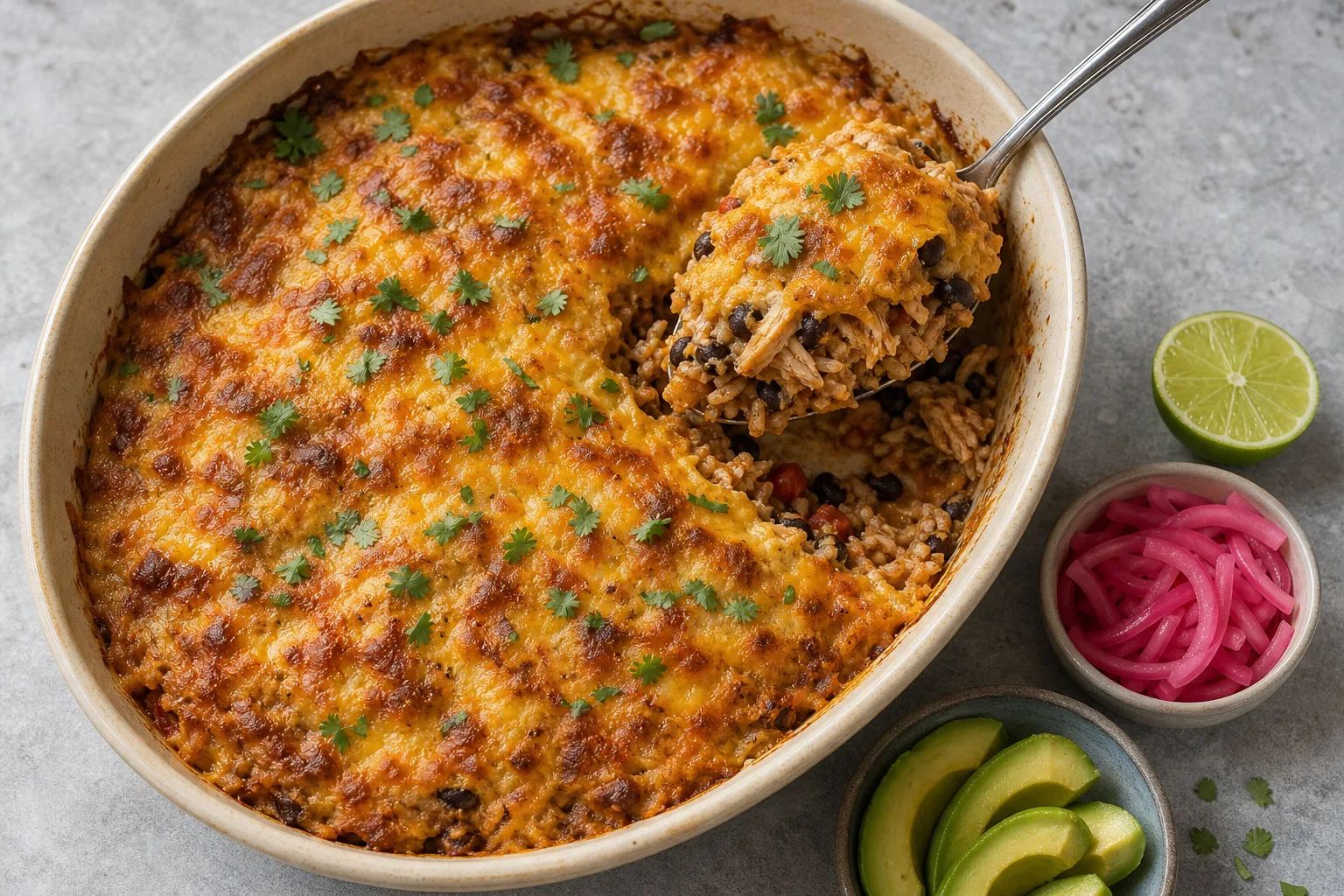
- Uncover, scatter the cheese over the top, and bake 12 to 15 minutes more, until it is browned in patches and the sauce is bubbling up the sides. The cheese goes on late on purpose; thirty-five minutes of direct heat makes it leathery.
- Rest it 10 minutes, squeeze a lime half over the pan, and scatter the last of the cilantro. The cold toppings go on the table in bowls.
Don’t Bake the Toppings
Lettuce, avocado, sour cream, and fresh tomato belong on the table, not in the oven — avocado in particular goes gray and faintly bitter at 375°F. It matters more here than in the beef version, because with no rendered fat making the hot half rich, the contrast between a soft savory base and a cold sharp top is doing most of the work. Mix them in and you get one warm texture.
Can You Make It the Night Before?
Yes — Assemble Up to 24 Hours Ahead
Assemble through the folding step, cover, and refrigerate up to 24 hours — but stir in an extra 1/4 cup of broth first, because the rice keeps drinking sauce all night and a mixture that looked right at nine will look dry at six. Hold back the cheese, the finishing lime, and all of the cold toppings.
Out of the refrigerator 45 minutes before baking, then 30 minutes covered instead of 20 and the same 12 to 15 uncovered once the cheese is on. A cold 9×13 heats from the outside in, and without that extra time under foil you get scorched edges around a lukewarm middle.
Overnight is a trade, not a free win. The flavor improves, because the bloomed spices settle into one thing instead of several and the beans soften into the sauce. The texture gets worse: the rice firms up and the mixture loses the loose, saucy quality it had in the pan. The extra broth buys back most of that.
For the freezer, freeze the chicken and sauce on their own, before the rice goes in, for up to two months. Frozen cooked rice comes back faintly chalky and never rehydrates in a bake that is already fighting dryness. The sauce thaws overnight in the refrigerator and is also most of a quesadilla filling.
Chicken Brings No Fat, and Taco Seasoning Expects It
Taco seasoning was designed around ground beef whether or not the packet says so. Chili powder, cumin, and paprika hold most of what they taste like in compounds that will not dissolve in water, and 80/20 beef hands you five tablespoons of hot fat at exactly the moment the spices need it. The beef version works by accident.
Four cups of pulled chicken breast brings maybe a tablespoon, and most of that is clinging to the meat rather than loose in the pan. Add the same spices and there is nothing for them to dissolve into, so they stay granular. You can name every one of them, they are all sitting on the surface of the rice, and none of them taste like a taco. The instinct is to add more seasoning, which adds more dust.
So the oil goes in first and it goes in generously: three tablespoons for a 9×13, which is more than it sounds like and still less than half of what two pounds of beef would have shed. What matters is the order, not the quantity. Oil stirred in at the end does nothing, because by then the spices have already sat in a watery sauce and come out grainy. A seasoning packet is fine to use here, incidentally — add it dry to the hot oil with the onions and skip the water it tells you to add.
The Dryness Problem: Cooked Chicken in a 35-Minute Bake
The other job beef fat was quietly doing is insulation. Your chicken is already cooked when it goes into the dish, so every one of the next thirty-five minutes at 375°F is time spent losing moisture rather than gaining anything. Ground beef sits in a pool of its own fat and barely notices. Dry shredded breast turns to thread.
Two of the three fixes are small. Thigh meat instead of breast gives you more fat, more gelatin, and a genuinely wider margin for error. Bigger pieces help too: pull the chicken into chunks about the size of the end of your thumb rather than fine shreds, because threads are almost all surface area, and surface area is where the water leaves.
The third fix is the one that actually does the work, which is having enough sauce. Two cups of salsa plus a cup and a quarter of broth looks like far too much liquid when you are folding it into the bowl, and it is not — the rice drinks about a third of it in the oven, and the rest is what keeps the chicken sitting in something wet instead of drying in open air. The foil is part of the same idea, and it is why the cheese waits until the last twelve to fifteen minutes.
How to Tell You Have Enough Sauce
Push the folded mixture to one side of the bowl. A little liquid should seep back into the trench within a few seconds. If the walls hold dry, you are a quarter cup of broth short — add it now. After the bake is too late.
Why Lime Does Real Work in This One
In the beef version lime is a garnish you can skip, because rendered fat gives the dish a richness that lingers after you swallow. Here there is almost none of that, and what you notice is not that the casserole is lean but that it stops short — the flavor arrives, registers as taco-shaped, and quits. Acid keeps it going, and it also cuts the flat starchiness of rice and beans.
It goes in twice. Two tablespoons of juice get folded in off the heat, after the simmering is done, because acid cooked for any length of time loses its top note and leaves a vague sourness behind. Then wedges on the table and a squeeze over the whole pan after the rest. The second round is the one people notice. Use fresh — bottled juice has a cooked, slightly metallic edge that the beef version’s fat would paper over and this one will not.
Questions People Ask
What is the difference between this and a beef taco casserole?
Mostly fat, and everything downstream of it. Beef renders enough to bloom the spices and protect the meat, so there the job is getting rid of the excess. Chicken brings none, so you add three tablespoons of oil up front, bloom the spices deliberately, and lean harder on sauce and lime. The beef one is also layered on corn tortillas; this one is folded together with rice.
Is this the same as King Ranch chicken casserole?
No. King Ranch is creamy — bound with a roux or condensed soup plus sour cream, deliberately mild, and layered on corn tortillas so it cuts into strata. This has no dairy in the base at all. It is bound with salsa and bean starch, it is brighter and more acidic, and it is stirred rather than layered. Same region, different dinners.
Why does my chicken taco casserole taste dusty?
The spices never met fat. Added after the chicken or the liquid, they land somewhere watery, cannot dissolve, and stay granular right through the bake. Oil in the pan first, onions softened in it, then the dry spices alone in that hot oil for 45 seconds. If it already tastes dusty, more seasoning is more of the problem.
Chicken breast or thighs?
Thighs if you get to choose: more fat and more gelatin, which is exactly what this dish is short of, and much harder to overcook in a 35-minute bake. Breast works fine — pull it into thumb-sized chunks rather than shreds, do not skimp on the sauce, and keep the foil on for the first 20 minutes.
About This Article

Written by Rachel Thompson. Rachel Thompson is a home cook who has spent over 10 years making an unreasonable number of dips, appetizers, and party spreads — no culinary training, just a decade of trial and error and a reputation among friends for always being asked to "bring a dip." She focuses on approachable recipes that combine bold flavors with simple techniques, making entertaining at home accessible to everyone. More about this site.
Scope and limits. Rachel is a home cook with no culinary training. Follow current food safety guidance for holding temperatures and time limits whenever you are serving people other than yourself.
Verify this against a primary source
Specifics change, and your situation may differ from the one described here. These are the authorities worth checking directly:
- FoodSafety.gov — cold holding, hot holding and the two-hour rule
- USDA FoodData Central — ingredient composition and nutrition data
- USDA Food Safety and Inspection Service — safe minimum temperatures and leftovers