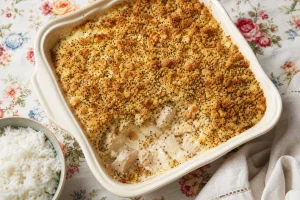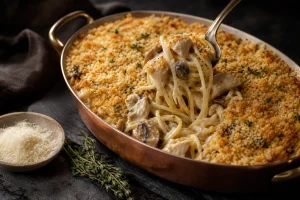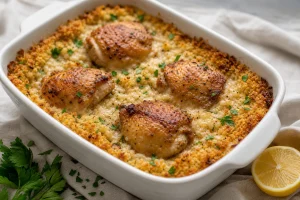
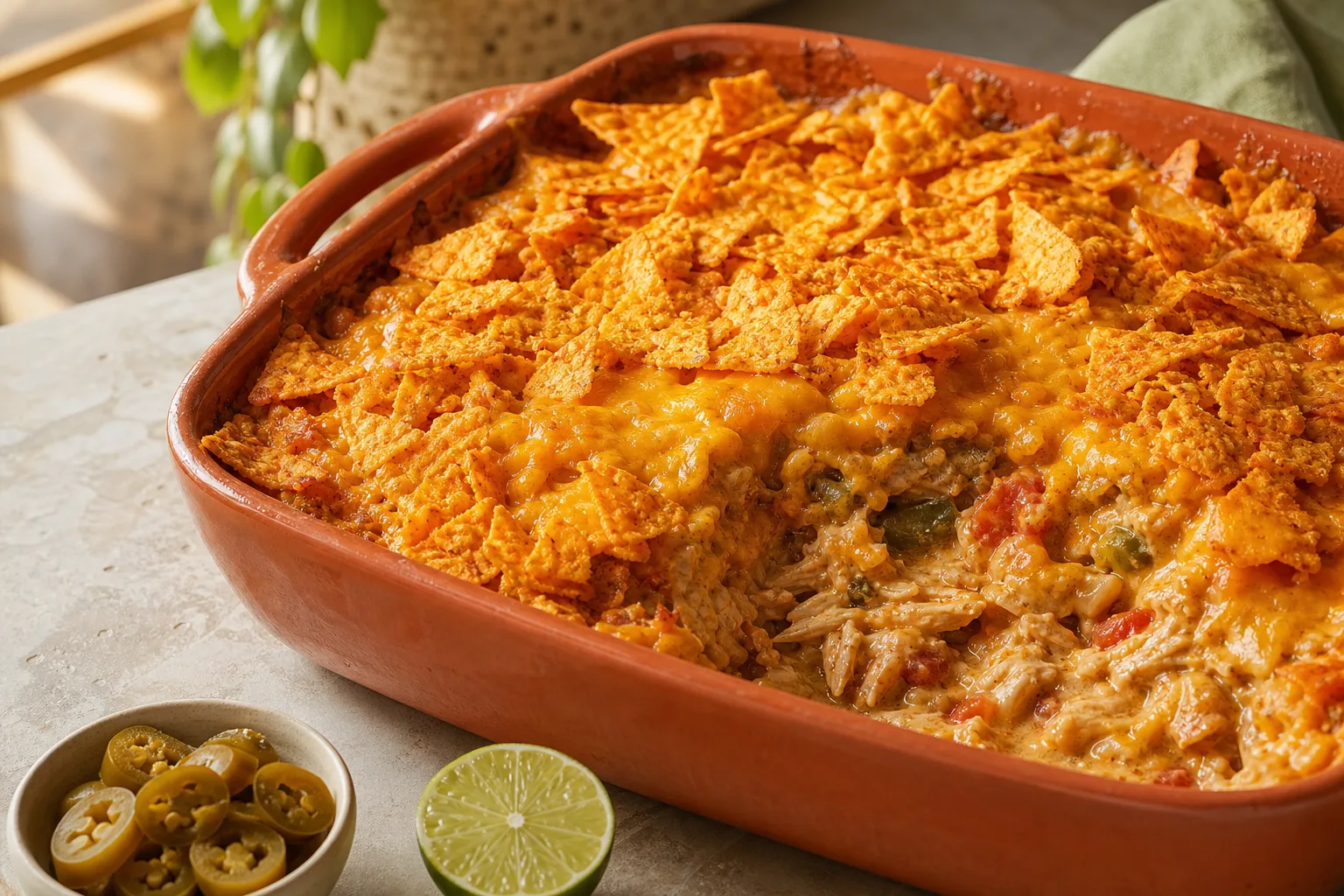

Most Dorito chicken casserole recipes treat the chips as a hat: make a creamy chicken filling, crush a bag over the top, bake, hope. That is why the dish has a reputation as a kid-dinner joke. The filling tastes like nothing much and the chips end up soft or faintly burnt. The usual method also has you poaching chicken, sautéing onions and cooking a roux before the dish even reaches the oven.
A Nacho Cheese Dorito is really two ingredients pressed together: fried corn, which is structure, and orange powder, which is salt, dried cheese, tomato, onion and a lot of acid. Crush two cups fine and stir them into the sauce, and that powder seasons the dish from the inside. The crust on top is a separate decision.
This version is one bowl and one dish. The chicken goes in raw, the sauce is flour whisked into cold broth, and the onion and jalapeno go in uncooked. The oven does all the cooking. I have made it a dozen times, and the things that went wrong were salt, scorch, and one batch that stayed thin because I forgot to cover the dish. All three are avoidable once you know they are coming.
Why This Works
A nacho cheese chip is a seasoning delivery system with a cracker attached. Crushed fine into the sauce, the powder dissolves and does real flavor work while the corn softens and thickens the filling. Left in big shards on top, the same chip does the opposite job and stays crunchy. The oven handles the rest: 40 minutes under tight foil cooks the raw chicken through and gives the flour time to thicken, then the crust goes on for the last stretch only.
Ingredients
This fills a 9×13 and feeds eight with rice or a salad. One 9.25-ounce bag covers the filling and the crust with a handful left over.
For the Sauce
- 1/3 cup all-purpose flour
- 2 1/4 cups low-sodium chicken broth, cold
- 1 cup full-fat sour cream
- 1 tablespoon lime juice
- 1 tablespoon chili powder
- 2 teaspoons ground cumin
- 1 teaspoon smoked paprika
- 1/2 teaspoon dried oregano
- 1/2 teaspoon kosher salt (yes, only a half teaspoon)
- 1/2 teaspoon black pepper
- 1 large yellow onion, diced to 1/4 inch
- 1 jalapeno, seeded and minced (seeds in for real heat)
- 3 cloves garlic, minced
- One 10-ounce can diced tomatoes with green chiles, well drained
For the Filling
- 1 1/2 pounds boneless, skinless chicken thighs, cut into 3/4-inch pieces
- 1/2 teaspoon kosher salt, for the chicken
- 2 cups Nacho Cheese Doritos, crushed to coarse sand
- 1 1/2 cups shredded Monterey Jack
- 1/3 cup chopped cilantro
For the Crust
- 1 1/2 cups shredded sharp cheddar
- 3 cups Nacho Cheese Doritos, broken into rough quarters, not crushed
- Sliced scallions or pickled jalapenos, for serving
Easy Swap
Cool Ranch works and pulls the dish toward buttermilk and dill. Drop the smoked paprika and add a teaspoon of dried dill. Chili cheese Fritos are the sturdiest crust and the slowest to scorch, since corn chips are thicker than tortilla chips. Plain tortilla chips are the trap: with no seasoning on them the salt argument reverses, and the sauce needs closer to a full teaspoon of salt instead of a half.
How to Make It
Prep: 20 minutes | Bake: 55 minutes | Rest or cool: 10 minutes | Serves: 8
- Heat the oven to 375°F with the rack in the center, and grease a 9×13 dish. Crush the chips into two bowls: 2 cups down to coarse sand for the sauce, 3 cups broken into rough quarters for the crust. Toss the cut chicken with the 1/2 teaspoon of salt and set it aside.
- In a large bowl, whisk the flour into the cold broth for a full minute, until there are no lumps at all. Cold liquid is the whole trick here, because flour hits warm broth and clumps. Whisk in the chili powder, cumin, paprika, oregano, 1/2 teaspoon salt and the pepper.
- Whisk in the sour cream until smooth, then the lime juice. Stir in the diced onion, jalapeno, garlic and the drained tomatoes with green chiles.
- Stir in the 2 cups of fine crushed chips and let the bowl sit a minute while the powder dissolves. Fold in the chicken, Monterey Jack and cilantro.
- Scrape everything into the dish and smooth the top. It will look looser than you would like, because the fine chips keep drinking liquid as it bakes. Press down any chicken poking above the surface, since pieces above the sauce line dry out.
- Cover tightly with foil, crimping all the way around. Bake 40 minutes, until bubbling at the edges and a piece of chicken from the center is white all the way through (165°F, if you use a thermometer). The foil is not optional: the flour needs that time under cover to thicken.
- Uncover and stir gently once, scraping the corners. Taste a spoonful from the edge. If it is flat, stir in salt 1/4 teaspoon at a time, but expect to add none.
- Scatter the cheddar over the surface, then the broken chips over the cheese, in a layer open enough to see filling through in places. Do not pack them down. Bake uncovered 10 to 12 minutes, paying attention from minute 8. It is done when the cheese bubbles between the chips and the tips have gone glossy and a shade darker. Pull it as soon as the kitchen smells like toasted corn.
- Rest 10 minutes. Top with scallions or pickled jalapenos and serve with a spatula, so the crust comes up with the filling.
Don’t Do This
Do not add the broken chips at the start of the bake, and do not finish them under the broiler. Forty minutes under foil steams a crust soft, and a broiler takes already-fried, already-colored corn past toasted in under a minute, with no color change to warn you.
Can You Make It the Night Before?
Yes — Assemble Up to 24 Hours Ahead
You can assemble the sauce and raw chicken in the dish up to 24 hours ahead, covered and refrigerated. Hold the lime juice and the chips back. Whisk or stir the whole thing well before baking, because the flour slurry settles overnight. Add the lime and the fine chips right before the dish goes in the oven, and leave the broken chips in the bag until the foil comes off.
The flour and cold broth will separate in the refrigerator, with the flour sinking and a thin layer sitting on top. That is cosmetic, and a thorough stir before baking puts it right. The split on the chips matters more. The fine crushed corn absorbs liquid for as long as you let it, and twelve hours of that turns a saucy filling into something closer to stuffing, so it goes in at the last minute.
From the refrigerator, bake it covered 50 minutes instead of 40, checking the center chicken, then uncover and finish exactly as written. The baked filling, cooled before the crust goes on, freezes for three months. Thaw overnight and reheat covered at 350°F until hot, then crust it fresh. Expect day-two leftovers to taste saltier, because the powder has fully dissolved.
Crushed Fine or Broken Rough: Two Piles, Two Jobs
The fine pile is a seasoning. Two cups crushed to coarse sand carry a startling amount of orange powder, and in a sour cream sauce it dissolves as the dish heats. It brings salt first, then sharp tomato acidity, then the dried cheese and onion notes that make this taste like nachos rather than a cream-of-something bake. The corn itself goes soft and thickens the filling, which is why the sauce should look too loose going into the dish.
This is where the salt math matters. That powder is heavily salted, and engineered to be, since it is designed to be licked off a finger. A chicken casserole this size would normally take about 1 1/2 teaspoons of kosher salt between the sauce and the chicken. Add that, then add two cups of crushed seasoned chips, and the result is unpleasant to eat. So the sauce gets 1/2 teaspoon, the chicken gets 1/2 teaspoon, and the chips supply the rest. You cannot taste raw chicken, so the check comes at minute 40, when the filling is cooked and the crust has not gone on yet. Season then, never before.
The rough pile is structure, and it adds no flavor the fine pile has not already added. Broken into quarters, the chips stay thick enough that ten minutes at 375°F cannot soften them through, and you get a real crack when the spatula goes in. Crushed fine instead, that layer turns dense and greasy and behaves like damp sand. The inverse mistake is subtler. Big shards stirred into the filling soften into chewy flaps without giving up much seasoning, because most of the powder sits on surfaces that never fully wet out.
How to Divide the Bag
A 9.25-ounce bag holds 7 to 8 cups of whole chips. Pour off a third and crush it down to the 2 cups the filling needs. Crushing collapses the volume by more than half.
Why the Crust Goes On Late, and How to Tell It Is Done
Most toppings are judged by color: a cracker or panko layer goes pale to gold to brown and gives you minutes of warning in each direction. Corn chips give you none of that. They are already fried, so the starch is cooked and the oil is in them, and they are already dyed deep orange. There is no pale-to-gold runway. They go from toasted to acrid in about two minutes, and do most of it without looking very different.
So the crust goes on for the last 10 to 12 minutes, uncovered, center rack, and you use your nose. The signal is the smell. Around minute eight the kitchen smells like toasted corn: warm, a little sweet, like the bottom of a bag of tortilla chips. That is the window. What follows is sharper and drier, with a scorched-popcorn edge, and by then the thinnest shards are bitter. The tips go glossy as the oil surfaces and darken before the flat centers do.
Two things buy you margin. Scatter the cheddar on first and lay the chips on top of it, so they are bedded in melting cheese instead of sitting dry in moving oven air, which also glues the crust into something you can cut. And leave the layer open enough to see filling through the gaps. A packed layer traps steam, so the middle chips go limp while the high points burn.
The Two-Minute Window Is Real
Do not start the crust bake and then go set the table. The gap between a crust that tastes like toasted corn and one with a bitter edge is shorter than the time it takes to fill water glasses, and scorched corn does not cook out.
Where the Stove Went: Raw Chicken, a Cold Slurry, Raw Onion
The chicken goes in raw, cut into 3/4-inch pieces so the center of each piece is cooked by the time the foil comes off. Bigger chunks lag in the middle. Thighs are the forgiving choice, since they stay juicy even if they overshoot. Breasts work, but they dry at the edges, so every piece has to sit under the sauce line. Raw chicken is also unsalted, unlike a rotisserie bird. That is why the chicken gets its own half teaspoon in step 1 instead of leaning on the sauce.
The sauce is the part people distrust. Flour whisked into cold broth looks like thin gray milk and nothing like a gravy. But the starch only thickens once it is hot and hydrated, and it needs about half an hour under cover to do it. That is the reason for the tight foil. Uncovered, the surface skins over and the sauce underneath stays thin. Whisk the flour in cold, and keep whisking until you cannot feel any lumps, because lumps do not dissolve once the dish is in the oven.
Raw aromatics need small cuts. Onion diced to 1/4 inch softens completely in 40 minutes under foil, while a coarse dice stays crunchy in the middle. I use three cloves of garlic instead of the four I would sauté, because raw garlic is harsher. You do give something up here: the spices never get toasted in butter, so the cumin and chili powder taste a little flatter on their own. The powder from the chips and the smoked paprika make up most of the difference, and I have never missed it once the dish is on the table.
Rachel’s Tip
Crush the fine chips in the sealed bag with the heel of your hand, not in a food processor. The processor powders them in four seconds and keeps going, until corn oil and seasoning dust make a greasy paste that clumps instead of dispersing.
Questions People Ask
Why does my Dorito topping taste bitter?
It scorched, probably in the last two minutes. Corn chips are already fried and already dyed orange, so they do not give you the pale-to-golden warning a cracker topping does. Bake the crust uncovered 10 to 12 minutes on a center rack, never under the broiler, and pull it when the kitchen smells like toasted corn.
Do I really only use a half teaspoon of salt in the sauce?
Yes, plus a half teaspoon on the raw chicken. Two cups of crushed nacho cheese chips carry a lot of salt in that powder, and all of it goes into solution as the dish heats. Taste a spoonful of the cooked filling at minute 40, before the crust goes on, and add salt only if it is flat. Salt heavily at the start and there is no walking it back.
Does the chicken really cook through from raw?
Yes. Pieces cut to 3/4 inch, submerged in the sauce under tightly crimped foil, are cooked through in 40 minutes at 375°F. Cut into a piece from the center of the dish, where it is slowest. It should be white and opaque all the way through, or 165°F on a thermometer. If it is not, recover and give it another 5 to 8 minutes.
Can I use chicken breasts instead of thighs?
Yes, in the same 1 1/2 pounds and the same 3/4-inch dice. Breasts dry out at the edges faster, so press every piece below the surface of the sauce and do not extend the covered bake past 40 minutes unless the center is still pink. Thighs are more forgiving if your oven runs uneven.
Why is my casserole soupy?
Usually the can of tomatoes with green chiles went in with its liquid. Drain it properly, because a 10-ounce can carries most of a cup of thin juice the flour was not measured to thicken. Other causes are foil that was not crimped tight, which lets the flour skin over instead of thickening, or skimping on the fine crushed chips, which absorb real liquid as it bakes.
About This Article

Written by Rachel Thompson. Rachel Thompson is a home cook who has spent over 10 years making an unreasonable number of dips, appetizers, and party spreads — no culinary training, just a decade of trial and error and a reputation among friends for always being asked to "bring a dip." She focuses on approachable recipes that combine bold flavors with simple techniques, making entertaining at home accessible to everyone. More about this site.
Scope and limits. Rachel is a home cook with no culinary training. Follow current food safety guidance for holding temperatures and time limits whenever you are serving people other than yourself.
Verify this against a primary source
Specifics change, and your situation may differ from the one described here. These are the authorities worth checking directly:
- FoodSafety.gov — cold holding, hot holding and the two-hour rule
- USDA FoodData Central — ingredient composition and nutrition data
- USDA Food Safety and Inspection Service — safe minimum temperatures and leftovers