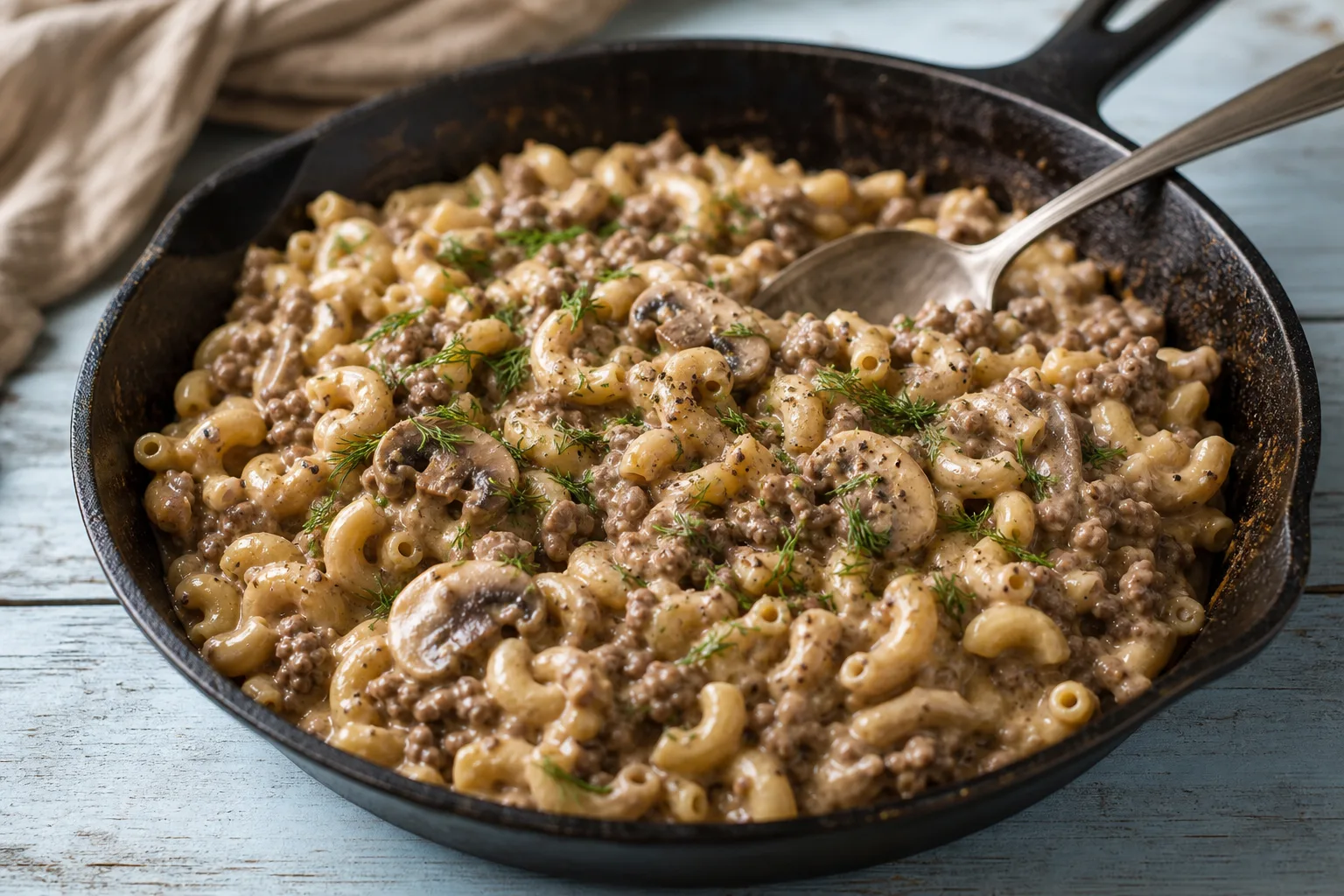

The boxed stroganoff was the one I asked for. Not the cheeseburger one — the pale tan one with flecks of dried onion, where the sauce went creamy instead of orange. It is also the hardest to reproduce, and the reason is not flavor. Flavor you can get close with eight things from the spice drawer. The problem is the sour cream, and sour cream breaks.
Breaking means the sauce goes grainy and a thin gray liquid separates out around the noodles. The box sidesteps that with dried dairy solids engineered not to do it. Mine broke the first two times I made it, and both times I blamed the heat when the culprit was the light sour cream I had bought.
So this is built around that one failure. The rest is simple: one skillet, pasta cooked in the sauce the way the box does it, and a dry blend standing in for the packet.
Why This Works
There is cornstarch in the dry blend, and it is not there to thicken anything — the pasta leaches plenty of starch on its own. It is there because starch molecules, once swollen in hot liquid, physically get between the milk proteins in sour cream and make it much harder for them to find each other and clump. Pair that with full-fat sour cream and a skillet off the burner, and the sauce stays smooth.
Ingredients
One 12-inch skillet, and it needs to be a real 12 inches — 8 ounces of dry pasta plus 3 cups of liquid fills a 10-inch pan to the rim.
For the Seasoning Blend
- 2 teaspoons onion powder
- 1 teaspoon garlic powder
- 1 teaspoon sweet paprika
- 3/4 teaspoon mustard powder
- 2 teaspoons granulated beef base or crushed bouillon
- 1 tablespoon cornstarch
- 1 teaspoon dried dill
- 3/4 teaspoon black pepper
- 1/2 teaspoon kosher salt
For the Skillet
- 1 pound ground beef, 85/15
- 2 tablespoons unsalted butter
- 8 ounces cremini mushrooms, sliced 1/4 inch thick
- 3 cups low-sodium beef broth
- 1 tablespoon Worcestershire sauce
- 8 ounces elbow macaroni (about 2 cups dry)
- 1 cup full-fat sour cream, out of the refrigerator 20 minutes
- 2 tablespoons chopped fresh dill, for serving
Easy Swap
Full-fat plain Greek yogurt works, tangier and thinner, but it is more acidic and higher in protein, which makes it more fragile. Whisk a teaspoon of cornstarch into it first and temper it with four spoonfuls instead of three. Never low-fat.
How to Make It
Prep: 15 minutes | Cook: 30 minutes | Serves: 5 to 6
- Whisk all nine blend ingredients in a small bowl — a fine tan powder with green specks and no lumps of cornstarch. Set it next to the stove.
- Heat a 12-inch skillet over medium-high for 2 minutes. Add the beef in four or five big pieces and leave it alone 3 minutes so one face browns. Break it up and finish, 4 minutes more. Pour off the fat, leaving about a tablespoon.
- Add the butter and mushrooms, spread close to a single layer, and cook over medium-high 8 minutes without salting them. They flood the pan at first; wait it out, and once the liquid is gone they brown.
- Sprinkle the blend over everything and stir constantly 1 minute, until it smells toasted rather than dusty.
- Pour in the broth and Worcestershire, scraping the brown film off the bottom as the liquid loosens it. Bring to a hard simmer, 2 minutes.
- Stir in the macaroni and push it under the liquid. Drop to a steady low simmer, uncovered, 11 to 12 minutes, scraping the bottom every 2 minutes. Done is pasta barely tender in a sauce that coats a spoon.
- Take the skillet off the heat entirely and let it sit 3 minutes. While it rests, stir three large spoonfuls of the hot sauce into the sour cream, one at a time, until it is warm and as thin as heavy cream.
- Fold the tempered sour cream through gently. Taste for salt now, not before. Rest 5 minutes off the heat, then scatter the dill and a few grinds of pepper over the top.
Don’t Do This
Do not let the skillet come back to a simmer once the sour cream is in, not even for ten seconds to warm it through. That is the sauce at its most vulnerable: folded in, not yet bound by the starch. Bubbles rising through it are above 200°F at their source. If it has gone cool, a lid for two minutes is enough.
Can You Make It the Night Before?
Not Fully — Here Is What You Can Prep
Not fully, and I would rather say so than have you ruin a batch. Pasta cooked in its own sauce keeps absorbing in the refrigerator until it is bloated and the sauce is gone, and sour cream that has already been heated once breaks far more readily the second time.
What you can do ahead is the blend, which keeps six months in a jar, and the base: brown the beef, cook the mushrooms, bloom the blend, and stop there. That holds three days refrigerated. On the night, tip it back into the skillet, add the broth, and you are twenty minutes out with nothing to measure.
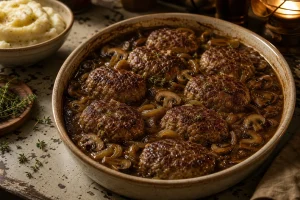
Leftovers reheat fine if you are gentle: low heat, a splash of broth or milk to replace what the pasta drank, stirring the whole time. A microwave on full power will break it. Do not freeze it — cooked pasta turns mealy and sour cream separates irreversibly on thawing. For a freezer dish from this category, the Salisbury steak casserole linked below is the one.
What Goes in the Blend, and What Each Piece Is Doing
Onion and garlic powder are the base, and the two-to-one ratio in favor of onion matters more than the amounts. Stroganoff is onion-forward, and garlic that reads as garlic drags it toward a generic pasta skillet. Powder rather than fresh is deliberate: fresh onion gives sweetness and texture, and what you want is the dry, slightly musty savor the packet had.
Paprika is the one people leave out and then wonder why the sauce is beige. Sweet paprika does almost nothing for heat and a lot for color — a teaspoon takes the sauce from gray-tan to the warm pinkish tan it should be. Mustard powder is the sharp note underneath; you will not taste mustard, but you will notice when it is missing, because the sour cream tang has nothing to push against.
Beef base carries the savoriness, and it has to be granulated or powdered — the paste in a jar is too wet for a dry blend and cakes it into a brick. Pepper goes in generously because stroganoff is peppery, not mild. Dried dill is what makes people say it tastes like the box; the fresh dill at the end is a brighter thing layered on top.
Why the Sour Cream Breaks, and How to Keep It From Happening
Sour cream is cream cultured until it is acidic, around pH 4.5. That acidity has already pushed its milk proteins most of the way toward wanting to clump — it is what makes sour cream thick in the first place. Heat gives them the energy to finish. Once they link into visible curds they squeeze water out as they go, and that is the gray liquid pooling at the edge of the pan.
A one-skillet stroganoff is the worst possible place to put sour cream. The pan is acidic from the sour cream and the Worcestershire, it is hot, and it is thick with pasta starch that holds heat and resists stirring. That is why this breaks for people who have made stroganoff over boiled noodles for years without trouble.
Full-fat sour cream, nothing less. Light sour cream has the fat replaced by water, thickeners and more milk solids per spoonful — more protein packed in, less fat between the molecules keeping them apart. It curdles at a lower temperature and the curds are coarser. In a pan like this one it is close to a guarantee.
The handling is two habits. Tempering means stirring hot sauce into the cold sour cream in the bowl so it climbs to temperature gradually; a cold dollop dropped into a simmering pan curdles on its outer surface before you finish stirring it in. And the skillet comes off the burner first, because a pan that was simmering a minute ago still has a scorching bottom and starchy sauce does not carry heat away from it. Three minutes is enough.
If It Has Already Broken
Take it off the heat and stop stirring hard — that shears the curds smaller and looks worse. Whisk a teaspoon of cornstarch into a tablespoon of cold water and stir it in, or fold in a tablespoon of cream cheese. Both coat the clumped proteins and pull the sauce back toward smooth. It will not be perfect, but it will be close enough that nobody remarks on it.
Mushrooms and the Noodle Question
There are no mushrooms in the box and there should be in yours. Eight ounces of cremini, browned rather than steamed, add a depth the beef base is otherwise faking alone. The trick is patience in step three: they dump their water into the pan, and stirring at them during that stage poaches them into rubber. Salting early pulls the water out faster, which sounds helpful and only extends the steaming. Skip them and the dish is still good, only flatter.
Egg noodles are what stroganoff is traditionally served over, and the box used elbows for a reason unrelated to authenticity: elbows are sturdy and cook in a sauce without falling apart. Wide egg noodles are softer, thinner and have egg in the dough, so they are more fragile and considerably starchier. Three changes if you use them. Add half a cup more broth, because they drink more and thicken the sauce faster. Start tasting at 5 minutes instead of 11, since they go from firm to mush inside two. And stir gently with a flat wooden spoon, because broken shards release still more starch and take the sauce from glossy to gluey.
Rachel’s Tip
Make the blend five times over and keep it in a half-pint jar. One batch uses a scant 3 tablespoons, so a jar is five dinners. I write the measurement on masking tape on the lid, having twice stood there trying to remember whether it was tablespoons or teaspoons.
Questions People Ask
Why did my stroganoff turn grainy?
The sour cream curdled, and it is almost always one of three things: it was light or reduced-fat, it went in cold and undiluted, or the skillet was still on the heat. Full-fat, tempered, into a pan off the burner three minutes, is the combination that works. The cornstarch in the blend is the backstop.
Can I boil the pasta separately instead?
You can, and the sauce is less likely to break with less residual starch holding heat. But you lose what makes it a copycat: the box’s sauce is thickened almost entirely by starch leaching out of the pasta. Boiling separately, use 2 cups of broth, simmer it down 5 minutes before the sour cream, and expect to need a cornstarch slurry for body.
What can I use instead of beef base?
A crushed bouillon cube is the direct swap, one cube for two teaspoons of granules, though cubes run saltier — drop the kosher salt to a pinch. Without any of it, use full-sodium broth and a second teaspoon of Worcestershire. That dried-savory note is specifically what beef base provides, so it will taste a little less like the box.
My sauce got too thick sitting on the stove. Can I fix it?
Yes, and it will do this every time. Pasta keeps absorbing as long as it is warm, so a sauce that was right at the five-minute rest will be tight at twenty. Stir in warm broth or milk a few tablespoons at a time, off the heat. Do not reheat it to loosen it.
About This Article

Written by Rachel Thompson. Rachel Thompson is a home cook who has spent over 10 years making an unreasonable number of dips, appetizers, and party spreads — no culinary training, just a decade of trial and error and a reputation among friends for always being asked to "bring a dip." She focuses on approachable recipes that combine bold flavors with simple techniques, making entertaining at home accessible to everyone. More about this site.
Scope and limits. Rachel is a home cook with no culinary training. Follow current food safety guidance for holding temperatures and time limits whenever you are serving people other than yourself.
Verify this against a primary source
Specifics change, and your situation may differ from the one described here. These are the authorities worth checking directly:
- FoodSafety.gov — cold holding, hot holding and the two-hour rule
- USDA FoodData Central — ingredient composition and nutrition data
- USDA Food Safety and Inspection Service — safe minimum temperatures and leftovers