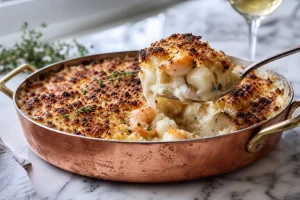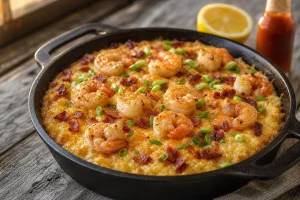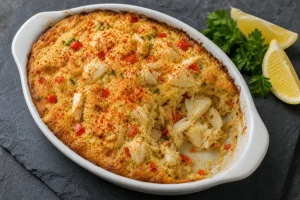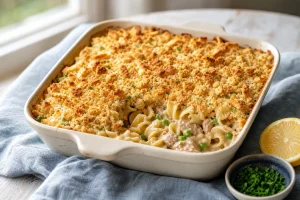

Shrimp tetrazzini is two good ideas with a scheduling conflict. The casserole wants half an hour in a hot oven. The shrimp want seven minutes. Put them in together and you get what I made the first three times: a sherry cream sauce with forty little gray erasers in it.
The fix is giving up on one bake. The pasta and sauce go in alone and come out bubbling. Then the dish sits for ninety seconds while I tuck raw shrimp into the hot sauce, scatter the crumbs, and send it back in hotter for seven minutes.
The second fix is the pasta, and it has nothing to do with mush. I make the original version of this with spaghetti and would not change it. With shrimp, long strands are the wrong tool — a fork problem, not a cooking one.
Why This Works
A dish of bubbling cream sauce is a heat battery, and unlike a set grits slab it is liquid, so it drives heat into a shrimp fast and keeps doing it on the counter. Seven minutes is enough, and pull the dish just before they look done, because 190°F sauce is brutal carryover.
Ingredients
This fills a 9×13, the smallest dish that holds a pound and a half of shrimp in one layer.
For the Shrimp
- 1 1/2 pounds large shrimp, 26/30 count, peeled and deveined, tails off
- 1 tablespoon olive oil
- 1 teaspoon kosher salt
- 1/2 teaspoon sweet paprika
- 2 tablespoons fresh lemon juice, for the end
For the Pasta
- 12 ounces medium pasta shells, campanelle, or cavatappi
- 1 cup frozen peas, straight from the freezer
For the Sherry Cream Sauce
- 5 tablespoons unsalted butter
- 12 ounces cremini mushrooms, sliced 1/4 inch thick
- 1 large shallot, minced
- 3 cloves garlic, minced
- 1/2 cup dry sherry (not cooking sherry)
- 1/3 cup all-purpose flour plus 1 tablespoon
- 2 1/2 cups seafood or chicken stock, warm
- 1 cup heavy cream
- 1 cup finely grated Parmesan
- 1/4 teaspoon freshly grated nutmeg
- 1/4 teaspoon cayenne
- Zest of 1 lemon
- 1 1/2 teaspoons kosher salt
- 3/4 teaspoon black pepper
For the Top
- 1 cup panko breadcrumbs
- 3 tablespoons unsalted butter, melted
- 1/2 cup grated Parmesan
- 2 tablespoons chopped flat-leaf parsley
Easy Swap
Bay scallops can replace half the shrimp: same moment in, same 7 minutes. Lump crab is already cooked, so fold it into the sauce at the end of step six instead. Dry white wine or dry vermouth stand in for the sherry; without alcohol, use 1/3 cup more stock plus 2 teaspoons white wine vinegar off the heat.
How to Make It
Prep: 35 minutes | Bake: 30 minutes | Serves: 8
- Dry the shrimp well on paper towels — wet shrimp steam instead of roasting. Toss with the oil, salt, and paprika and leave them on the counter, not in the refrigerator, while you work.
- Heat the oven to 375°F. Boil the pasta 3 minutes less than the package says for al dente; bite one and look for a pale core. Drain, rinse briefly under cool water, and toss with a teaspoon of oil.
- Melt the 5 tablespoons of butter in a large skillet over medium-high heat. Add the mushrooms in close to one layer and leave them alone for 4 minutes. Stir and cook 5 minutes more, until the pan is dry.
- Add the shallot and cook 2 minutes, then the garlic for 30 seconds. Pour in the sherry and let it bubble down until the pan is nearly dry, about 3 minutes.
- Sprinkle on all the flour and stir constantly for 90 seconds. Add the warm stock in three additions, whisking smooth each time, then the cream. Simmer 6 minutes. Make it thicker than you would for chicken — the shrimp will shed a quarter cup of water into it.
- Off the heat, once it stops steaming hard, stir in the Parmesan, nutmeg, cayenne, lemon zest, salt, and pepper. It should taste a shade too salty and clearly lemony on its own.
- Fold in the pasta and frozen peas with a spatula, lifting from the bottom. Scrape it into a buttered 9×13 and bake uncovered 20 minutes, until it bubbles around the whole edge. Mix the panko, melted butter, Parmesan, and parsley while it bakes.
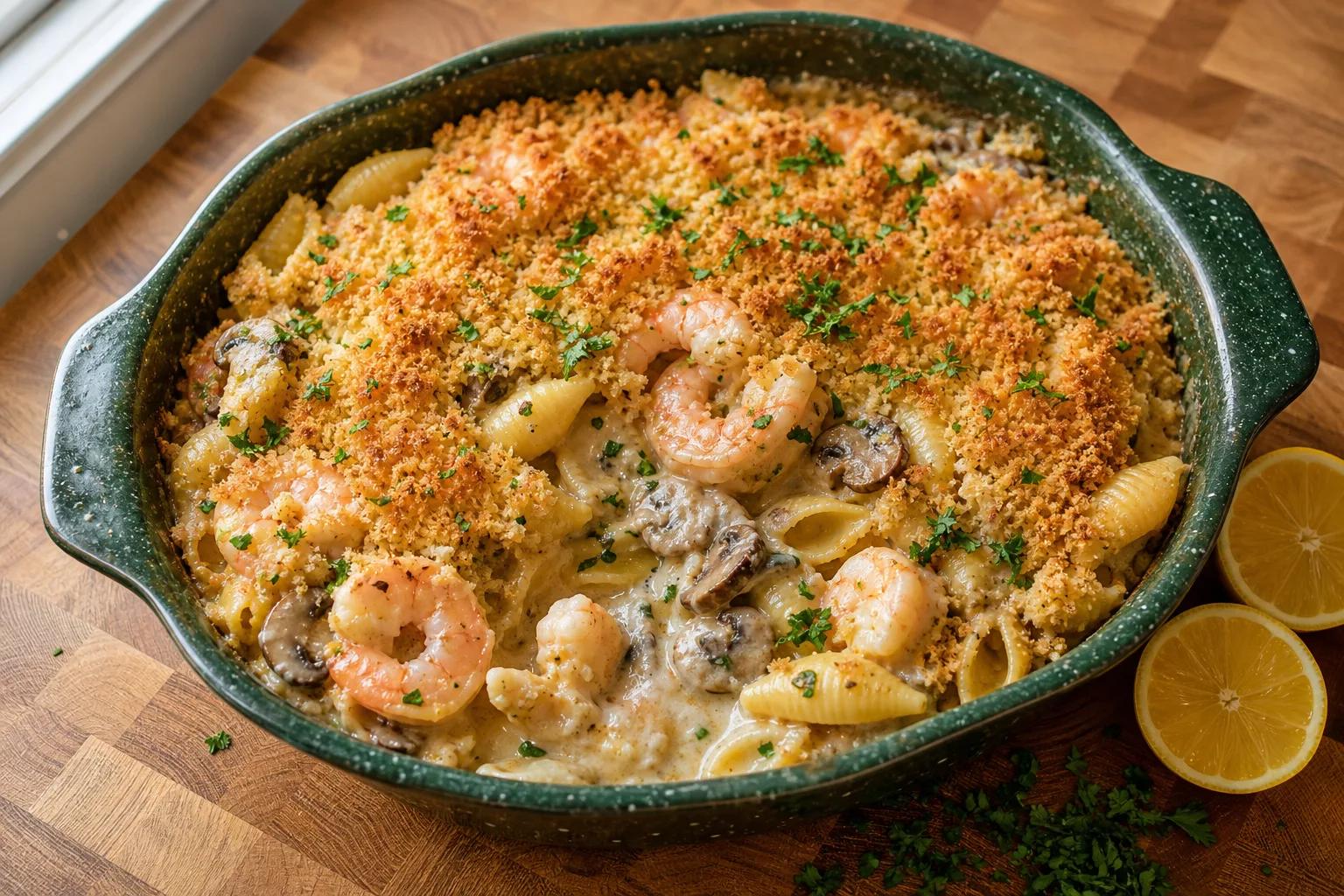
- Pull the dish and turn the oven up to 425°F. Working fast, open a shallow pocket for each shrimp with the back of a spoon and lay it in flat, half submerged — forty fit in one layer with room between. Nothing stacked, nothing touching. Scatter the crumbs into the gaps, only lightly over the shrimp, since a sealed crust poaches them.
- Bake 6 to 7 minutes, until the exposed backs are solid pink and the shrimp have curled into a loose C; a tight O went too far. Squeeze the lemon over, rest 5 minutes, and serve — the sauce keeps cooking them while it sits.
Don’t Do This
Do not build this with pre-cooked shrimp. They have already been through the one transformation you are trying to control, so every minute in your oven is pure loss — there is no version where they come out better than they went in. If it is all you have, bake the dish fully, then fold them in off the heat and cover it three minutes.
Can You Make It the Night Before?
Not Fully — Here Is What You Can Prep
Not fully, and the shrimp are why: a cold assembled dish needs 45 minutes just to come up to temperature, so shrimp buried in it get 45 minutes instead of 7. Assemble everything except the shrimp and crumbs up to 24 hours ahead, bake that base until it bubbles, then run steps eight and nine as written.
Pull the pasta four minutes early rather than three, since it keeps drinking sauce overnight, and cool the sauce before folding the pasta in. On the day, bake the cold dish covered at 375°F for 40 minutes and uncovered for 10 more before the shrimp go in.
The shrimp can be peeled, dried, and seasoned up to eight hours ahead, no longer — salt left on raw shrimp overnight cures them and they bake up dense and bouncy. The unbaked base freezes for two months; a baked one does not survive the freezer.
Pasta Shape Versus the Shrimp on Your Fork
I made this the first time with spaghetti, because that is what the original version uses. Then I sat down and found you cannot get a shrimp and a bite of spaghetti onto the same fork. You twirl, you get a tight bundle of strands, and the shrimp — smooth, slick, nothing to catch on — rolls off the bundle and back into the dish. Pulled chicken never does that; it is shaggy and tangles into the strands on its own.
What holds a shrimp is a short shape with a concave face, cut to roughly its length. Medium shells are the obvious answer: the cup is close to the size of a 26/30 tail, so a shrimp drops in and rides up on the fork inside it. Campanelle catches one in the ruffled bell, and cavatappi wedges it into the curve of the corkscrew.
The failures look sensible, which is the problem. Smooth penne is worst: the sauce goes inside the tubes and the shrimp rides alongside. Farfalle has no cup at all, and jumbo stuffing shells fail the other way, arriving with a whole shrimp and a quarter cup of sauce in them.
Rice Instead of Pasta, and the Timing Problem It Creates
Rice belongs in this conversation in a way it does not belong in the original. Nobody serves chicken tetrazzini over rice; a sherry cream sauce without its noodles reads as a sauce that lost something. But shrimp and rice is a pairing everybody already has filed away — jambalaya, shrimp pilau, étouffée over rice. Made with rice, this reads as a shrimp and rice casserole rather than tetrazzini with a substitution.
Use raw long-grain white rice, built into the bake rather than cooked first: 1 1/2 cups for a 9×13 serving eight, rinsed until the water runs clear. Raw rice takes about 1 3/4 cups of liquid per cup in an open pot, but a covered bake with fat and cheese in the liquid is slower and thirstier, so budget closer to 2 cups per cup — 3 cups of total liquid. Build the sauce thin on purpose: flour down to 2 tablespoons, 2 1/2 cups of stock plus 3/4 cup of cream. Thickened toward gravy it will not travel into the grains, and the corners come out crunchy.
Then the conflict. Rice wants 45 minutes, covered tightly, at 350°F. Shrimp want 7, and no temperature splits the difference, so the rice version is openly two bakes. Spread the rinsed rice in a buttered 9×13, pour the thin sauce over, and stir until every grain is submerged. Cover with foil crimped all the way around the rim — one loose corner vents steam and the rice at that end stays hard. Bake 45 minutes without opening it, then uncover, fluff, go to 425°F, and do steps eight and nine: 55 minutes of oven time against 28, so you gain nothing in speed. You gain a dish whose starch and protein were made for each other.
Brown rice needs 55 to 65 minutes and breaks a cream sauce held that long, and instant rice disintegrates. Leftover cooked rice is the worst: nothing left to absorb, so it sits in the sauce instead of drinking it. The full raw-rice method is the subject of my chicken and rice casserole.
What Raw Shrimp Do to the Sauce
A pound and a half of raw shrimp gives up around a quarter cup of water in the oven. A starch base dense enough to drink it can ignore that, but a tetrazzini is sauce, and that quarter cup is the difference between a portion that holds its shape and one that runs. It is why this sauce carries an extra tablespoon of flour and half a cup less stock than the chicken version.
How much you get depends on what you bought. Wet-packed shrimp, labeled with sodium tripolyphosphate, were soaked to hold water and shed two or three times as much. Size is the other variable, and it is really margin for error: buy by count per pound, because that number is the only size information worth trusting. A 21/25 or 26/30 shrimp has the mass to take seven minutes in hot sauce; a 51/60 salad shrimp is done in ninety seconds.
Rachel’s Tip
Take the shrimp out of the refrigerator before you boil the pasta. At 38°F they hit the sauce as forty objects at forty slightly different temperatures, and seven minutes is not long enough for that spread to even out.
Questions People Ask
Why did my shrimp come out rubbery?
Almost certainly because they were in for the whole bake instead of the last seven minutes; half an hour at 375°F is four times what a 26/30 shrimp can take. The other cause is carryover — the sauce leaves the oven near 190°F and keeps cooking them, so a dish that sat twenty minutes has tight shrimp anyway.
Can I use frozen shrimp?
Yes, and they are usually better than the thawed ones in the case, which were frozen anyway. Thaw them in a colander under cool running water for five minutes, then dry them well. Do not put them in frozen: they shed water into the sauce and take closer to twelve minutes.
What pasta shape works best with shrimp?
A short shape with a cup to it, so one bite holds one shrimp: medium shells, campanelle, or cavatappi. Skip smooth penne, where the sauce goes in the tube and the shrimp stays outside it, and skip long strands. Whatever you pick still leaves the water three minutes early.
Can I make it with rice instead of pasta?
Yes, and it suits shrimp better than it would suit chicken. Use 1 1/2 cups of raw rinsed long-grain white rice with about 3 cups of total liquid, build the sauce much thinner, and bake it covered tightly at 350°F for 45 minutes before the shrimp appear. Then uncover, go to 425°F, and add the shrimp and crumbs for 7 to 8 minutes.
About This Article

Written by Rachel Thompson. Rachel Thompson is a home cook who has spent over 10 years making an unreasonable number of dips, appetizers, and party spreads — no culinary training, just a decade of trial and error and a reputation among friends for always being asked to "bring a dip." She focuses on approachable recipes that combine bold flavors with simple techniques, making entertaining at home accessible to everyone. More about this site.
Scope and limits. Rachel is a home cook with no culinary training. Follow current food safety guidance for holding temperatures and time limits whenever you are serving people other than yourself.
Verify this against a primary source
Specifics change, and your situation may differ from the one described here. These are the authorities worth checking directly:
- FoodSafety.gov — cold holding, hot holding and the two-hour rule
- USDA FoodData Central — ingredient composition and nutrition data
- USDA Food Safety and Inspection Service — safe minimum temperatures and leftovers